The first big winter storms of the season tend to arrive just as holiday travel and December grocery runs pick up. When roads close or the power goes out, what is already in the pantry, the water jugs and the trunk of the car is what a household has to work with.
The American Red Cross says a winter storm stay-at-home kit should hold at least 2 weeks of supplies, with at least 1 gallon of drinking water per person per day. For the car, the organization lists canned fruit, nuts and high-energy snacks, along with warm broth in a thermos and several bottles of water.
2 Weeks at Home, 3 Days to Go
The Red Cross winter storm guide splits emergency supplies into two kits. The stay-at-home kit should cover at least two weeks. The go-kit, meant for anyone who has to leave home quickly, should hold at least three days of supplies that can be carried, including backup batteries and chargers for phones and other devices.
The organization’s advice is to gather food, water and other essentials before a storm arrives, not after the forecast turns serious. Its power outage guide also recommends keeping non-perishable food and water on hand for at least two weeks. For a family of four, that is a lot of shelf space, which is where good seasonal storage habits help: rotate cans forward, keep an inventory taped inside the pantry door and replace what gets used.
Building the kit over several grocery trips spreads out the cost. Setting aside a few dollars a week, the same way people build an emergency fund, makes the shopping list less of a shock.
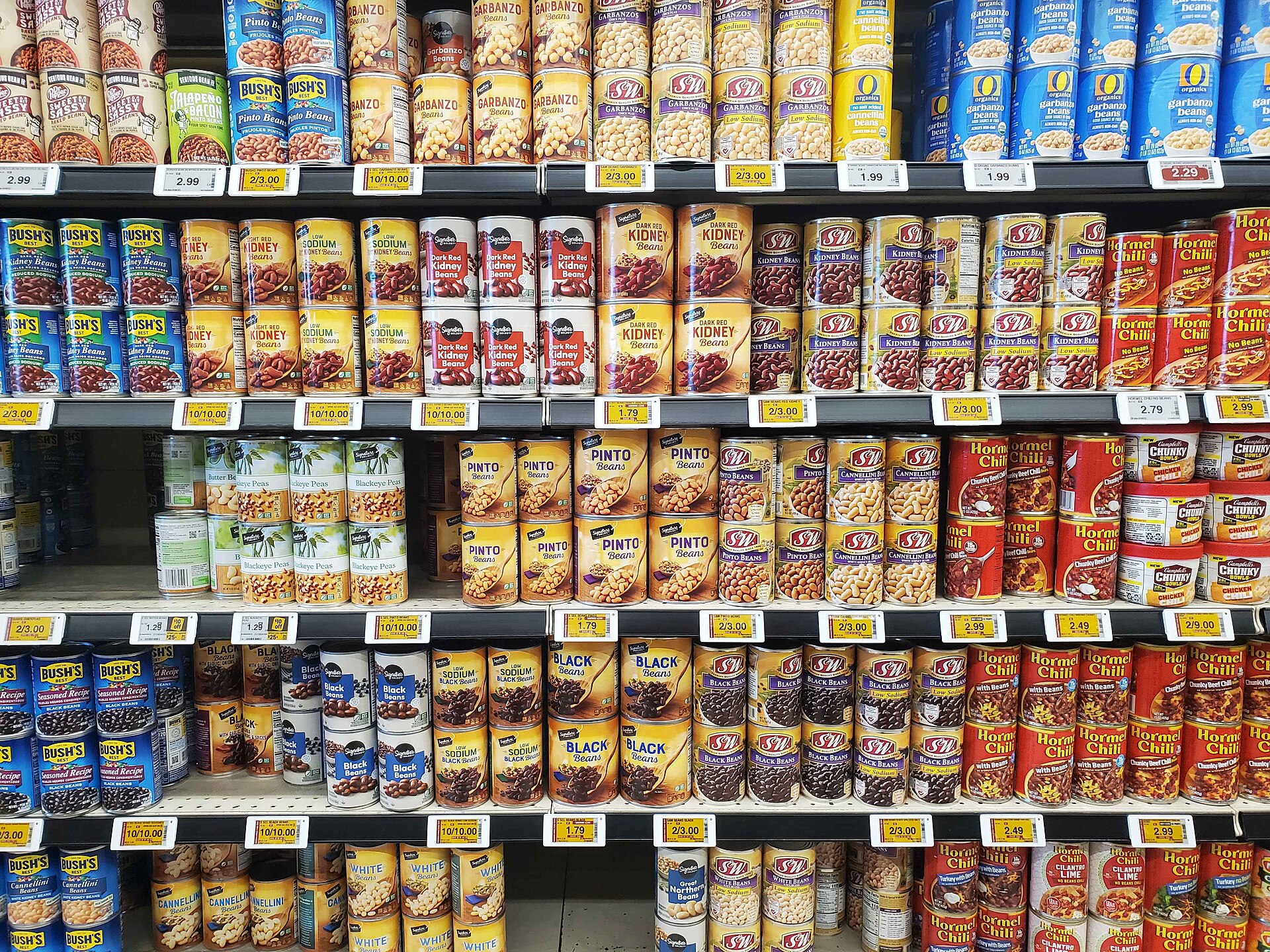
A storm-ready pantry also works best when it holds food the household already eats. Canned soups, beans, tuna, chicken, fruit and vegetables, peanut butter, crackers, cereal and shelf-stable milk can all be worked into regular meals and replaced as they are used, so nothing sits forgotten until it expires. Forecasters sometimes add stronger language for the worst storms, as explained in this guide to what a particularly dangerous situation warning means, and by then the shelves at the store are usually picked over.
1 Gallon of Water per Person, per Day
The Red Cross warns that a winter storm can cut off access to drinking water and recommends setting aside at least one gallon per person per day. Over two weeks, that adds up to 14 gallons for one person and 56 gallons for a household of four.
Ready.gov’s water storage guidance uses the same one-gallon figure, which covers drinking and sanitation. It recommends keeping commercially bottled water sealed in its original container in a cool, dark place, and replacing water that was not commercially bottled every six months. The agency also notes that needs vary, and hot weather can raise them.
Water matters for cooking, too. Pasta, rice, oatmeal, soup mixes and powdered drinks all need it, so households that plan to cook on a working stove during a storm should count that water on top of the drinking supply.
The Car Kit: Canned Fruit, Nuts and Warm Broth
The Red Cross list for a vehicle is short and practical. Along with blankets or a sleeping bag, dry clothing, mittens, socks and wool hats, it calls for canned fruit, nuts and high-energy snacks, plus warm broth in a thermos and several bottles of water.
The National Weather Service’s winter preparedness checklist adds non-perishable, energy-dense food and a water container for the car kit, along with a small can and waterproof matches for melting snow into drinking water. For home and work, it suggests no-cook, no-refrigeration foods such as dried fruit, nuts and granola bars.
Pop-top cans of fruit are easiest to open in a cold car, and a few packets of crackers or a jar of peanut butter round out the bag. Anyone heading out on a long holiday drive, whether to family or to one of the worst American tourist attractions for a laugh, should pack the kit before leaving. Some items do not belong in a frozen car overnight, though, and this list of things never to leave in a car in freezing weather covers what to bring inside.

Watch vs. Warning, and Kitchen Rules for the Storm
The Red Cross explains that a winter storm watch means conditions are possible within 36 to 48 hours, while a warning means dangerous conditions have begun or will begin within 24 hours. A watch is the signal to finish stocking food and water. The National Weather Service’s guide to winter weather watches, warnings and advisories explains the full set of alerts, from advisories for lighter snow to warnings for heavy snow and ice.
The kitchen comes with its own rules during a storm. The Red Cross says never to heat a home with a cooking oven or stove, and to use generators, grills and camp stoves only outdoors and away from windows. It also advises against candles because of the fire danger.
If the power goes out, the organization says to keep the refrigerator and freezer doors closed. An unopened refrigerator keeps food cold for about 4 hours, while a full freezer holds its temperature for about 48 hours, or 24 hours if half full. Food that has been warmer than 40°F should be thrown out, especially dairy and meat. Eating fresh, perishable food first and saving the canned goods for later stretches the supply.
A storm-ready kitchen does not need to be complicated: a full water supply, two weeks of shelf-stable food the household actually likes, a manual can opener and a stocked bag in the car. Checking it now, before the first warning of the season, beats a crowded grocery store the night before the snow.
This article was produced with AI assistance and edited for accuracy against the sources linked above.
Image: Alabama Extension – CC0/Wikimedia Commons