California Gov. Gavin Newsom has opened a volatile new front in his escalating war with President Donald Trump, accusing the administration of using the Justice Department to intimidate political opponents and pull their families into federal investigations.
At a recent news conference, Newsom said people close to him had faced early-morning visits from agents, demands for records and mounting legal bills. He described the pressure as overwhelming and warned that the dispute reaches far beyond one governor. “If a president can direct the DOJ to go after political opponents, no one is safe,” he wrote on social media.
Newsom says federal pressure reached his home.

Newsom first went public on June 15, claiming that federal agents had contacted friends, former employees, and others in his professional circle. His office said investigators were examining business, financial and personal matters connected to the governor and First Partner Jennifer Siebel Newsom.
The governor argued that the scrutiny crossed a line once it reached his wife. He accused Trump of trying to weaken him through those closest to him and linked the alleged campaign to his possible run for president in 2028.
Newsom has not announced a presidential campaign. Still, he has become one of Trump’s loudest Democratic rivals, challenging the administration in court, attacking its policies and mocking the president online.
The Justice Department has not confirmed Newsom’s claim.
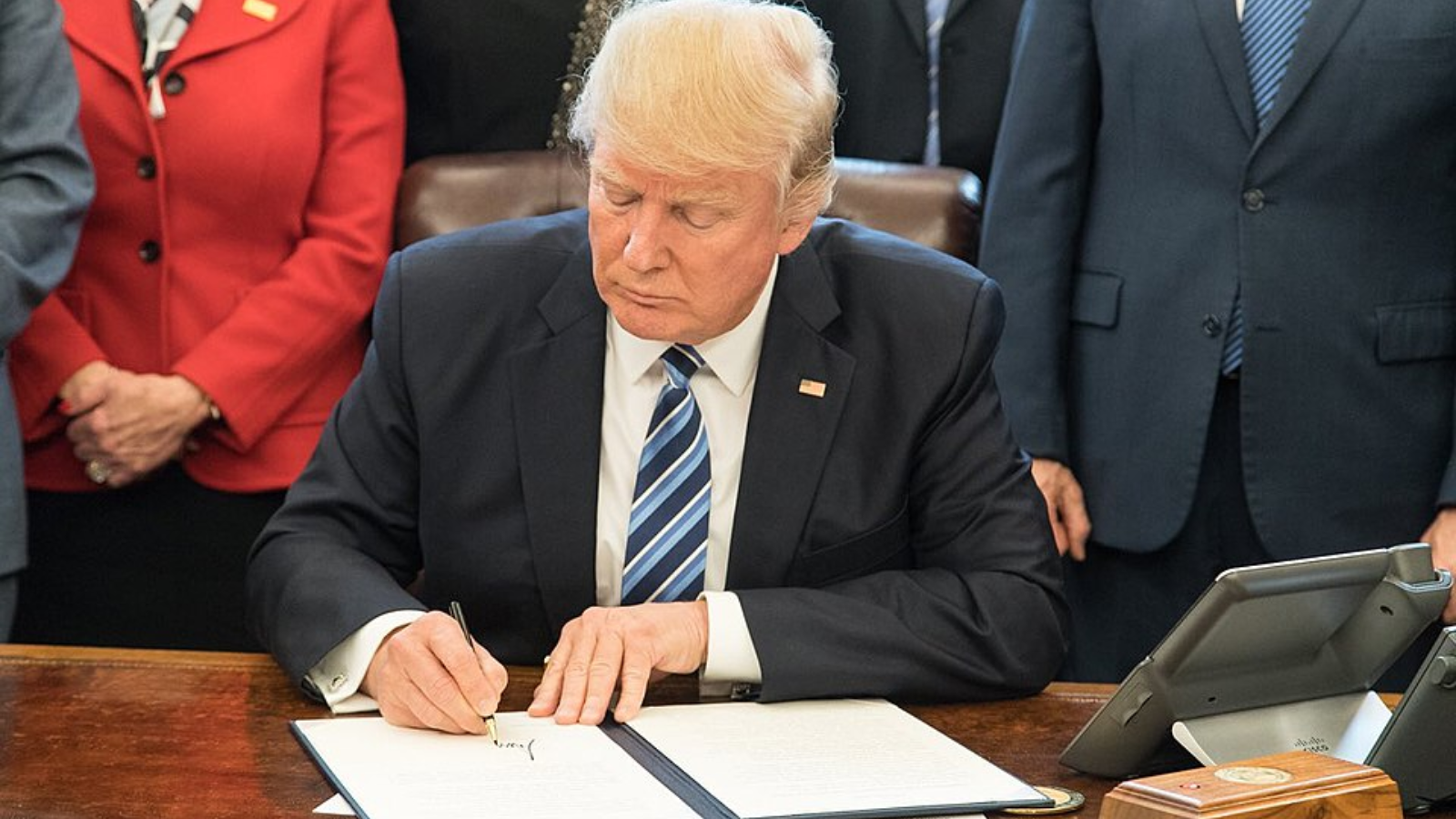
U.S. Air Force photo by Tech. Sgt. Robert Cloys, Public domain, via Wikimedia Commons
The Justice Department declined to comment when Newsom made his allegations public. Acting Attorney General Todd Blanche also avoided questions about the matter during a Capitol Hill appearance.
A person familiar with the federal activity told The Associated Press that investigators were not conducting a probe specifically targeting Newsom. The same person said several investigations involved people around him, including a tax-related inquiry connected to his wife.
According to that account, the inquiry involving Siebel Newsom began in 2025 and was not opened by political leaders in Washington. Reuters likewise reported that California prosecutors initiated the investigations.
That creates a crucial gap between accusation and evidence. Newsom says Trump is directing a political attack. Public reporting confirms scrutiny around the governor’s network, but it has not established that Trump personally ordered it or that Newsom committed a crime.
A former chief of staff’s case complicates the picture.
Another investigation involves Dana Williamson, Newsom’s former chief of staff. Federal prosecutors accused her of participating in a scheme to divert campaign funds from former Health and Human Services Secretary Xavier Becerra.
Williamson pleaded guilty in May to charges that included conspiracy to commit bank fraud. The investigation began under President Joe Biden’s Justice Department and later widened to include other staff members. Newsom has not been accused of wrongdoing in connection with the case.
The timeline gives Trump’s allies a ready defense. They can argue that the investigations grew out of existing cases, whistleblower information, and decisions made before Trump’s current administration took control.
Newsom argues that an investigation’s origin does not excuse its later misuse. He says federal power can still be redirected or expanded to frighten rivals.
Newsom is demanding the paper trail.
Newsom’s office filed a Freedom of Information Act request seeking Justice Department communications that mention him or his wife during Trump’s second term. The request covers emails, text messages, memoranda, and other records that could show whether political appointees influenced the probes.
That move shifts the battle from speeches to documents. A paper trail showing White House pressure could strengthen Newsom’s case dramatically. Records showing investigators acted independently could weaken his claim.
The clash comes as more than 1,200 former Justice Department employees have urged senators to reject Blanche’s nomination as attorney general. In a July 7 letter, they accused him of damaging the agency’s independence, driving out career employees and advancing politically motivated investigations.
Why the confrontation matters beyond California
Newsom’s warning strikes at a basic democratic principle: criminal investigations should follow evidence, not presidential grudges. Yet that principle also requires caution. Politicians cannot dismiss legitimate scrutiny simply by calling it persecution.
The Justice Department now faces pressure to explain what it can without compromising active investigations. Newsom faces an equally important test: separating confirmed facts from political conclusions while making one of the gravest accusations possible against a sitting president.
For Californians, the fight could shape Newsom’s final years in office. Nationally, it may become an early battle in the 2028 presidential race.
For now, two sharply different stories remain. Newsom says the federal government is searching for a crime to silence a rival. Available reporting suggests investigators are examining people around him, while Trump’s direct role remains unproven. The documents, subpoenas, and court filings will decide which version survives.