Thanksgiving leftovers usually end up in the microwave at least once this weekend, and most of them go in the same way: a plate of turkey and stuffing, uncovered, on high until it seems warm. That shortcut is the one food safety experts say to skip.
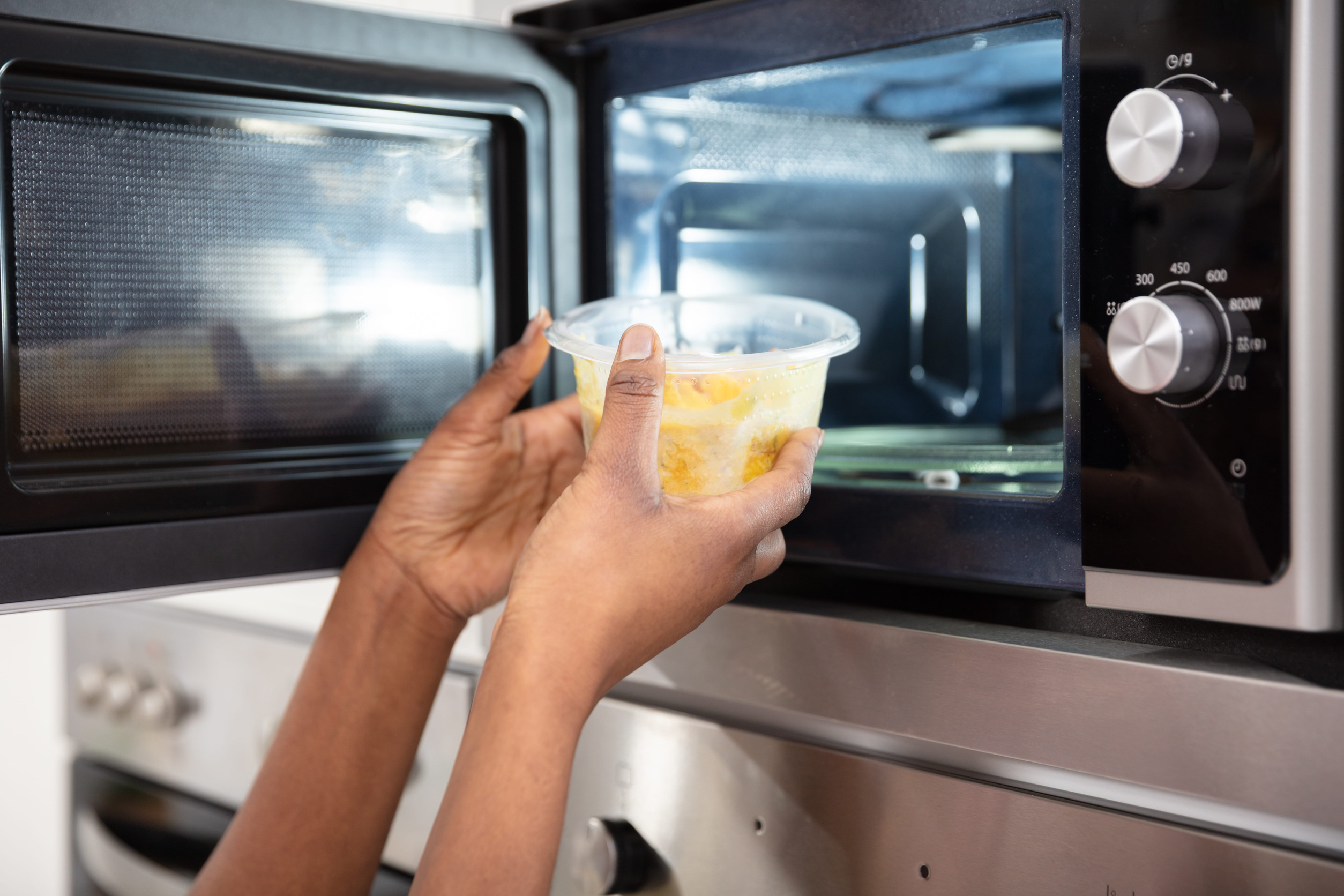
The U.S. Department of Agriculture’s Food Safety and Inspection Service says leftovers reheated in a microwave should be covered and rotated for even heating, and then checked with a food thermometer in several places to be sure they reach 165°F. Microwaves leave cold spots, and an uncovered plate makes them worse.
Why Uncovered Leftovers Heat Unevenly
A microwave oven heats food by making the water, fat and sugar molecules inside it vibrate, as University of Nebraska-Lincoln Extension explains in its microwave safety tips. That energy does not spread evenly. Thick pieces of turkey, dense scoops of stuffing and the center of a mound of mashed potatoes can stay cool while the edges of the plate bubble.
Covering the dish traps steam, and that moist heat is what evens things out. UNL Extension says the steam created under a vented lid or wrap helps ensure uniform cooking. Left uncovered, the surface dries out and the moisture escapes instead of working its way into the food.
For households trying to free up the main oven during the holidays, countertop appliances help too; Frenz Hub’s comparison of the COSORI and Ninja air fryers and the Ninja Flip toaster oven covers other ways to rewarm a plate.
Step 1: Cover the Dish, but Leave a Vent
USDA’s guide to leftovers and food safety says to arrange food evenly in a covered, microwave-safe dish, add some liquid if needed, and make sure the lid or wrap lets some steam escape. UNL Extension adds that there should be enough space between the food and the top of the dish so plastic wrap does not touch the food.
A splash of broth over sliced turkey or a spoonful of water over stuffing gives the steam something to work with. For gravy, soups and sauces, USDA’s rule is simpler: bring them to a rolling boil.
Step 2: Use a Microwave-Safe Container
Not every container belongs in the microwave. UNL Extension says glass, ceramic and plastic containers should be labeled microwave-safe, because other containers can warp or melt. It also says never to use thin plastic storage bags, brown paper or plastic grocery bags, newspapers or aluminum foil in a microwave oven.
Moving leftovers out of takeout tubs and onto a glass or ceramic plate before reheating solves most of these problems. Kitchen shortcuts like that are collected in Frenz Hub’s clever kitchen tricks for home cooks, and families who stretch the holiday meal for days will recognize themselves in a look at people who never let leftovers go to waste.
Cleanup matters as much as reheating: the fats and gravies left on plates are on the list of things that should never go down the kitchen drain. And for anyone still working through the platter, Frenz Hub’s list of strange Thanksgiving traditions includes a few leftover habits of its own.
Step 3: Rotate and Stir Halfway Through
USDA says to cover and rotate food for even heating. UNL Extension recommends stirring, rotating or turning foods upside down where possible midway through the microwaving time to help eliminate cold spots. Most turntables help, but a plate piled high in the middle still benefits from a stir.
Spreading food in an even layer, with thicker pieces toward the outside of the dish, also helps the center heat at the same pace as the edges.

Step 4: Let It Stand, Then Check 165°F in Several Spots
Food keeps heating after the microwave stops. UNL Extension calls this standing time and says to allow at least 3 minutes before checking the internal temperature with a food thermometer.
Then comes the step most people skip. USDA says that because microwaves have cold spots, the temperature should be checked in several places with a food thermometer, and that leftovers should reach 165°F. One reading at the edge of the plate is not enough; the thickest slice of turkey and the middle of the stuffing are the spots to test.
The Thanksgiving Leftovers That Need the Most Care
Some holiday dishes are harder to heat evenly than others. Stuffing is dense and often packed tightly into a storage container, so its center can stay cool long after the top is steaming; breaking it up into a looser layer helps. Thick slices of turkey breast heat faster when they are laid flat in a single layer and moistened with broth. Mashed potatoes and sweet potato casserole hold their shape well, which also means they hold cold spots, so a stir halfway through matters more than usual.
Reheating one plate at a time, rather than a heaped serving dish, also makes it easier to hit 165°F everywhere without overcooking the edges.
How Long Thanksgiving Leftovers Keep
The same USDA page says leftovers can be kept in the refrigerator for 3 to 4 days or frozen for 3 to 4 months, and should go into the fridge within 2 hours of cooking. Frozen leftovers can be reheated without thawing first, though it takes longer. For Thanksgiving dinner on Nov. 26, that puts the refrigerator deadline at about Sunday or Monday.
The Short Version
Cover the dish with a vented lid, add a little liquid, rotate or stir halfway through, let it stand, and check 165°F in several spots. The leftovers will taste better for it, too, since covered food stays moist instead of drying out at the edges.
This article was produced with AI assistance and edited for accuracy against the sources linked above.