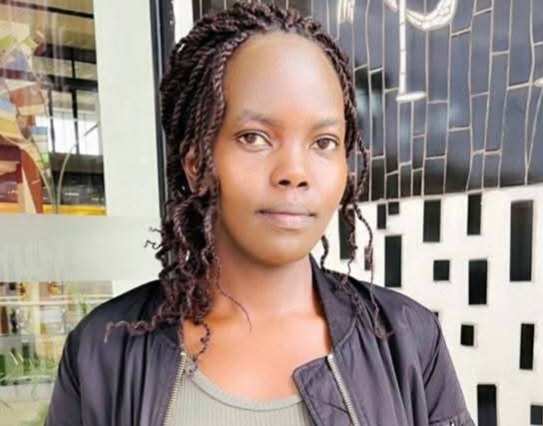
A $120 restaurant meal became a notable piece of evidence in the murder trial of an Illinois woman accused of killing her estranged husband after he returned their children from a family outing.
Betty Akamani, 35, was found guilty of murdering her estranged husband, Dr. Kofi Akamani, a 48-year-old forestry professor at Southern Illinois University Carbondale.
On November 19, 2026, a Jackson County jury returned a guilty verdict following a four-day trial. Prosecutors presented evidence that contradicted Betty’s claim that she acted in self-defense.
Among the details presented during the trial was a restaurant bill for filet mignon, shrimp, salad, and alcoholic beverages. Prosecutors described the dinner as her “final meal” before the killing.
However, behind the unusual restaurant detail is a devastating family tragedy involving two young daughters, a marriage that was coming to an end, and a respected university professor whose life was cut short.
A marriage that was already coming to an end

Long before the fatal shooting on September 19, 2026, Betty and Kofi Akamani were going through a difficult separation.
Kofi had filed for divorce in February 2026, several months before his death. The couple was also involved in a custody dispute concerning their two daughters.
A court-approved parenting arrangement allowed Kofi to spend time with his children despite the breakdown of his marriage.
On the day of his death, the professor spent time with his daughters, taking them to Texas Roadhouse, the library, and Starbucks for a birthday celebration.
What should have been an opportunity for the children to enjoy time with their father ended in an unimaginable tragedy.
According to the Jackson County State’s Attorney’s Office, authorities received multiple emergency calls concerning a shooting in Murphysboro, Illinois.
Kofi did not survive.
The circumstances surrounding his death would later become the subject of a criminal investigation and a murder trial that attracted attention both in the United States and his native Ghana.
The $120 restaurant bill that became part of a murder trial
Restaurant receipts rarely attract much attention beyond the person paying. However, Betty’s dining expenses became a significant talking point during her trial.
Jackson County Sheriff’s Office detective Brianna Hayes testified about Betty’s visit to The Turn, a restaurant in Marion, Illinois.
She reportedly spent approximately $120 on steak, shrimp, salad, and alcoholic drinks.
Prosecutors characterized the restaurant visit as her final meal before murdering her estranged husband.
The restaurant visit’s significance was not the expensive food itself. Instead, prosecutors used evidence of Betty’s activities to challenge her explanation for her actions.
The prosecution maintained that the circumstances of the killing did not support her claim that she was responding to an immediate danger.
For jurors, the restaurant visit was one part of a much larger body of evidence, including witness accounts, video recordings, and testimony presented during the trial.
Betty Akamani claimed self-defense.
Betty took the witness stand during her trial and offered a different account of the circumstances surrounding her husband’s death.
According to Heartland News, she maintained that she acted in self-defense and believed her children were in danger.
She made serious allegations against Kofi, including claims involving the sexual abuse and trafficking of their daughters.
However, prosecutors disputed those accusations, and the evidence presented at trial did not substantiate her account.
Her defense attorney also argued that Kofi had entered Betty’s residence without permission on the day he died.
The jury’s central question was whether Betty’s actions were legally justified.
Prosecutors argued that the physical evidence and witness accounts contradicted her testimony. Authorities also reported that investigators did not recover a firearm belonging to Kofi at the scene.
After considering the evidence and both sides’ arguments, jurors rejected Betty’s self-defense claim and found her guilty.
One of the couple’s daughters recorded the incident.
Among the most heartbreaking details to emerge during the trial was the involvement of the couple’s children.
One of their daughters recorded video evidence of the fatal encounter.
Witness recordings also became part of the prosecution’s case.
The children had spent part of the day celebrating a birthday with their father. By the end of that day, they had lost him.
Assistant State’s Attorney Sophia Allen acknowledged the devastating consequences of the crime, emphasizing how much the children loved their father.
Their mother’s conviction adds another difficult reality to an already heartbreaking situation.
Although the criminal trial has established responsibility for Kofi’s death, the children will continue living with the consequences long after the legal proceedings conclude.
Who was Dr. Kofi Akamani?
Beyond the courtroom headlines, Kofi Akamani was an internationally respected academic, educator, and father.
Originally from Ghana, he built a career studying the relationship between people, forests, and natural resources.
According to his Southern Illinois University faculty profile, he specialized in forest recreation and conservation social science.
His research examined how communities interact with their natural environment and how natural resources can be managed sustainably.
His work also explored forest governance, conservation, and rural community resilience.
For his students, Kofi was more than someone who delivered lectures and graded assignments. He was an educator whose knowledge and experience helped prepare future professionals in forestry and environmental conservation.
His death sent shockwaves through the university community.
Students, colleagues, friends, and relatives gathered for a candlelight vigil in September to remember him.
The Southern Illinois University Foundation also established the Dr. Kofi Akamani Memorial Student Fund to support students pursuing careers in forestry and natural resources.
The memorial gives his educational legacy a chance to continue through future generations of students.
His death prompted tributes from Ghana.
News of Kofi’s death also reached Ghana, where his academic achievements and international contributions were recognized.
The Embassy of Ghana in Washington, D.C. released a tribute acknowledging his contributions to forestry research and education.
The embassy extended condolences to his relatives, students, colleagues, and others affected by his passing.
The International Union of Forest Research Organizations also published an obituary recognizing his academic career.
Following Betty’s conviction, Kofi’s younger brother, Solomon Abache, thanked the prosecutors and the jury.
Although the verdict offered the family a measure of justice, it could not bring his brother back.
Betty Akamani could spend the rest of her life in prison.
Betty was found guilty of first-degree murder, a firearm enhancement, and endangering the life or health of a child. She faces a possible life sentence.
A sentencing date had not been announced in the latest reports reviewed as of November 27, 2026.
Jackson County State’s Attorney Marsha Cascio-Hale acknowledged that the guilty verdict delivered accountability but could not reverse the suffering the crime caused.
While the $120 steak and shrimp dinner has attracted considerable attention, the most important part of this story remains the human cost.
Two daughters have lost their father. A family is grieving. A university has lost a respected educator, and an international academic community is mourning a colleague.
For those who knew Kofi Akamani, his life deserves to be remembered for far more than the circumstances surrounding his death.