There is something wonderful about waking up to the smell of crispy bacon. Whether you’re making a big weekend breakfast or throwing together a quick bacon sandwich before work, few things make a morning feel more satisfying.
But cooking bacon on the stovetop comes with a few annoying problems.
First, grease splatters everywhere. Then comes the constant flipping, the uneven cooking, and the frustrating cleanup afterward. Sometimes one piece burns while another remains soft, leaving you wondering why something so simple requires so much attention.
Fortunately, another way to prepare bacon without standing over a frying pan exists.
The secret is an air fryer.
With the right temperature and a little preparation, regular-cut bacon can become beautifully browned and crispy in approximately nine minutes. No standing over a hot skillet, no constant flipping, and considerably less stovetop mess.
And once you discover how convenient the method can be, you might find yourself reaching for the air fryer every time breakfast includes bacon.
Why Cooking Bacon on the Stove Can Be Frustrating
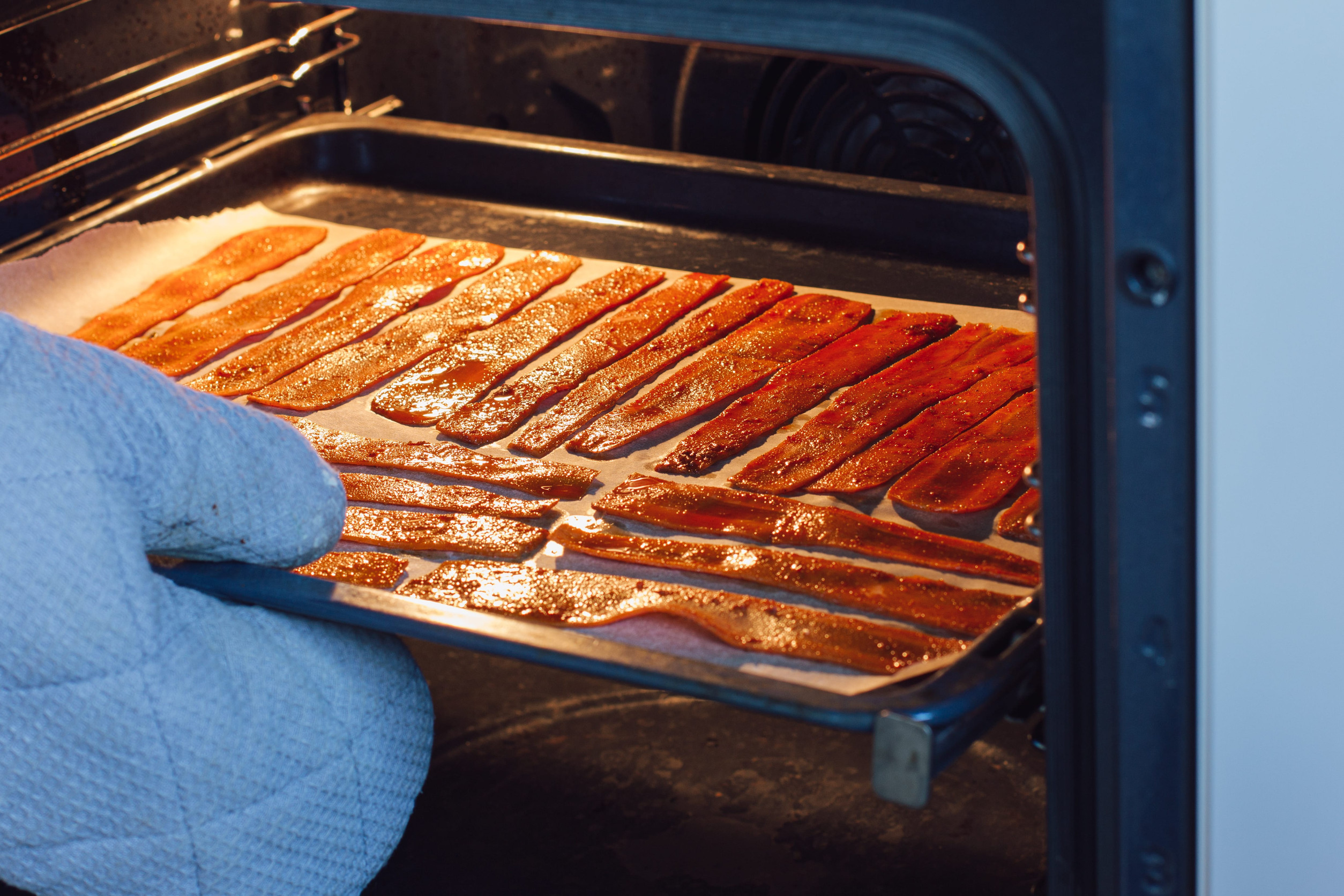
Traditional stovetop cooking certainly works. In fact, generations of home cooks have prepared bacon in frying pans with excellent results.
However, anyone who regularly cooks bacon knows the process can become messy.
As bacon heats, the fat renders and releases grease into the pan. That hot grease can splatter onto the stovetop, nearby counters, and occasionally your hands.
Cooking several strips at once can also become challenging.
If the pan is overcrowded, some pieces may cook more quickly than others. You might find yourself constantly moving strips around or adjusting the heat to prevent burning.
Then comes cleanup.
Even after enjoying breakfast, a greasy frying pan still waits in the sink, and the stovetop may need wiping.
The air fryer offers an alternative by circulating hot air around the bacon while allowing much of the rendered fat to collect below the cooking basket.
That does not eliminate grease or cleanup, but it can make the process more manageable.
For anyone who dislikes standing over the stove first thing in the morning, that alone can make the method appealing.
The 9-Minute Air Fryer Bacon Trick
The method is surprisingly straightforward, and you do not need any special ingredients.
All you need is regular-cut bacon and an air fryer that can handle high-fat foods.
Start by checking your appliance’s instructions, since some manufacturers recommend specific settings or precautions when cooking bacon.
For a typical batch of regular-cut bacon, set the air fryer to approximately 350 degrees Fahrenheit.
Arrange the bacon strips in a single layer inside the basket. Try to avoid overlapping the pieces too much, since crowded bacon may cook unevenly.
Once everything is arranged, cook the bacon for approximately seven to nine minutes.
Check the strips toward the end of cooking, especially if you are using your air fryer for bacon for the first time.
Some machines cook more quickly than others, and thinner slices may finish before the nine-minute mark.
If the bacon needs more cooking, continue in short intervals until it is fully cooked and reaches your preferred crispiness.
Carefully remove the cooked bacon using tongs and place it on a paper towel-lined plate to absorb excess grease.
That is essentially the entire method.
Budget Bytes recommends approximately seven to nine minutes at 360 degrees Fahrenheit for regular-cut bacon, while Food Town suggests a similar cooking time at 350 degrees.
The exact results will depend on your air fryer, bacon thickness, and batch size.
Why the Air Fryer Works So Well
The magic behind air fryer bacon isn’t magic.
Air fryers use rapidly circulating hot air to cook food.
Unlike a frying pan, which transfers heat primarily through direct contact with its cooking surface, an air fryer circulates heated air around the food.
This helps expose more of the bacon to heat without requiring the same amount of manual attention.
Meanwhile, much of the fat released during cooking drips into the appliance’s lower compartment.
That separation can help prevent the bacon from sitting in a pool of grease.
The result is a convenient way to get browned, crispy bacon without an extra frying pan.
Another advantage is that you do not need to pour oil into the air fryer before cooking ordinary bacon.
Bacon already contains fat, which renders as the meat heats.
However, results vary by appliance. Air fryers with smaller baskets may require several batches, and models that circulate air differently may produce uneven results.
The nine-minute method is a useful starting point, not a universal guarantee.
Thick-Cut Bacon Needs a Little More Time
Before tossing every type of bacon into the air fryer, keep one detail in mind.
Not all bacon slices are the same thickness.
Regular-cut bacon generally cooks faster than thick-cut varieties, which contain more meat and fat.
According to Natasha’s Kitchen, thick-cut bacon cooked at 350 degrees Fahrenheit may need approximately 10 to 12 minutes for a crispier result.
That means setting a timer for exactly nine minutes might leave thicker strips softer than expected.
There is nothing wrong with adjusting the cooking time.
The key is to check the bacon rather than assume every package will cook the same.
A particularly powerful air fryer may brown thin bacon quickly, while a smaller appliance may need more time.
For consistent results, avoid overcrowding the basket and follow the manufacturer’s recommendations.
One Important Mistake to Avoid
Although air fryer bacon is convenient, home cooks should understand one issue before trying it.
Bacon releases a considerable amount of fat during cooking.
If that grease gets too hot or contacts heating elements, the appliance can start smoking.
This is especially important when cooking multiple batches without cleaning accumulated grease.
LG’s appliance guidance explains that high-fat foods, including bacon and sausage, can contribute to smoke buildup during air frying.
To reduce problems, use a temperature recommended by your appliance manufacturer, avoid overloading the basket, and remove accumulated grease only after the appliance has cooled sufficiently.
Do not leave the air fryer unattended while cooking bacon.
Also avoid placing loose paper towels or unsecured parchment paper inside the cooking basket. Air circulation can move lightweight materials toward the heating element.
If your appliance manufacturer advises against cooking bacon in that model, follow those instructions instead.
And if excessive smoking occurs, stop cooking and address the problem according to the appliance manual.
The goal is to make breakfast easier, not create another kitchen problem.
Does Air Fryer Bacon Taste Different?
For many bacon lovers, flavor and texture matter just as much as convenience.
The good news is that air fryer bacon can develop a satisfying crispy texture without requiring constant attention.
However, its texture may differ slightly from bacon cooked in a skillet.
Some people prefer stovetop bacon cooked in its own rendered fat, particularly when preparing thick, chewy slices.
Others enjoy the crispier texture produced by circulating hot air.
No single method suits everyone.
In a 2026 Business Insider comparison of several bacon-cooking methods, the reviewer tested stovetop, oven, microwave, and air fryer preparation.
The air fryer proved to be a convenient option, with cooking taking less than 10 minutes after preheating.
For people preparing small batches of bacon, that speed can be particularly useful.
However, anyone cooking breakfast for a large family might prefer an oven, where more bacon fits on baking sheets at once.
Ultimately, the best method depends on how much bacon you are making and the texture you enjoy.
Cleaning Up Is Easier Than You Might Expect
One of the biggest attractions of air fryer bacon is avoiding a greasy stovetop.
Instead of washing a frying pan and wiping grease splatters from nearby surfaces, you generally need to clean the air fryer basket and grease collection area.
Wait until the appliance cools before handling the collected fat.
Then dispose of the grease appropriately and clean the removable parts according to the manufacturer’s directions.
Avoid pouring bacon grease down the kitchen drain, where it can contribute to plumbing blockages.
Some air fryer components are dishwasher-safe, although that depends on the model.
Cleaning after cooking is particularly important because leftover grease can cause odors or smoking during future use.
A quick cleanup after each batch helps keep the appliance ready for the next meal.
Is the 9-Minute Bacon Trick Worth Trying?
If you love bacon but dislike the mess associated with frying it on the stove, the air fryer method is worth considering.
It requires little prep, cooks regular-cut bacon in about seven to nine minutes under ideal conditions, and eliminates the need to stand over a frying pan.
The method also works well when you need just a few strips for breakfast sandwiches, burgers, salads, or other meals.
There are limitations, of course.
You may need extra time for thick-cut bacon, and cooking several batches can take longer than using a large oven.
You also need to monitor grease buildup and follow the appliance’s safety instructions.
Still, for a quick breakfast, the convenience is difficult to ignore.
Sometimes the best kitchen tricks are not complicated recipes or expensive new gadgets. They are simply different ways of using appliances you already own.
And if nine minutes in an air fryer means less time standing over a sizzling pan, that could be one small breakfast change worth making.