Sen. Kirsten Gillibrand is warning that the Trump administration’s decision to end Temporary Protected Status (TPS) for Haitians could create another challenge for an already strained U.S. health care system.
The New York Democrat argues that removing work protections from thousands of Haitian immigrants could lead to fewer caregivers in hospitals, nursing homes, and home health programs at a time when many employers are already struggling to fill critical positions.
Gillibrand says the issue goes beyond immigration policy. She believes it could directly affect patients who depend on health care workers every day.
Gillibrand says Haitian workers fill important health care roles
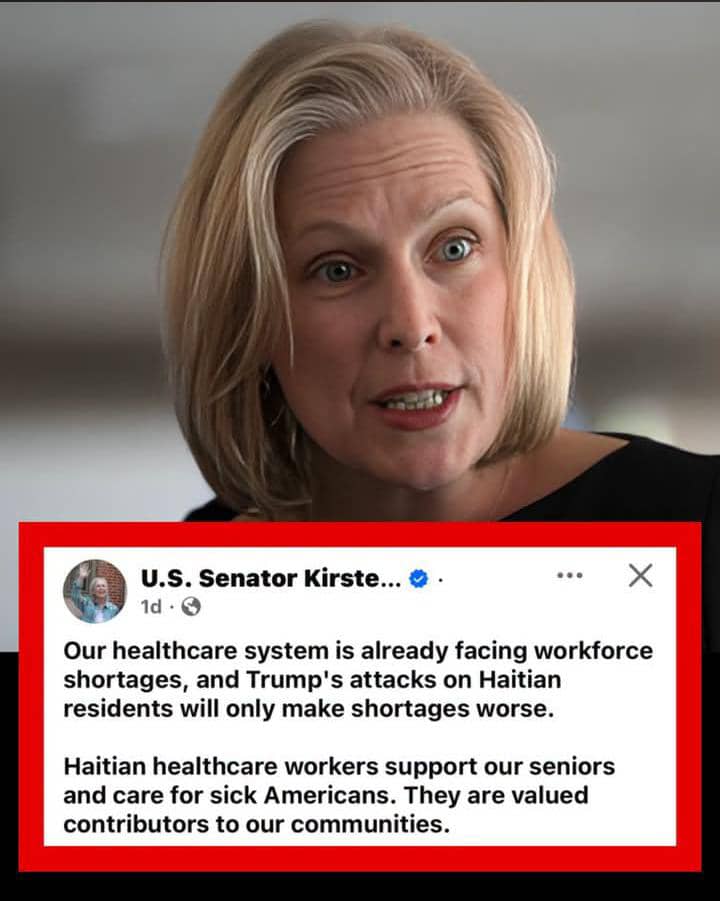
Gillibrand has urged the Trump administration to reconsider ending Haiti’s TPS designation, warning that the move could force many Haitian workers to leave jobs they have held for years.
The senator has pointed to the role Haitian immigrants play in New York’s health care workforce, including jobs as nursing assistants, home health aides and caregivers for elderly and vulnerable residents.
“Ending TPS for Haiti would result in a sudden loss of trusted caregivers for some of New York’s most vulnerable citizens,” Gillibrand said while calling for the protection to be restored.
Her argument centers on a growing problem across the country: the shortage of workers willing and available to provide direct care.
Hospitals, nursing homes and home-care agencies have faced staffing challenges for years. Health care employers have struggled to recruit enough workers as demand continues to rise, especially as the U.S. population grows older.
Haitian TPS holders represent a small but important part of that workforce. In states with large Haitian communities, many have built careers providing daily care to patients who rely on consistent support.
Gillibrand argues that removing those workers could put additional pressure on facilities that are already stretched thin.
The fight over Haiti’s TPS protections
Temporary Protected Status was created by Congress in 1990 to allow people from countries facing dangerous conditions, such as natural disasters, armed conflicts or other emergencies, to legally remain and work in the United States for a limited period.
Haiti received TPS after the devastating 2010 earthquake. The designation was later extended several times as the country faced continued instability, including political turmoil, natural disasters and worsening security concerns.
The Trump administration moved to end Haiti’s TPS protections, arguing that conditions in Haiti no longer met the legal requirements for the program.
The decision has faced criticism from immigration advocates and lawmakers who argue that Haiti remains unsafe for large-scale returns.
The U.S. State Department continues to warn Americans against traveling to Haiti because of serious security concerns, including crime, kidnapping and limited access to health care services.
The Supreme Court later allowed the administration’s TPS decision to move forward, rejecting efforts to keep the protections in place while legal challenges continued.
The ruling does not mean every Haitian TPS holder will immediately leave the country, but it removes the legal protections that allowed many to work and remain in the United States.
Health care leaders worry about losing experienced workers
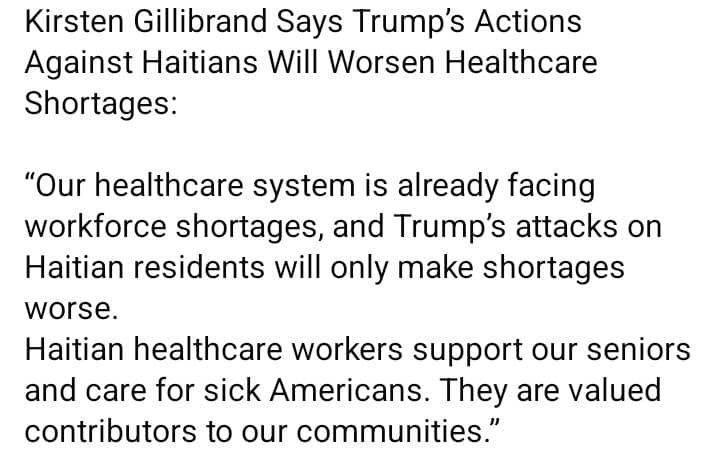
The debate has placed a spotlight on a broader issue facing the health care industry: who will fill essential jobs if experienced workers are forced out?
Direct-care positions, including nursing assistants and home health aides, are among the hardest roles for employers to fill. Many facilities already report difficulties maintaining adequate staffing levels.
Health care experts say immigrant workers make up a significant share of these jobs because they often provide care that requires patience, reliability and close personal contact with patients.
Dr. Steffie Woolhandler, a public health professor at Hunter College, warned that removing workers from an already limited labor pool could make existing shortages worse.
Supporters of ending TPS argue that temporary immigration programs should not become permanent solutions and that immigration laws must be enforced consistently.
Opponents, including Gillibrand, say the immediate impact on communities and essential services must also be considered.
For families who depend on caregivers, the debate is not only about immigration numbers or political arguments. It is about whether a familiar worker will still be available to help an elderly parent, assist a patient recovering at home, or support someone who needs daily care.
As the administration continues its immigration policies, the health care industry is watching closely. The question now is whether removing thousands of Haitian workers will create a new challenge for a system that is already struggling to find enough hands to provide care.