Rhode Island’s coffee milk inspires loyalty because it is more than another way to drink coffee. Made by stirring sweet coffee syrup into cold milk, it connects childhood kitchens, school cafeterias, diner counters and distinctly local vocabulary. It is closer in preparation to chocolate milk than an iced latte, and Rhode Island considers it important enough to have named it the official state drink on July 29, 1993.
Its following also extends beyond a plain glass. Add ice cream and the drink becomes a coffee cabinet, Rhode Island’s name for a coffee-flavored milkshake. The syrup has appeared in desserts and cocktails, while generations of customers have treated their preferred brand as a small declaration of hometown identity. The formula is simple; the traditions surrounding it are considerably richer.
It Is Coffee Milk, Not Coffee With Milk
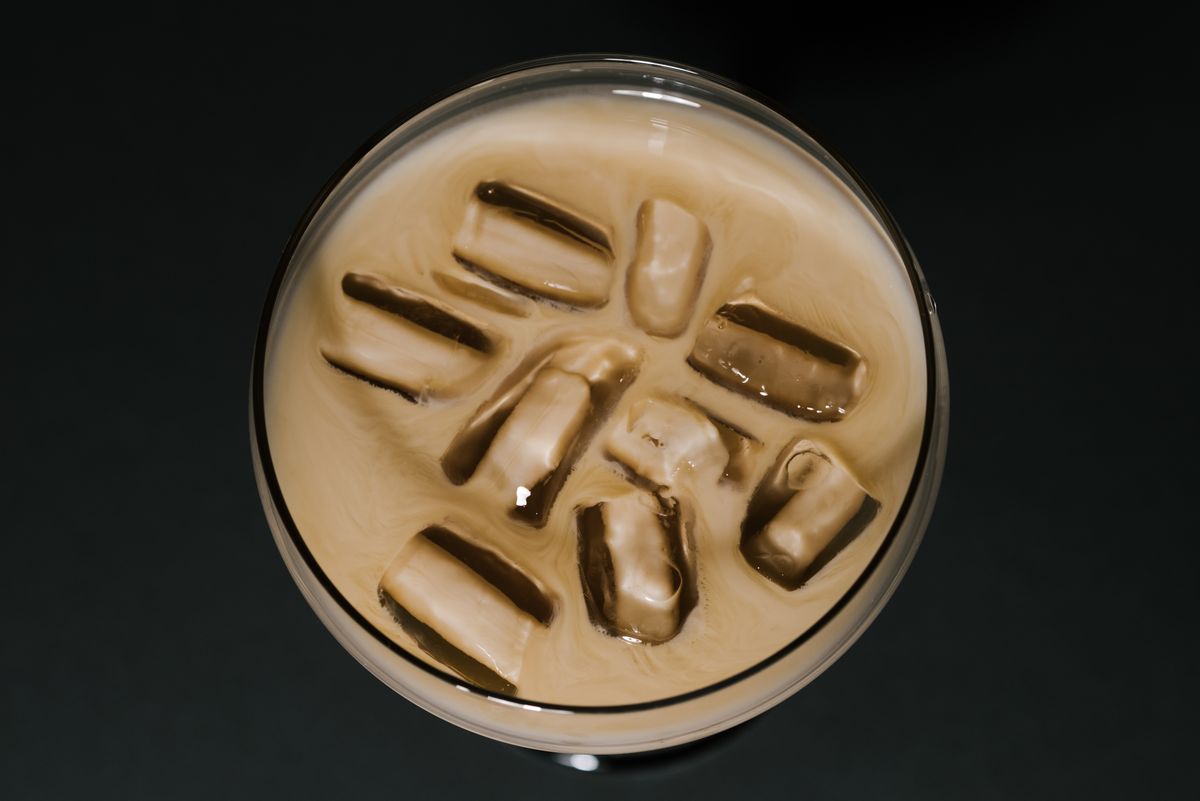
The order of those words matters. Coffee milk begins with milk, flavored and sweetened with concentrated coffee syrup. It does not require brewing espresso or pouring cold coffee over ice. In its familiar form, a spoon does the mixing, leaving a light, sweet drink rather than a thick, frozen dessert with ice cream, even though both rely on the same basic coffee-and-dairy relationship.
That distinction helps explain why coffee milk belongs comfortably alongside lunch instead of functioning only as a morning caffeine ritual. At Providence’s Olneyville New York System, the traditional pairing is hot wieners and coffee milk. Owner Greg Stevens told Imbibe in 2011, “People assume that hot wieners and coffee milk won’t go together. But they try it and find it works somehow. It’s one of those things.”
The business’s enthusiasm was supported by its reported orders: Stevens said coffee milk outsold every other beverage there eight to one in that 2011 account. That is a historical statement about one restaurant, not a current statewide sales figure. Its value is illustrative: a drink unfamiliar to many outsiders was not a novelty item on this menu. Regular customers repeatedly chose it with their meal.
The state designation gave that everyday preference formal recognition. During the 1993 legislative debate, coffee milk prevailed over another Ocean State favorite, Del’s frozen lemonade. Rhode Island’s government confirms the July 29 adoption date. The honor didn’t invent the drink’s popularity; it acknowledged an attachment already built through decades of home use and local food service.
Related: Forget Coffee for a Moment: The Warming Spice That Has Been Used for Centuries
Immigrant Traditions and Syrup Brands Helped Build the Following
Coffee milk’s exact origin is uncertain. Accounts often connect it to Italian and Portuguese immigrant communities and their tastes for strong, sweetened coffee, alongside New England’s existing appetite for coffee-flavored dairy foods. Those connections are plausible historical explanations, not proof of one inventor or a single first glass. Imbibe notes that nineteenth-century publications included recipes called “coffee milk” and coffee syrup, though those preparations were not identical to the modern Rhode Island drink.
Food historian and cookbook author Nancy Verde Barr offered context from Southern Italian traditions: “The children drank what the parents did,” she told Imbibe. “[And] the tradition of sweetening continued [when they came] here.” Her observation helps explain how sweet coffee flavors could become familiar across generations. It should not be stretched into a claim that one immigrant community alone created every part of the beverage’s history.
Commercial syrup made the drink easier to reproduce. Silmo Packing Company in New Bedford, Massachusetts, began selling coffee syrup in 1932. Eclipse followed in Warwick, Rhode Island, in 1938, and Autocrat entered the market in the early 1940s. Autocrat’s founding as a business in 1895 is therefore different from the date it began selling coffee syrup, a distinction sometimes lost in simplified histories.
The brands developed devoted followings. Food writer David Leite, who grew up in a Portuguese-American household in southeastern Massachusetts, recalled, “There were little cliques.” He continued, “If you lived up north you might drink Eclipse, but on the South Coast it was only Autocrat, all the time.” Autocrat eventually acquired Eclipse, bringing the competing labels under the same business without necessarily erasing customers’ preferences.
That loyalty could be more emotional than a tasting comparison suggested. Richard M. Field Jr., then Autocrat’s fourth-generation chairman and president, told Imbibe in 2011, “You would never tell this to a Rhode Islander, but if you mixed up glasses of Autocrat and Eclipse, you’d probably have trouble telling them apart.” That was his assessment, not a published blind-test result, but it captures the difference between brand identity and measurable flavor preference.
The Syrup Gives the Tradition a Life Beyond the Glass
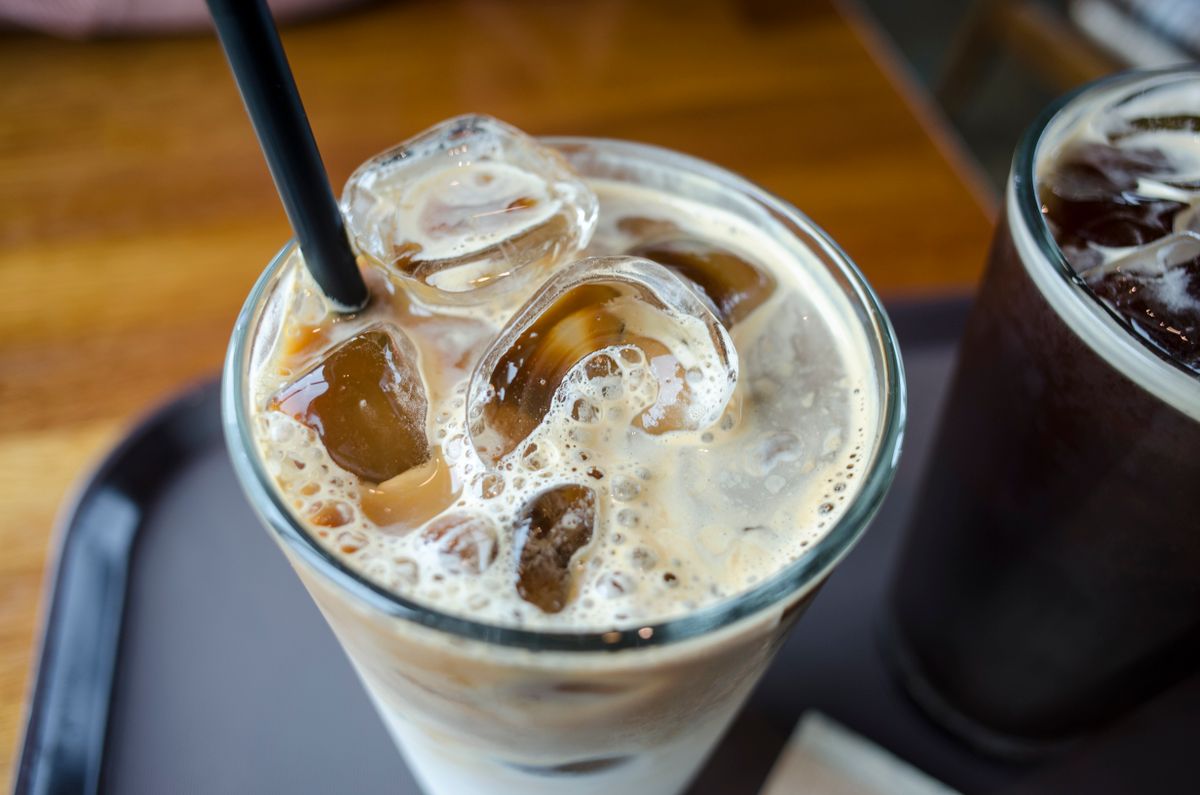
The coffee cabinet is the most direct extension: milk, coffee syrup and ice cream blended into a richer drink. Rhode Island’s official state-symbols page recognizes it alongside coffee milk. The frequently repeated explanation that the name came from where soda-fountain workers stored their blenders is best treated as a naming story, rather than an independently settled etymology. The drink itself is much easier to define than the exact origin of its nickname.
Smaller producers have also offered different interpretations of the syrup. Dave Lanning, founder of Dave’s Coffee, described his approach in a 2019 Imbibe interview: “I really wanted to focus on the quality of the beans, and to only use coffee and cane sugar.” Morning Glory Coffee Syrup’s David and Mary Sylvia likewise developed a product from a family recipe. These examples show a tradition that accommodates new makers, not that every syrup has the same ingredients.
Its flavor has also traveled into food and cocktails. Imbibe documented coffee-milk-syrup cheesecake and a rum-based coffee-milk cocktail at New York’s Violet in 2019. Those are historical menu examples, not recommendations based on verified current availability. They demonstrate how a regional drink can inspire something beyond its original format while preserving a recognizable connection to Rhode Island.
Ultimately, loyalty comes from the relationships around the glass. Leite remembered feeling grown-up as a child drinking sweet, coffee-flavored milk beside his godmother, who was drinking coffee. That memory explains the beverage’s staying power better than calling it merely a retro curiosity. For its admirers, coffee milk is sweet, familiar, and home-specific, a small state’s everyday drink with an identity much larger than its ingredient list.
Other Posts You Might Like
- The 7 Comfort Zones That Are Ruining Your Potential
- 9 Popular Foods That Aren’t As Good As People Pretend
- Boomer Cooking Habits That Younger Generations Don’t Get