A teenager standing at the stove for the first time usually asks the same question: where does a person even start? The sink is full, the recipe card is smudged, and the pan is already warm.
University extension offices have answers. North Dakota State University Extension, University of Illinois Extension and Kansas State University all publish guidance on what young cooks can handle, and together their pages add up to nine solid first skills, from converting cups to tablespoons to whisking a white sauce. Each is described below with the source and its date.

1. Converting Cups to Tablespoons
NDSU Extension’s teen cooking publication opens with measuring equivalents: 16 tablespoons in a cup, 8 tablespoons in a stick of butter and 8 fluid ounces in a cup of milk. The publication, numbered FN706 and written by Sarah M. Wells and Julie Garden-Robinson, is marked as reviewed in August 2021. A teen who knows these three numbers can scale a recipe up or down without guessing. Families fitting kitchen lessons into a busy week may relate to this list of everyday struggles parents share before the holidays, and a list of kitchen checks before Thanksgiving dinner is a handy follow-up for the whole household.
2. Reading and Following a Recipe
University of Illinois Extension’s kids in the kitchen sheet, modified October 2024, says kids ages 8 to 11 can read and follow recipes, and that those ages 12 and up can prepare complex recipes and change them on their own once they feel confident. Kansas State University’s July 2026 fact sheet on cooking with kids at every age lists reading and following a recipe independently for ages 9 to 12. Time management and patience are part of the skill, according to Illinois. A shelf of 20 clever kitchen tricks for home cooks can give a new cook ideas once the basics are down.
The Illinois sheet says teens at this stage can also build basic cooking science, meaning how heat or cold changes food, and learn to pair flavors and textures. It stresses that they still need supervision to stay safe and keep their work sanitary, so a parent in the next room is part of the plan.
3. Whisking a White Sauce
The NDSU publication describes a basic white sauce made from milk, butter and flour, with cheese added for flavor. In its baked macaroni recipe, butter melts over medium heat and flour is whisked in for 3 minutes, with a warning to watch closely so the flour does not burn. Wikipedia’s entry on béchamel sauce says the sauce is made by cooking butter and flour into a roux and slowly heating it with milk, and that béchamel with cheese is known as Mornay. Wikipedia’s page on roux adds that the mixture is usually equal parts fat and flour by weight, and that longer cooking gives a darker, nuttier result with less thickening power.
4. Grating Cheese
The NDSU macaroni recipe calls for shredded mozzarella and grated sharp cheddar, stirred into the sauce off the heat. Kansas State lists using a grater among the tasks that kids ages 9 to 12 can repeat with less supervision once they have learned them.

5. Kneading and Shaping Dough
NDSU’s pizza dough calls for warm water between 105 and 115 degrees Fahrenheit, then about 10 minutes of kneading on a floured surface until the dough is smooth and elastic. The dough then rises in a lightly greased bowl in a warm, draft-free spot until doubled. For teens who get hooked, a roundup of outdoor pizza ovens and a guide to the best pizza peels show where the hobby can lead.
6. Crimping Crust and Arranging Toppings
After the rise, the NDSU recipe has teens punch down the dough, shape it, rest it for 5 minutes and press it out on a 16-inch pan dusted with cornmeal, then crimp the edges. Sauce and toppings go on, and the pizza bakes at 425 degrees Fahrenheit for 15 to 20 minutes. The publication suggests toppings such as green pepper, pineapple, onions, olives, mushrooms and fresh herbs.
7. Tossing Bread Crumbs in Melted Butter
The baked macaroni topping is a small skill with a big payoff: toss half a cup of bread crumbs in 1 tablespoon of melted butter and sprinkle them over the top. The dish bakes at 350 degrees Fahrenheit for about 30 minutes, until the crumbs are lightly browned and crisp, according to NDSU.
8. Blending a Smoothie in Order
NDSU’s smoothie recipe teaches sequence: add the ingredients in the listed order, hold the lid down, blend on low for 30 seconds, then on high for 1 minute. It is a lesson in following directions as much as in using a blender, and it works well for teens who are still nervous about the stove. The publication’s version uses canned mandarin oranges, frozen bananas, frozen strawberries and milk, but the order-and-timing habit applies to any blended drink.
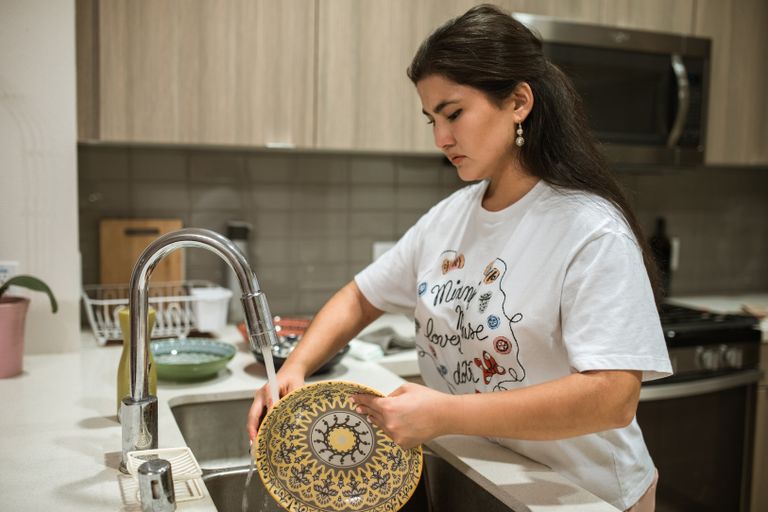
9. Cleaning Up and Staying Careful
Illinois Extension says kids should wash their hands for at least 20 seconds with soap and warm water, keep raw and cooked foods separate, use oven mitts, never leave the stove unattended and use a food thermometer to check cooking temperatures. It also says children can help wash dishes, wipe counters and sanitize surfaces. Kansas State adds that new tasks should be taught step by step, with close supervision at first and more independence as skills grow.
None of the nine skills requires fancy equipment, and every one of them can be practiced on a weeknight. Teens who learn them in order, starting with measuring and ending with cleanup, have the base for most family recipes by the time the next holiday meal comes around.
This article was produced with AI assistance and edited for accuracy against the sources linked above.
Image: Scott Veg – CC BY 2.0/Wikimedia Commons