Your toaster might be switched off, your coffee maker might be sitting quietly on the counter, and your air fryer might have finished cooking hours ago. But there’s one small detail worth checking before you turn out the kitchen lights: are those appliances still plugged in?
Fire-safety experts recommend unplugging small kitchen appliances when they’re not being used, particularly those designed to generate heat.
The advice isn’t limited to one appliance or to bedtime. In fact, the U.S. Fire Administration’s official electrical safety guidance recommends unplugging small appliances whenever they’re not in use.
The guidance isn’t new. The federal agency’s webpage was last reviewed on May 4, 2023, and it doesn’t identify a toaster, air fryer, or coffee maker as the single biggest overnight concern.
Still, the recommendation is especially relevant for households where several countertop appliances are part of everyday cooking.
Why the Toaster Gets So Much Attention
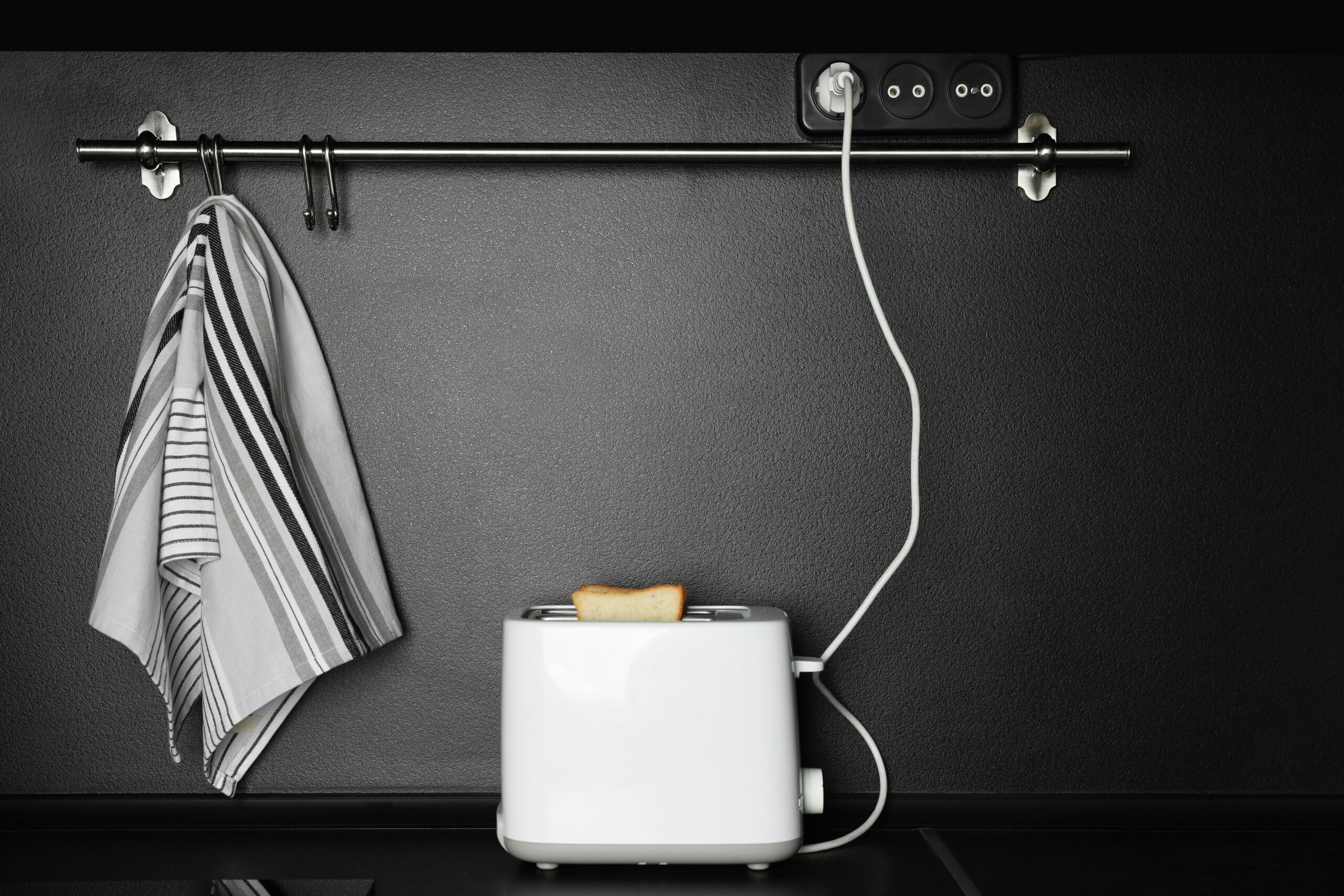
The toaster is one of the simplest kitchen appliances. You put in bread, select a setting, and wait for breakfast. But its familiar appearance doesn’t mean it should be overlooked when you’re finished using it.
In a May 2026 interview published by Simply Recipes, Corey Hannahs, a spokesperson for the National Fire Protection Association, explained why heat-producing appliances deserve particular attention.
Because these devices use electricity to generate heat, an electrical malfunction or accidental activation can create a fire risk. Toasters can also come into contact with nearby combustible materials, including dish towels and oven mitts.
The practical advice is straightforward: unplug the toaster when you’re finished with it and pay attention to what’s sitting nearby.
This is particularly relevant when organizing a kitchen filled with countertop appliances, where limited space can make appliance placement an important consideration.
There’s no need to assume every plugged-in toaster is about to malfunction. The recommendation is a precaution, not a prediction that an incident will occur.
Air Fryers and Countertop Ovens Deserve the Same Attention
Air fryers have become convenient additions to everyday cooking, especially for preparing smaller meals, appetizers, and side dishes.
But they also rely on heating elements and electricity.
In the same Simply Recipes interview, Hannahs included air fryers and tabletop ovens among the appliances he recommends unplugging after use.
The advice also fits with Crafting Your Home’s discussion of appliances that should not share a power strip, including heat-producing kitchen equipment.
Another source offers a manufacturer perspective.
In a Homes & Gardens interview about unplugging air fryers, Ninja executive Kaitlyn Hebert Beauchemin said the company recommends unplugging its air fryer units when they aren’t being used and before cleaning.
That advice doesn’t establish that every model has identical instructions. Owners should consult the manual for their particular appliance.
For households comparing air fryers with countertop toaster ovens for holiday cooking, the electrical setup deserves attention alongside cooking capacity and available counter space.
The basic message is to finish cooking, turn the appliance off, and disconnect it when no longer needed.
Coffee Makers and Electric Kettles Are Also on the List
It’s easy to remember switching off the toaster or air fryer because their heating functions are obvious.
Coffee makers and electric kettles, however, can blend into the everyday kitchen routine.
They may be used first thing in the morning and then left plugged in throughout the day.
Hannahs also identified electric kettles and coffee makers in his appliance-safety recommendations.
He noted that automatic shutoff features can provide an additional precaution, although not every appliance has the same functions.
That distinction matters when choosing between coffee machines or considering the features of an existing model.
For example, comparing single-cup coffee makers with full-pot machines involves different brewing routines and equipment, but the need to follow the manufacturer’s electrical instructions remains.
The recommendation isn’t to stop enjoying convenient kitchen appliances. It’s to treat unplugging them as part of finishing the task.
It’s Not Just About Whether the Appliance Is Switched Off
Unplugging a countertop appliance is only one part of the broader electrical-safety guidance.
The U.S. Fire Administration also advises against overloading outlets, recommends inserting plugs fully into sockets, and says appliances with cracked, damaged, or loose cords should be replaced.
These recommendations apply beyond the toaster.
A kitchen may contain a coffee maker, air fryer, toaster oven, and other equipment, but their plugs fitting into available outlets doesn’t automatically establish that the electrical arrangement is appropriate.
That’s why common mistakes involving household power strips deserve attention when several appliances compete for limited kitchen outlets.
For a typical evening kitchen routine, the practical questions are simple. Have the appliances finished their jobs? Are unused small appliances unplugged? Are the cords in suitable condition? Are outlets being used appropriately?
None requires buying another kitchen gadget.
Does Every Appliance Need to Be Unplugged Before Bed?
No. The official guidance makes an important distinction between small appliances and major household appliances.
The U.S. Fire Administration recommends connecting major appliances directly to wall outlets, identifying refrigerators, stoves, washers, and dryers among those devices.
That is different from its recommendation to unplug small appliances when they’re not being used.
So the takeaway isn’t to disconnect everything in the kitchen before going to sleep.
It’s to understand which equipment the advice concerns and to follow the appropriate instructions.
There is also no verified basis in the reviewed sources for claiming that firefighters nationwide have identified one particular countertop appliance as the leading cause of overnight kitchen fires.
A toaster might be the focus of one article, while an air fryer receives attention in another. The official recommendation is broader than either headline.
A Small Step Worth Adding to Your Kitchen Routine
For anyone who regularly prepares breakfast, makes coffee, or uses an air fryer for dinner, unplugging a small appliance after use can become another part of shutting down the kitchen.
The recommendation comes from established federal guidance and is reinforced by named fire-safety and appliance experts.
It doesn’t require replacing working equipment, abandoning favorite cooking methods, or assuming that an unused appliance is automatically dangerous.
Instead, it means paying attention to how everyday kitchen devices are connected and following the instructions that apply to them.
Before turning out the kitchen lights, make sure the small appliances you’ve finished using are unplugged—not just switched off.