Abdul El-Sayed won Michigan’s Democratic primary on Wednesday, giving progressives a major Senate victory in one of the country’s most competitive political states.
The result arrived hours after Pennsylvania Sen. John Fetterman warned that socialists, online influencers and anti-Israel activists were pulling the Democratic Party away from its traditional base. Fetterman made his remarks Tuesday at a pro-Israel student conference in Washington.
El-Sayed narrowly defeated Rep. Haley Stevens after a costly and bitter campaign. He will face Republican Mike Rogers in November for the seat being vacated by retiring Democratic Sen. Gary Peters.
El-Sayed Secures Michigan Nomination
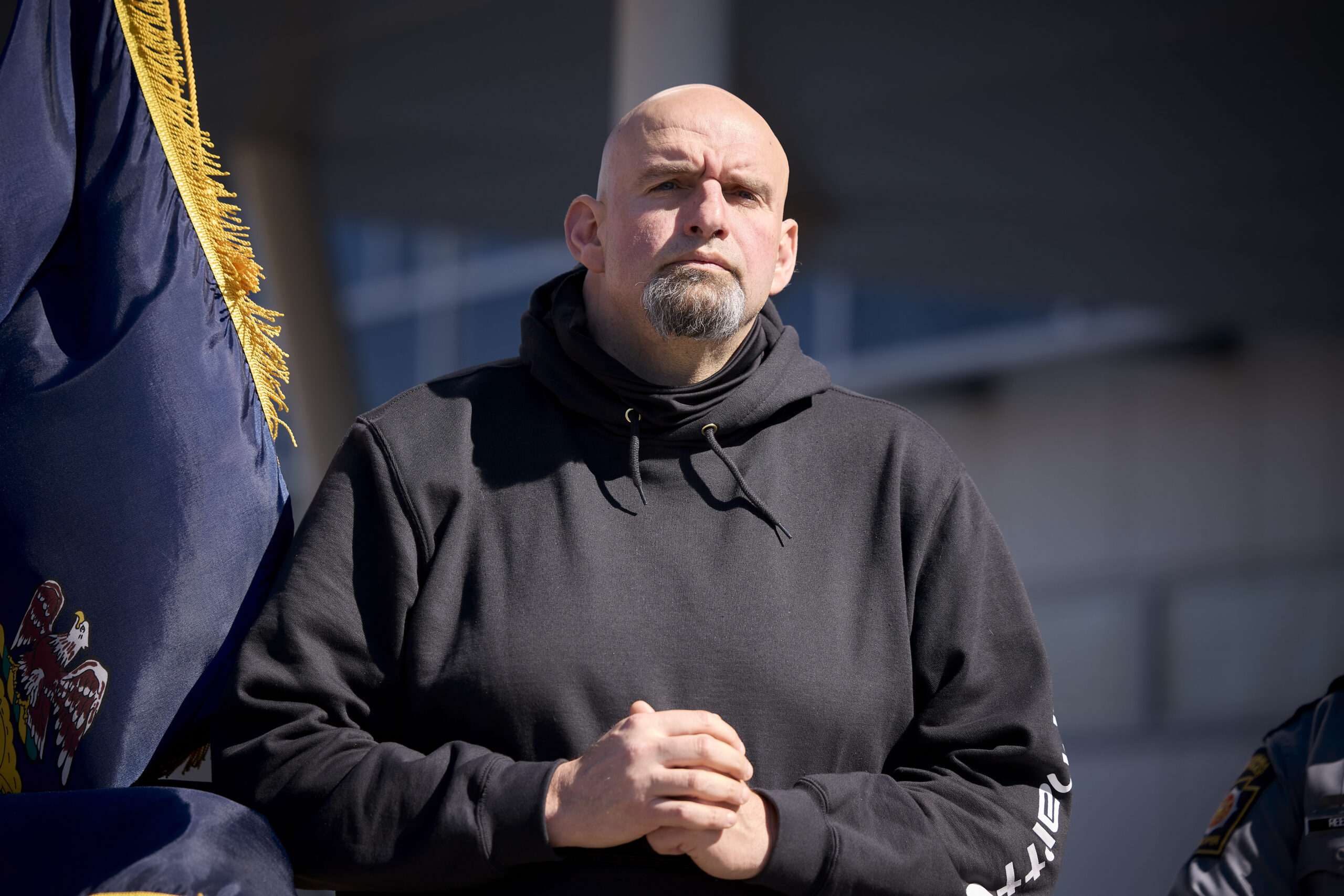
Governor Tom Wolf via Wikimedia Commons licensed under CC BY 2.0
El-Sayed, a physician and former Detroit health director, ran on Medicare for All, higher taxes on wealthy Americans and major campaign finance changes.
He also called for ending U.S. military assistance to Israel. That position separated him sharply from Stevens, who defended continued support for Israel and emphasized her experience in Congress.
Stevens received backing from several prominent Democratic leaders and outside political groups. Her supporters presented her as a stronger general election candidate with experience winning suburban voters.
El-Sayed built his campaign around frustration with corporate influence and the cost of health care. He received support from Sen. Bernie Sanders, Rep. Alexandria Ocasio-Cortez and other leading progressives.
More than 1.5 million votes were counted in the race. El-Sayed held a lead of fewer than 15,000 votes when the contest was called, leaving Democrats with little time to repair divisions before the November election.
Stevens conceded and urged her supporters to back El-Sayed. Party leaders also called for unity as Republicans prepared to focus on his positions involving health care, Israel and government spending.
Fetterman Criticizes Online Left
Fetterman used his Washington appearance to criticize the political influence of Hasan Piker, a left-wing commentator with millions of followers across Twitch and other platforms.
The Pennsylvania senator said Democrats should not elevate a political figure simply because that person attracts a large online audience. He also criticized Piker’s past comments about Mao Zedong, communism and Cuba.
Piker supported El-Sayed and appeared during events connected to his campaign. El-Sayed has not identified himself as a democratic socialist, although several socialist leaders and organizations supported his candidacy.
Fetterman argued that such associations could damage Democrats among moderate and independent voters. He said communist beliefs should remain outside the boundaries of the Democratic Party.
His warning reflected a growing conflict over the role of online political personalities. Streamers and podcasters can now introduce candidates to millions of younger voters without relying on traditional party organizations.
That influence also gives political opponents access to years of controversial videos and comments. Candidates may benefit from a commentator’s audience while facing questions about views they have not personally endorsed.
Israel Divides Democratic Candidates
Fetterman also focused heavily on Israel, an issue that has created one of the deepest divisions inside the Democratic Party.
He said some activists now use the word “Zionist” as an insult and pressure Democrats to qualify their support for Israel. Fetterman has remained one of Israel’s strongest Democratic defenders since the October 7, 2023, Hamas attack.
El-Sayed represents a different position within the party. His campaign argued that Washington should end military support for Israel and place greater emphasis on Palestinian rights and civilian suffering.
Recent polling found that fewer Democrats support continued aid to Israel than in previous years. A national survey found only 16% supported continued U.S. military and economic assistance, while 57% opposed it.
That shift is particularly strong among younger and more liberal Democrats. It has helped candidates who challenge long-standing U.S. policy gain support in competitive primaries.
The debate is no longer limited to a small activist group. Opposition to military assistance has become a significant position within the Democratic electorate, even as many party leaders remain committed to the U.S.-Israel relationship.
Missouri Delivers Different Result
Progressives won in Michigan, but voters delivered a different result in Missouri.
Rep. Wesley Bell defeated Cori Bush in the Democratic primary for Missouri’s 1st Congressional District. Bush was seeking to regain the seat she lost to Bell in 2024.
Bush entered Congress as a member of the progressive group known as the Squad. She became a leading critic of Israel’s military operations in Gaza and opposed continued U.S. weapons support.
Bell ran as a more pragmatic Democrat focused on district services, health care and economic concerns. He supports the U.S.-Israel relationship while also criticizing some decisions made by Israel’s government.
The two results showed that Democratic voters are not moving in one uniform direction. Michigan voters selected a progressive statewide nominee, while Missouri voters kept a more moderate incumbent.
Local political records also shaped the outcomes. Bell entered the race as a sitting member of Congress, while Bush asked voters to reverse the decision they made two years earlier.
Democratic Voters Move Left
The party’s ideological direction has changed steadily over the past decade. A national survey found that 71% of Democrats identified as liberal, up from 55% in 2012. The share describing themselves as conservative fell from 33% to 16%.
Liberal Democrats also expressed strong support for government-provided health care and higher taxes on billionaires and large corporations. Those positions closely match major parts of El-Sayed’s platform.
The polling does not show widespread Democratic support for communism. It does show a party increasingly comfortable with larger government programs, aggressive taxation of wealth and reduced military involvement abroad.
That distinction will shape the debate surrounding Fetterman’s warning. Republicans will likely use terms such as socialist and communist broadly, while progressive Democrats will argue that their economic policies address public frustration with rising costs.
Iran Deepens Fetterman’s Split
Fetterman has also broken with Democrats over Iran. He supported military action against Iranian nuclear facilities and defended President Donald Trump’s approach. He argued that strikes were justified if Iran was attempting to develop a nuclear weapon.
Fetterman later voted against the resolution seeking to limit unauthorized U.S. military involvement involving Iran. He was the only Democrat to oppose the measure.
Most Senate Democrats argued that Congress should approve any expanded military operation. Their position focused on presidential war powers rather than support for Iran’s government or nuclear program.
Fetterman’s stance has strengthened his relationship with pro-Israel organizations and some Republican lawmakers. It has also placed him outside his party’s mainstream on Middle East policy.
El-Sayed now enters a general election that will test whether a progressive platform can win statewide in Michigan. His campaign must unite Stevens supporters while responding to Republican attacks over Israel, spending and his political allies.
Fetterman’s warning will remain part of that debate. The November result will show whether Michigan voters view El-Sayed as an economic reformer or as a candidate positioned too far from the political center.