Some breads arrive in a basket and wait politely on the sidelines. Injera has a bigger role. At an Ethiopian meal, the soft, spongy flatbread can form the foundation beneath the food, scoop up a mouthful of stew and absorb the sauce left behind. It is not simply something served with dinner. Its texture and flavor help shape how the meal is eaten, turning the bread into an essential part of every bite.
Traditionally made with teff, injera has a pleasantly sour character developed through fermentation. Its distinctive surface is covered with small holes, while the bread itself stays flexible enough to tear and fold around food. Injera is central to Eritrean cuisine as well as Ethiopian cooking, so its significance extends beyond a single national table. Understanding what it does makes that first shared platter much less mysterious, and considerably more inviting.
The Flavor Starts Before the Bread Reaches the Griddle
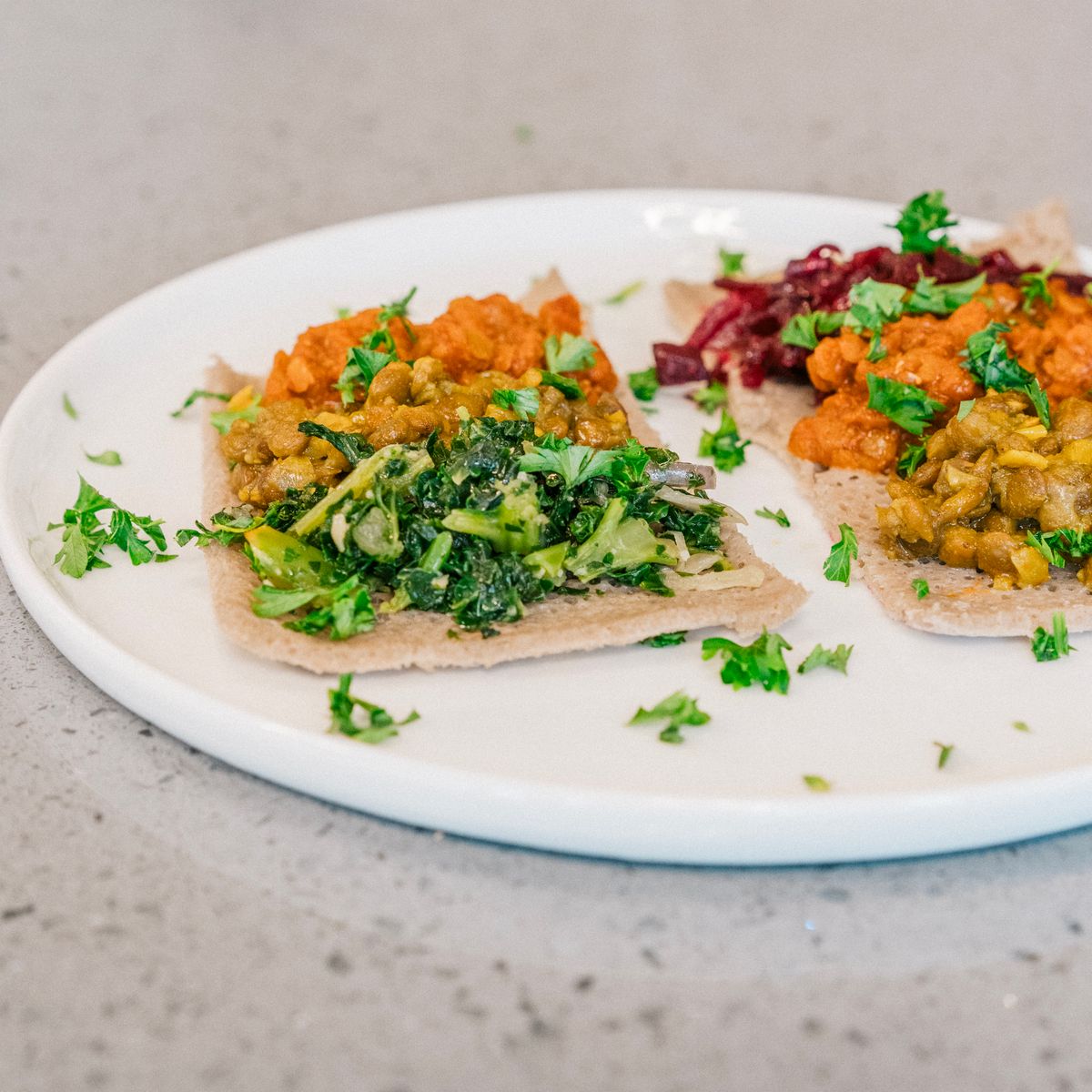
Teff is the starting point for traditional injera. The tiny grain is ground into flour and mixed with water, then the batter is allowed to ferment before cooking. Smithsonian describes a process lasting several days, during which the batter develops its characteristic sour aroma. That time is not an optional pause between mixing and cooking. It gives injera the tang that distinguishes it from an ordinary pancake or unleavened flatbread.
No single timetable governs every kitchen. New York City’s Tsion Café, for example, says its injera undergoes a three- to five-day fermentation process. Teff producer Maskal Teff similarly describes batter resting for days before it is poured in spirals onto a hot cooking surface called a mitad. The shared principle is slow preparation: a finished round may look simple, but its flavor begins developing well before anyone sits down to eat.
Cooking turns that fermented batter into injera’s recognizable, porous surface. As the batter bubbles and steams on the hot mitad, it develops a lace-like appearance rather than the smooth finish of many familiar flatbreads. That sponginess helps at the table, where you can tear it and serve it with sauces. Its structure is therefore not just a visual signature. The way injera is made directly supports its role during the meal.
Teff is naturally gluten-free, but that does not make every restaurant’s injera gluten-free. Smithsonian notes that versions can contain wheat or barley, and Tsion Café explicitly offers both 100% teff injera and a teff-and-wheat blend. Anyone avoiding gluten should ask which version is being served rather than relying on the name alone. Different flour combinations exist, so checking the ingredients is more useful than assuming every round follows the same formula.
Bread, Serving Surface and Scoop in One
The easiest way to understand injera’s function is to look at the arrangement of the meal. Stews, vegetables and other dishes are placed over a broad round of bread, often with additional injera available for eating. Diners tear off pieces and use them to gather the food. As Smithsonian explains, injera functions as both a plate and a utensil. That description is practical, not figurative: the bread is part of the serving arrangement and part of the mouthful.
Tsion Café puts the relationship plainly, describing injera as “both the base of many dishes and the utensil which we use to enjoy our meat and veggies.” At its tables, the accompaniments include red lentils, chickpeas, collard greens, yellow split peas and a cabbage, carrot and potato combination. Those choices illustrate how much variety the bread can carry. Injera is not reserved for one signature stew; it connects multiple textures and fdeliberately lavors across the
Its sourness also means it contributes something beyond convenience. A bite brings together the flavor of the bread and whichever stew or vegetable it gathers, rather than delivering the topping on a neutral carrier. Maskal Teff identifies that tang, soft texture and delicate bubbles as defining characteristics of traditional injera. When you eat it with the food, you are experiencing the intended combination, not using the bread as disposable packaging around the “real” dinner.
Then there is the injera underneath everything. As the meal progresses, that bottom layer absorbs the sauces placed above it, becoming part of the food rather than something to leave behind. The Smithsonian highlights this absorbent quality, describing injera as both a sponge and a utensil. The platter’s foundation is edible, too, so the bread beneath the stews serves a purpose throughout the meal.
Related:8 Old-School Pantry Ingredients That Are Quietly Making a Comeback
A Shared Meal With Its Own Language of Hospitality
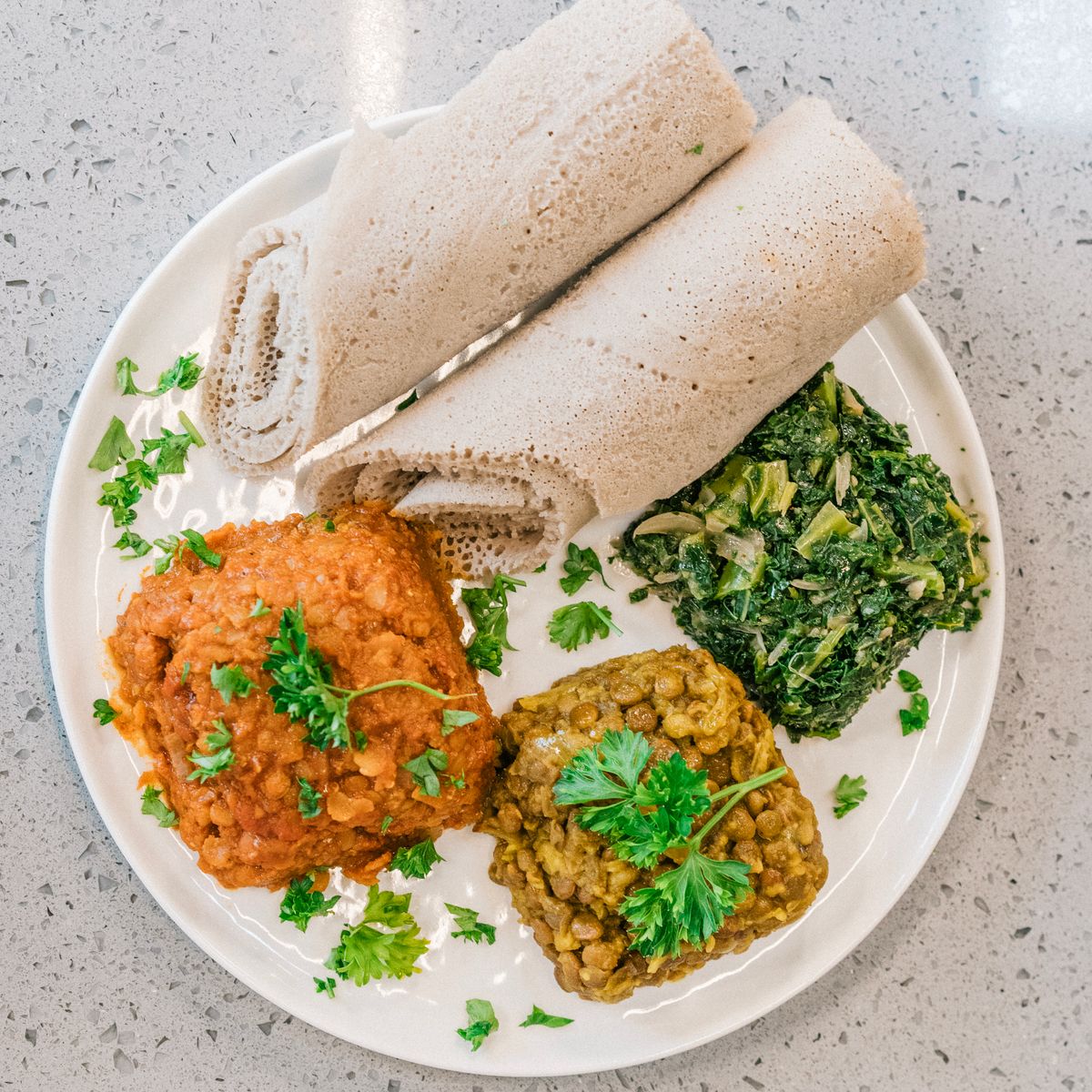
Injera’s role is social as well as practical. Maskal Teff describes families and friends gathering around woven baskets called mesobs, and sharing food from a single round of bread. That arrangement puts the meal in a shared space rather than dividing everything into separate, self-contained plates. It helps explain why describing injera only by its ingredients misses something important: the bread supports a way of coming together, not merely a way of serving carbohydrates.
One especially meaningful expression of that connection is gursha, the gesture of feeding another person a prepared mouthful. Tsion Café explains it this way: “Not only do we eat with our hands, we literally feed each other with delicate gurshas, mouthfuls of food, as a sign of love.” It is not simply another way to scoop up stew; part of the dining element is offering the bite to someone else, making affection part of the meal itself.
For someone encountering Ethiopian food for the first time, that combination of flavor, texture and shared eating is the real introduction. Injera’s tang comes from fermentation, its porous surface welcomes sauce, and its flexibility makes it useful for gathering food. Those qualities all meet at the table. What looks like a generous round of bread does several connected jobs, and the pleasure lies in eating it with everything it was made to accompany.
Other Posts You Might Like:
- 6 Ways to Declutter Your Pantry and Maximize Space
- 6 Pantry Essentials to Toss for a Healthier Kitchen