A Georgia couple’s public break with MAGA is not just another political regret story. It is a warning sign wrapped in hard numbers: federal job cuts, falling trust, shifting independents, and growing voter frustration are now colliding inside households that once believed Donald Trump’s movement would protect them.
Ron and Chrissey Kelley were not casual Trump voters. They were loyal supporters. They believed the message. They accepted the stolen election claims. They defended the January 6 rioters. They watched conservative media, repeated the arguments, and lived inside the political identity that MAGA built for millions of Americans.
Then the policy consequences reached their own front door.
Ron, a 55-year-old construction analyst for the Department of Housing and Urban Development, said his turning point came after Trump returned to office and federal workers became targets of sweeping government cuts and new oversight. He said he was furloughed for 43 days as Elon Musk’s Department of Government Efficiency, known as DOGE, carved through federal agencies.
That personal shock is now part of a larger data story. The federal workforce shrank sharply during Trump’s first year back in office. Polls show weakness among independents, rural voters, and voters worried about the cost of living. Gallup data shows Americans are identifying as independents at a record level. Pew data shows conservative news habits remain highly concentrated, especially around Fox News.
The Kelleys’ break with MAGA feels emotional, but the numbers behind it are structural.
The Georgia MAGA Breakup Fits a Bigger Federal Worker Backlash
Ron Kelley’s story cuts through political talking points by turning an abstract policy fight into a paycheck problem. For years, many Trump supporters backed promises to “drain the swamp,” shrink government, and punish the “deep state.” But for federal employees in red and purple states, those slogans can become lost income, unstable careers, and sudden anxiety at the kitchen table.
This is the political risk for Trump and MAGA: many federal workers do not live in blue Washington neighborhoods. They live in Georgia, Texas, Florida, Ohio, Pennsylvania, North Carolina, Virginia, and other states where federal jobs support mortgages, schools, grocery budgets, churches, and small-town economies.
In Georgia alone, federal employment is large enough to matter locally. More than 100,000 federal employees live or work in the state, and a large share are concentrated around Atlanta, Augusta, Savannah, and Columbus. These are not faceless bureaucrats. They are analysts, inspectors, veterans, engineers, public safety workers, housing staff, defense employees, administrative workers, and specialists whose paychecks move through local economies every two weeks.
When voters hear “cut government,” they may imagine waste. When the cuts hit home, they see a spouse furloughed, a delayed payment, a forced career decision, or a retirement plan suddenly under pressure.
That is the gap where political loyalty can crack.
Ron and Chrissey Kelley Became the Kind of Voters Campaigns Fear Losing
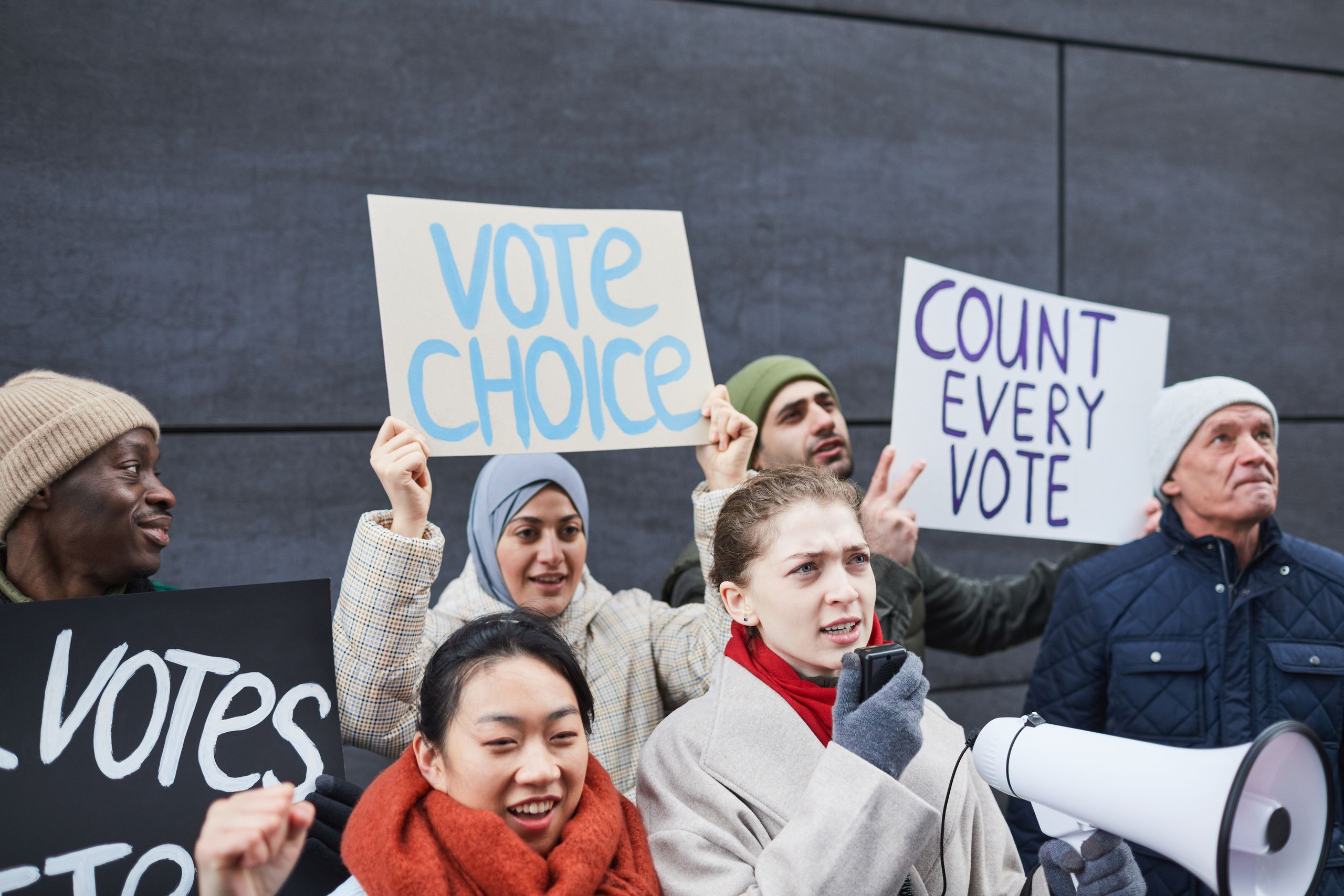
The most damaging defections are not from people who always disliked Trump. They are from former believers who can explain the movement from the inside.
Ron Kelley admitted he bought into claims about the 2020 election. He said he once viewed January 6 rioters as patriots. Chrissey Kelley described years of being “spoon-fed” through conservative media. Their reversal is powerful because it does not sound like an outside partisan attack. It sounds like a confession from inside the house.
For campaigns, voters like this matter because they carry credibility in circles Democrats often struggle to reach. A lifelong Republican who says, “I was wrong,” can speak to another Republican in a way a Democratic strategist cannot.
This does not mean millions of Trump voters will suddenly switch parties. American politics rarely moves that cleanly. But modern elections are often decided by small shifts: a few voters staying home, a few independents breaking differently, a few suburban households reconsidering, a few working-class voters deciding that the chaos now costs too much.
That is where the data becomes important.
Recent polling has shown Trump’s approval under pressure, especially on cost-of-living concerns. Rural approval has softened from earlier levels. Independents are drifting in ways that should alarm Republicans. And Democrats have gained ground in some national ballot measures as voters weigh economic instability against partisan loyalty.
The Kelleys are not proof that MAGA is collapsing. They are evidence that pain can travel through the same base that once treated Trump as politically untouchable.
Federal Cuts Are No Longer a Washington Story
For years, attacks on the federal workforce were politically easy because they were sold as attacks on Washington waste. But the federal workforce is geographically spread across America.
That matters.
A federal worker in Georgia may buy from a local grocery store, pay property taxes, hire a contractor, send children to public school, and support nearby restaurants. A furlough does not stop at the employee. It spreads into household budgets and local businesses.
This is why the Kelleys’ story has a stronger local angle than it first appears. A HUD worker in Georgia who is being furloughed is not just a government management story. It is a Georgia family finance story. It is a homeowner’s story. It is a retirement-planning story. It is a local consumer story.
When federal cuts are discussed on television, they sound ideological. When they arrive in a household, they become arithmetic.
A missed paycheck changes how a family shops.
A furlough changes how a couple talks about bills.
A hiring freeze changes how younger workers view public service.
A sudden agency shake-up changes whether experienced workers stay or leave.
That is the kind of reality that can move voters who once ignored every warning because the warnings seemed aimed at someone else.
Conservative Media Habits Help Explain the Slow Wake-Up
Chrissey Kelley’s comment about being “spoon-fed” points to another data-backed issue: Republicans and Democrats often live in very different information environments.
Pew research has shown that Republicans are more concentrated around a smaller group of news sources, with Fox News standing far above other sources for regular Republican news consumption. Democrats, by contrast, tend to spread their attention across a wider mix of mainstream outlets.
That does not mean every conservative voter believes every claim they hear. It does mean political reality can become heavily filtered. If voters repeatedly hear that government cuts will only punish waste, immigrants, Democrats, or faceless elites, they may not fully process the risk to their own jobs, benefits, agencies, communities, or family members.
The Kelleys’ story is built on that delayed recognition.
For years, the enemy was somewhere else. Then the impact came home.
That pattern is politically dangerous because it creates a delayed backlash. Voters may not reject a policy when it is announced. They reject it when it changes their life.
Independent Voters Are Becoming the Real Battlefield
The Kelleys’ political movement after leaving MAGA also reflects a wider national shift. Ron now says he votes Democratic. Chrissey identifies as independent but has voted Democratic multiple times.
That matters because independent voters are now central to American politics. Gallup data has shown that a record share of Americans identify as independent. This does not automatically mean Democrats benefit. Many independents still lean Republican. But it does mean party loyalty is becoming more flexible, especially when voters feel personally betrayed.
MAGA was built on loyalty. The current danger for Republicans is that loyalty may be weaker when voters connect policy decisions to their own financial stress.
This is especially true for voters who supported Trump as a disruption candidate. Many did not necessarily vote for a detailed governing blueprint. They voted for anger, change, punishment, border control, lower prices, and the feeling that someone was finally fighting for them.
When that fight becomes a furlough, the emotional contract changes.
The Cost-of-Living Problem Makes the MAGA Defection Story Bigger
The Kelleys’ political turn is not happening in a vacuum. Many Americans are already frustrated by prices, housing costs, food bills, insurance premiums, fuel costs, and general financial pressure.
That environment makes every government disruption feel sharper.
If household budgets were comfortable, a furlough might be irritating but manageable. In a high-cost economy, it can feel like betrayal. A family already dealing with grocery inflation, rent pressure, mortgage anxiety, medical bills, car payments, and rising insurance costs has less room for political patience.
This is why voter anger over federal cuts can overlap with broader economic dissatisfaction. People rarely separate politics into neat categories. They do not say, “This is only about DOGE,” or “This is only about inflation,” or “This is only about Trump’s executive orders.” They feel the whole pile at once.
A voter who once supported MAGA may start asking a simple question: “Is my life better because of this?”
If the answer becomes no, the movement has a problem.