A sudden discovery that deepens unanswered questions in a busy city corridor
A death investigation is underway in Tampa after a man found dead has drawn attention across the city as authorities work to understand what happened on a well-traveled stretch of West Martin Luther King Jr. Boulevard. The case unfolded on Saturday evening when officers responded to an emergency call involving an unresponsive man. The incident quickly escalated into a full-scale investigative response.
The focus keyword, death investigation underway in Tampa after man found dead, now defines a case that remains open, uncertain, and under active review. Police have not released the man’s identity, and they have not confirmed how or why he died. That absence of clarity has intensified public curiosity while investigators maintain procedural caution.
In moments like this, early details often shape public perception long before facts are confirmed. However, investigators in Tampa continue to emphasize verification over speculation. The city now waits for answers while forensic teams and detectives follow a structured process designed to rebuild the final hours of an unknown life.
The evening timeline that triggered an urgent police response
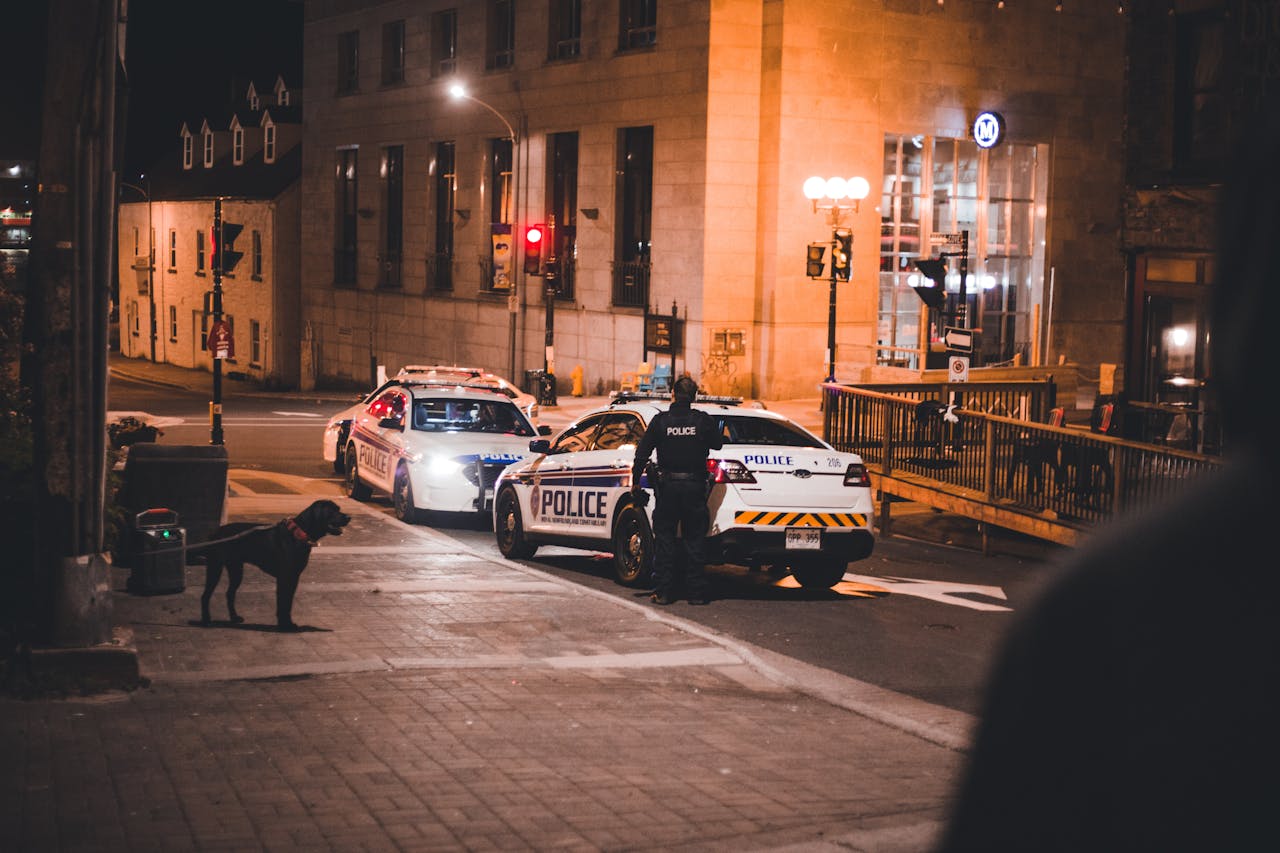
The case began at approximately 6:18 p.m. when the Tampa Police Department received reports of an unresponsive individual in the 1900 block of West Martin Luther King Jr. Boulevard. Officers arrived within minutes and located a man who showed no signs of life. Emergency responders confirmed the death at the scene shortly afterward.
The timing of the incident places it within a high-activity window for the area. Evening hours on this corridor often bring a mix of commuters, pedestrians, and local business traffic. That activity increases the likelihood that witnesses or surveillance systems may hold critical fragments of the timeline.
Investigators now face a familiar challenge in urban death investigations. They must reconstruct a narrow sequence of events from limited initial observations. Every minute before the discovery becomes important, especially when no immediate cause of death is visible at the scene.
A corridor shaped by movement, surveillance, and unanswered moments
West Martin Luther King Jr. Boulevard serves as a major artery through Tampa, connecting residential zones with commercial districts and transit routes. This constant flow of activity creates both opportunity and complexity for investigations. It also means that dozens of potential witnesses may have passed the location within a short timeframe.
In cases like this, surveillance coverage often becomes the backbone of early reconstruction. Investigators typically review business cameras, traffic systems, and transit footage. These sources can reveal movement patterns that human memory alone cannot reliably capture.
The death investigation underway in Tampa after a man was found dead now depends heavily on whether such visual evidence exists and whether it captures the critical window before the discovery. Even a brief recording of movement near the scene could shift the direction of the case. Without it, investigators must rely more heavily on forensic science and environmental clues.
What authorities are confirming, and what remains deliberately withheld
At this stage, police have confirmed only the discovery of the body and the initiation of an active investigation. They have not released the man’s name, age, or background. They have also not indicated whether they suspect foul play or natural causes.
This level of restraint reflects standard investigative procedure. Early disclosure can interfere with witness testimony or compromise the interpretation of evidence. Authorities instead focus on securing the scene and establishing verified facts before drawing conclusions.
The absence of key details has created a gap filled by public speculation. However, investigators consistently avoid early classification in cases involving sudden death. The death investigation underway in Tampa after a man was found dead remains open-ended, with all possibilities still under consideration.
The medical examiner’s role in defining what actually happened
The next major development in the case will come from the Hillsborough County Medical Examiner’s Office. The office will conduct an autopsy to determine the cause and manner of death. This step is essential in distinguishing between natural medical events, accidental causes, and external factors.
Toxicology testing may take several days or even weeks, depending on laboratory workload. These results often determine whether investigators expand their inquiry or close the case as a non-criminal death. Until then, the investigation remains in an observational and evidence-gathering phase.
Medical examiners also examine environmental conditions, injuries, and physiological indicators. These findings help reconstruct not only how a person died, but sometimes even what they experienced in the final moments. In urban cases like this, those details often become the turning point in the investigation.
Community awareness and the value of fragmented evidence
Urban investigations often depend more on community awareness than on dramatic breakthroughs. In busy corridors like West MLK Jr. Boulevard, dozens of people may pass through without realizing they have witnessed something relevant. A brief glance, an unusual stop, or a parked vehicle can become meaningful when placed into a timeline.
Authorities have encouraged anyone with information to come forward. Even small details can help narrow down the time window before discovery. Investigators often piece together cases through fragmented accounts that only make sense when combined.
The death investigation underway in Tampa after a man was found dead now extends beyond the immediate scene. It becomes a network of possible observations, digital footprints, and environmental traces. Each piece adds structure to a timeline that remains incomplete.
Why early-stage death investigations remain deliberately uncertain
Investigators avoid premature conclusions because early assumptions can distort the interpretation of evidence. In many cases, initial appearances do not match final autopsy results. A scene that appears suspicious may later reveal a medical explanation, and vice versa.
This uncertainty is why law enforcement typically uses broad language in early statements. They confirm facts only when they can support them with evidence. This disciplined approach protects both the integrity of the investigation and the accuracy of public reporting.
In Tampa, this approach is especially important given the corridor’s high level of activity. Multiple unrelated factors can intersect in a single location at any given time. The investigation must therefore separate coincidence from causation with careful precision.
A city waiting for clarity while science and time do their work
As the investigation continues, the focus shifts from immediate response to long-term analysis. Forensic results, witness interviews, and surveillance review will gradually shape the narrative. Each stage reduces uncertainty, but only step by step.
For residents and observers, the case reflects a broader reality of urban life. Sudden deaths in public spaces often unfold faster than explanations can be confirmed. The gap between discovery and understanding is where investigations do their most important work.
The death investigation underway in Tampa after a man was found dead remains unresolved, but it is not without direction. Each procedural step moves it closer to clarity, even if that clarity takes time to arrive.
In the end, the unanswered questions surrounding this case highlight a simple but difficult truth about public space and human vulnerability. In a city that never truly slows down, moments of stillness often carry the most complex stories, waiting quietly for science and investigation to reveal what first appeared unknowable.