A powerful earthquake turned an ordinary Monday morning into a national catastrophe, leaving families waiting beside mountains of rubble for news of missing loved ones.
A magnitude 7.4 earthquake struck western Colombia at about 7:34 a.m. local time on August 10, killing more than 100 people and injuring hundreds. Officials warned that the death toll could continue to rise as rescue teams reached damaged communities and searched collapsed buildings.
The disaster hit several major cities, including Cali, Pereira, Manizales and Quibdó. According to Colombia’s Geological Service, it was the strongest earthquake recorded in the country during the 21st century. The shaking was also felt in parts of Ecuador, Panama and Venezuela.
A Morning of Panic Across Western Colombia
The earthquake’s epicenter was near San José del Palmar, a community in Colombia’s Chocó department about 250 miles west of Bogotá. The U.S. Geological Survey measured the quake at magnitude 7.4 and warned of potentially widespread damage.
For residents across western Colombia, the danger arrived with little warning. Buildings shook violently, walls cracked, and frightened people rushed into streets. In the hardest-hit areas, entire structures collapsed before occupants could escape.
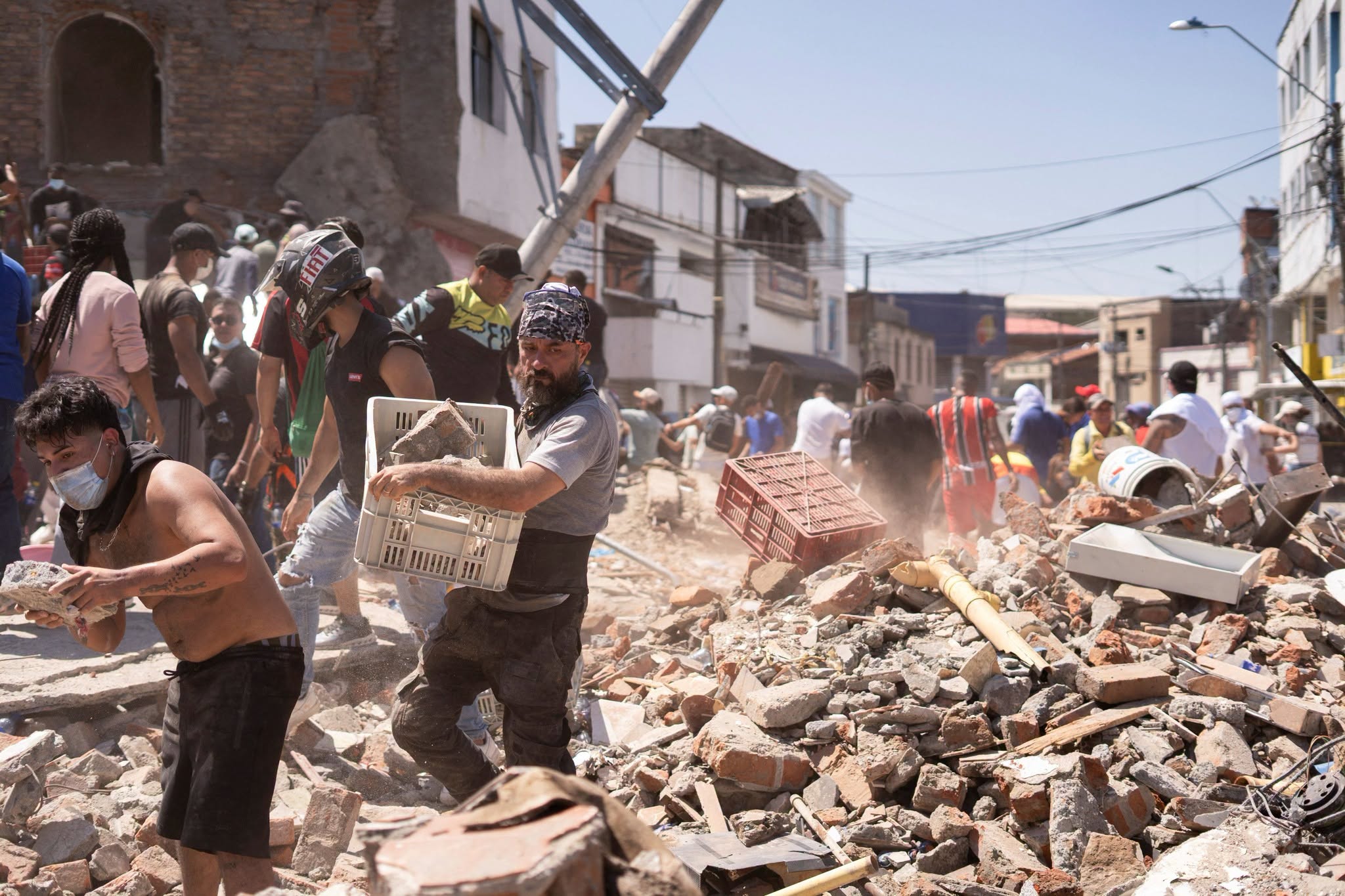
Images from Cali showed rescue workers and volunteers climbing over broken concrete while searching for survivors. Residents formed human chains to move pieces of rubble away from damaged buildings. Others stood nearby holding photographs and calling the names of relatives who had not been found.
The destruction was especially severe because the earthquake affected both densely populated cities and isolated communities. Damaged roads and disrupted communications made it harder for emergency crews to determine the full scale of the disaster.
More Than 100 People Confirmed Dead
The reported death toll changed rapidly throughout Monday as officials received information from different regions. Early reports counted several dozen deaths, but the figure climbed above 100 as rescue teams reached additional sites.
ABC News reported that more than 100 people had died, while later reports placed the toll as high as 132. The Associated Press reported at least 111 deaths, hundreds of damaged buildings and numerous people trapped beneath debris.
The varying numbers reflect the fast-moving nature of the emergency rather than a settled final count. Authorities were still checking hospitals, shelters and devastated neighborhoods on Tuesday.
Cali, Colombia’s third-largest city, suffered some of the most visible damage. Local officials reported collapsed buildings, heavy casualties and hundreds of injuries. Hospitals received waves of patients as medical teams worked through overcrowded emergency rooms.
Pereira also experienced extensive destruction. Buildings collapsed across parts of the city, leaving rescue crews searching several locations at once. Damage was also reported in Manizales, Quibdó, Armenia and surrounding towns.
The Search for Survivors Becomes a Race Against Time
Rescue workers used heavy equipment, cameras and listening devices to search beneath fallen walls and concrete slabs. In places where machinery could not safely operate, firefighters and residents removed debris by hand.
Each hour carried greater urgency. After a major building collapse, trapped survivors can face injuries, dehydration and limited air. Unstable structures and continuing aftershocks added another layer of danger for the people trying to reach them.
Still, there were moments of hope. Reports described survivors being pulled from wreckage, including a baby and the child’s mother. Such rescues offered exhausted emergency crews a reason to keep digging as families waited for answers.
Authorities urged people to remain outside visibly damaged buildings. Even structures that remained standing could have weakened foundations, fractured columns or unstable walls.
Colombia Declares a National Emergency
President Abelardo de la Espriella declared a national emergency, allowing the government to accelerate the movement of personnel, money and supplies into affected areas.
The declaration marked the first major crisis of his presidency, which began only days before the earthquake. Government officials said rescue operations, medical care and temporary shelter would remain the immediate priorities.
Several airports reportedly suspended operations because of damage or safety inspections. Curfews were introduced in some cities as authorities tried to secure commercial districts and prevent looting.
International help also began arriving. The United States announced $15.5 million in emergency assistance for shelter, food and other urgent needs. The European Union activated satellite resources to support damage assessments, while several Latin American countries offered rescue teams and humanitarian aid.
Why the Damage Was So Widespread
Colombia lies near the Pacific Ring of Fire, a vast zone where tectonic plates meet and many of the world’s earthquakes and volcanic eruptions occur. The country has experienced deadly earthquakes before, but Monday’s magnitude 7.4 event was unusually powerful.
The quake affected a wide area containing large cities, mountain communities and remote jungle settlements. That geography could make the final assessment particularly difficult. Some rural communities may remain cut off until damaged roads reopen or aircraft can reach them.
Aftershocks also remained a serious concern. More than 20 were reported by Monday night, according to Reuters. Although most were weaker than the original earthquake, they could still bring down structures already damaged by the first shock.
Key Takeaway
Colombia’s earthquake is no longer simply a story about its magnitude. It is a human emergency unfolding across crowded cities and isolated communities, where families are waiting for names, hospitals are treating the injured and rescuers are listening for signs of life beneath the rubble.
With more than 100 deaths already reported, the country now faces two enormous challenges at once: finding survivors before time runs out and beginning a recovery that could take years. The casualty figures remain preliminary, but the scale of the devastation is already clear.