In 2025, 54% of U.S. adults said they drink alcohol, matching the lowest level Gallup has recorded since it began tracking the question in 1939. The figure is unchanged from 2024, but it confirms that last year’s drop was not simply a temporary shift in the data.
Gallup’s annual Consumption Habits survey was conducted July 1 through July 19 among 1,200 U.S. adults through telephone interviews. The full sample carries a margin of error of four percentage points.
The numbers tell a story bigger than whether someone orders wine with dinner or skips the cocktail menu. They point to a broader question: what place does alcohol now hold in everyday American life?
The long decline arrived quickly after decades of stability
From 1997 through 2023, at least 60% of U.S. adults consistently said they drank alcohol. The share moved within a relatively narrow range for decades, even though preferences between beer, wine, and spirits shifted.
Then the pattern changed.
The percentage of Americans who reported drinking fell from 62% in 2023 to 58% in 2024 and reached 54% in 2025. That eight-point decline over two years stands out because similar movements were uncommon in previous decades.
The latest result does not show that drinking is still falling at the same pace. Instead, it suggests the country may have reached a new level after several years of movement.
For restaurants, bars, and beverage companies, that distinction matters. A sudden drop is one challenge. A new consumer habit is another.
The decline is showing up beyond surveys
Distributor sales tracked through Wine & Spirits Wholesalers of America’s SipSource service, which follows product movement through the alcohol supply chain, showed combined wine and spirits volume down 6.5% for the 12 months ending in June.
That decline was slightly smaller than the previous month’s 6.9% drop, suggesting the market may be moving toward a more stable level after a period of contraction.
Retail scanner data from NielsenIQ points in a similar direction. The company reported total beverage alcohol sales fell 2.6% in dollar terms and 4.7% in volume during the four weeks ending July 11, with beer and wine declining more sharply while spirits performed better.
Gallup measures what people report about their habits, while sales data measures what consumers actually purchase. Together, they suggest the shift toward lighter alcohol consumption is not limited to survey responses.
The conversation around alcohol is changing
One of the biggest shifts in Gallup’s findings is not only whether Americans drink, but how they think about drinking.
In 2025, 51% of adults said having one or two drinks daily is bad for health, close to the record high recorded the previous year. In 2001, when Gallup first began asking the question, only 27% viewed moderate drinking that way.
More Americans also reported hearing about research on alcohol’s long-term health effects. Gallup found that 86% had heard at least something about recent studies, while the share saying they had heard “a great deal” increased compared with the previous year.
The survey does not prove that changing health opinions are the single reason people are drinking less. Personal finances, lifestyle choices, social trends, and changing ideas about wellness may all influence individual decisions.
But the data shows that alcohol is being viewed through a different lens than it was a generation ago.
Even people who drink are changing how they drink
The shift is not only about people choosing complete abstinence.
Among Americans who still drink, the frequency and amount of consumption have also changed.
Average alcohol consumption among drinkers has declined compared with earlier years. The share of drinkers reporting a drink within the previous 24 hours also reached a record low in the survey’s trend.
That suggests a move toward moderation rather than a simple divide between drinkers and non-drinkers.
For some people, the change may mean fewer weekday drinks. For others, it may mean choosing alcohol only for certain occasions or replacing some alcoholic beverages with alternatives.
The traditional idea that every celebration, dinner, or social gathering automatically includes alcohol appears to be becoming less universal.
The alcohol-free drink aisle is becoming part of the experience
One of the clearest signs of changing habits is the rise of nonalcoholic options.
Gallup asked about nonalcoholic beer, wine, and spirits for the first time in 2025. The survey found that 17% of adults had tried a nonalcoholic substitute in the previous year, including both drinkers and non-drinkers. Among drinkers who had tried them, many said they were using those alternatives more often than before.
That shift is visible beyond grocery shelves.
Restaurants and bars have increasingly expanded their drink menus beyond traditional cocktails and beer lists. A guest who wants something sophisticated without alcohol is no longer necessarily limited to soda or water.
The change also reflects a broader evolution in dining culture. Beverage choices are becoming more personalized, with people looking for options that match their mood, lifestyle, and occasion.
Beer still leads, but spirits have changed the competition
Americans are not only changing how much they drink. They are also changing what they choose.
Among drinkers, beer remains the most popular alcoholic beverage, followed closely by liquor and wine. But the balance has shifted over time, with liquor gaining ground compared with previous decades.
Preferences also vary significantly between groups.
Men remain more likely to choose beer, while women are more likely to select wine or liquor as their preferred drink.
These differences show that the American alcohol market is not moving in one direction. Instead, it is becoming more divided, with different groups developing different relationships with drinking.
Younger consumers are changing the drinking culture
The generational shift has become one of the most discussed parts of the alcohol conversation.
Younger adults, who historically represented a strong drinking demographic, have become more likely to question alcohol’s role in their lives. Gallup’s data shows declining drinking rates among younger adults alongside broader concerns about alcohol’s health effects.
That does not mean younger Americans have abandoned drinking entirely.
Instead, the pattern appears more selective. Some are choosing fewer occasions to drink, exploring alcohol-free alternatives, or approaching drinking as an occasional experience rather than a routine habit.
For industries built around nightlife, restaurants, and entertainment, that creates a new challenge: attracting customers who may still want social experiences but do not necessarily want alcohol at the center.
The changes are appearing across different groups
The decline has not happened evenly across every segment of the population.
Gallup found differences by political affiliation, gender, and other demographic categories. Republicans and independents showed larger declines since 2023 than Democrats, while women’s reported drinking fell more sharply than men’s over the same period.
Religious attendance also remains connected with drinking patterns, although Gallup’s findings show the broader decline appearing across many groups.
The larger takeaway is not that one type of American is driving the trend.
It is that alcohol habits are being reconsidered in many parts of society at the same time.
America’s relationship with alcohol may be settling into a new normal
Speaking with Time about the findings, Gallup researcher Lydia Saad said the latest result suggests that “whatever is happening out there is a sustained change.”
The most significant part of the 54% figure may not be the number itself. It is what the number represents.
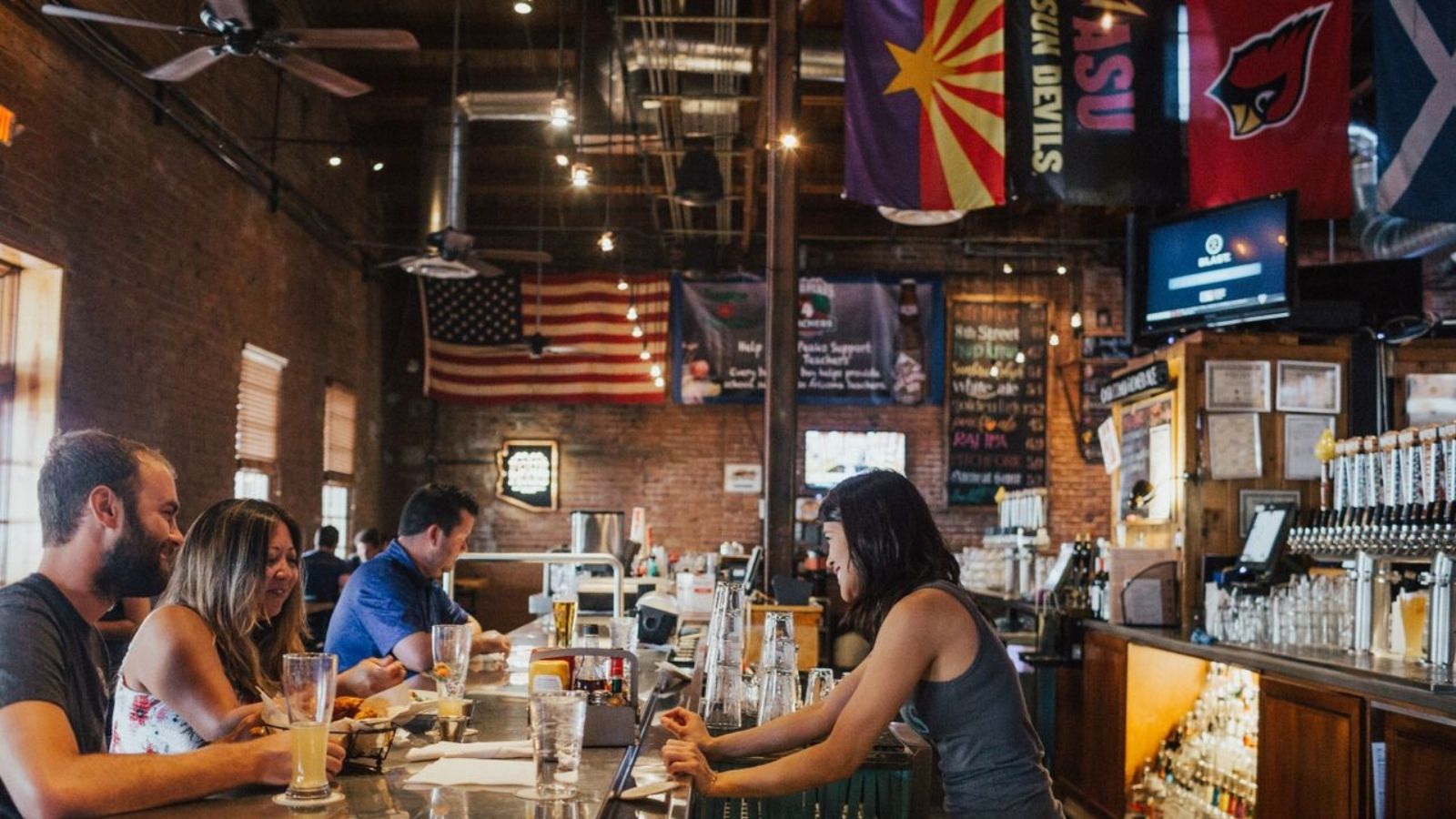
Alcohol has not disappeared from American culture. Bars are still busy. Restaurants still build beverage programs. Celebrations still include drinks.
But drinking is becoming less automatic.
For many Americans, alcohol is shifting from a default part of social life into one option among many.
The next chapter may not be about whether people drink or do not drink.
It may be about a more personalized drinking culture; one where the choice itself becomes the defining feature.