Abdul El-Sayed spent much of Michigan’s Democratic Senate primary attacking powerful interests, but one argument became especially central to his campaign: Jewish people, Judaism, the Israeli government and the American Israel Public Affairs Committee should not be treated as interchangeable.
Now that El-Sayed has won the Democratic nomination for U.S. Senate in Michigan, those comments are receiving fresh attention.
The former Wayne County health official narrowly defeated Rep. Haley Stevens in the August 4 Democratic primary. The Associated Press called the race after El-Sayed built a lead of 14,893 votes, less than one percentage point, with more than 1.5 million ballots counted. He will face Republican Mike Rogers in November in a contest expected to play a major role in determining control of the U.S. Senate.
But months before that victory, El-Sayed was already challenging one of the most contentious arguments in American politics: where legitimate criticism of Israel ends, and antisemitism begins.
El-Sayed Draws a Line Between Judaism and Israeli Politics
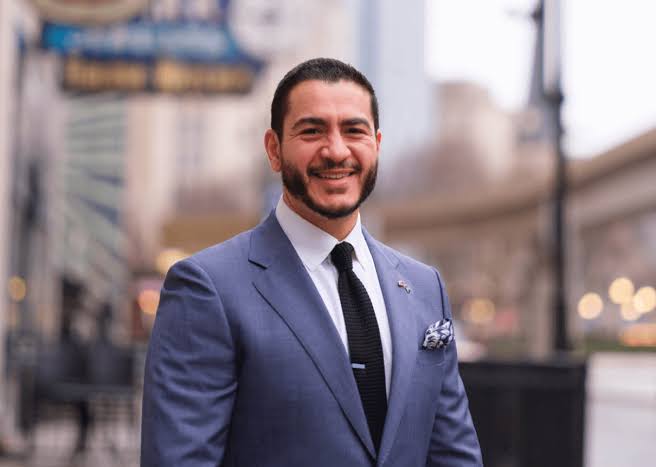
At a May 3 “Fighting Oligarchy” rally at Mumford High School in Detroit, El-Sayed directly addressed accusations surrounding criticism of Israel and pro-Israel political groups.
“The single most dangerous thing that they’ve tried to tell us is somehow they can extend the definition of antisemitism to include a foreign government and its leaders,” El-Sayed said.
He then made his distinction explicit.
“AIPAC and Israel are not the same as Judaism and the Jewish people,” he said.
El-Sayed followed that argument with a broader message about religious and ethnic respect, saying, “We love Judaism and the Jewish people because we love people, and we love Palestinians and their rights because we love people.”
The comments matter because El-Sayed has made criticism of Israeli policy and U.S. support for Israel a defining part of his political identity. He campaigned on ending U.S. military aid to Israel and repeatedly criticized the influence of AIPAC in Democratic elections.
His position is not that antisemitism should be ignored. El-Sayed has repeatedly rejected antisemitism and argued that Jewish Americans deserve protection from hatred and violence. After winning the primary, he said his commitment to Jewish safety was the same as his commitment to the safety of his own daughters.
Instead, his argument is that condemning Israeli government policy or challenging AIPAC’s political influence should not automatically be treated as hostility toward Jewish people.
AIPAC Spending Turned the Argument Into a Campaign Issue

That distinction was hardly theoretical during Michigan’s Democratic primary.
AIPAC and affiliated groups spent more than $30 million supporting Stevens, according to the Associated Press. Overall, outside organizations backing her spent more than $60 million. The level of spending transformed the race into a national test of whether a progressive candidate openly hostile to AIPAC’s political influence could survive a massive advertising campaign.
AIPAC describes itself differently from the way many of its critics characterize it. The organization says it is an American grassroots organization funded by Americans whose mission is strengthening the U.S.-Israel partnership. It says it is neither funded nor directed by the Israeli government.
That distinction is important. AIPAC is not the Israeli government. It is an American political advocacy organization that supports candidates and policies favorable to a strong U.S.-Israel relationship.
El-Sayed nevertheless argues that its political spending deserves aggressive scrutiny. During the campaign, he framed foreign policy spending as an economic issue for Michigan residents, arguing that American tax money being spent overseas could instead address problems at home.
That message became part of his larger populist pitch. He repeatedly described his campaign as a contest of ordinary voters against wealthy political interests, telling supporters that they were building “a movement of the many against the money.”
Michigan voters ultimately gave him the nomination despite the enormous outside spending against him.
His Primary Victory Does Not End the Debate
El-Sayed’s win guarantees that the arguments surrounding Israel, antisemitism and AIPAC will continue into the general election.
AIPAC has already indicated that it intends to oppose him in November, describing his position as a “radical anti-Israel agenda.” Meanwhile, Stevens conceded the Democratic primary and pledged to support El-Sayed against Rogers.
El-Sayed’s position also exists within a much broader debate over how antisemitism should be defined. Even widely cited frameworks do not say that every criticism of Israel is antisemitic. The dispute instead centers on when criticism moves from opposition to a government’s actions into hostility toward Jewish people, collective blame or other antisemitic ideas.
That makes El-Sayed’s wording politically significant.
He is asking voters to separate four things that often become tangled together in heated political debate: Judaism as a religion, Jewish people as individuals and communities, Israel as a state, and AIPAC as an American political advocacy organization.
His critics may strongly dispute his positions on Israel. His supporters may see his primary victory as proof that candidates can challenge traditional U.S. policy toward Israel without being politically destroyed.
Either way, Michigan voters have moved that debate from the margins of Democratic politics directly into one of the most important Senate races of 2026.
El-Sayed is no longer simply making the argument from a campaign stage.
He is making it as Michigan’s Democratic nominee for the United States Senate.