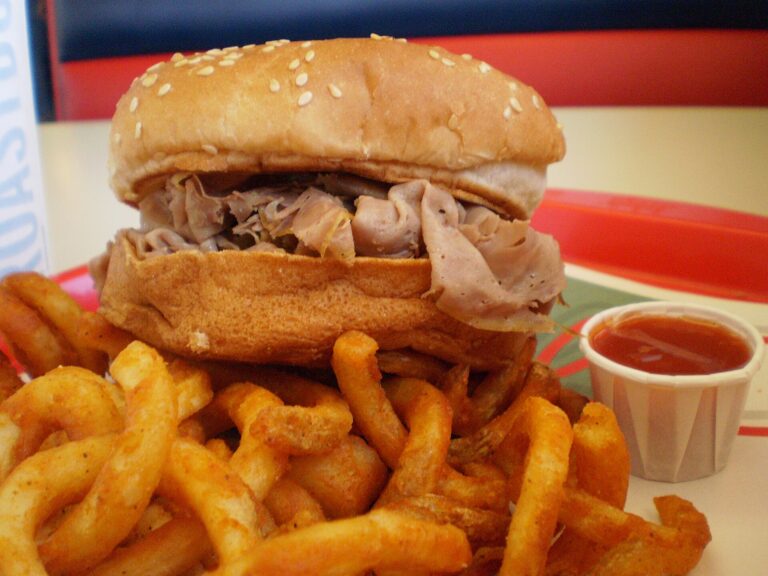
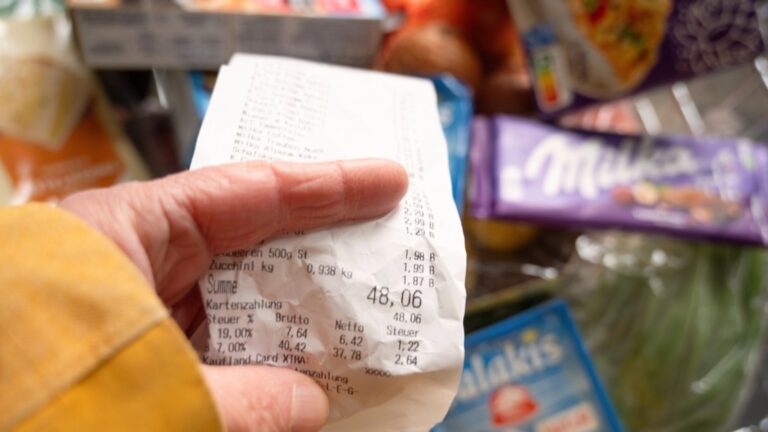
Any parent of a teenage son knows the moment: the refrigerator was full on Sunday and empty by Tuesday. A new federal price report now puts a number on that feeling. On the U.S. Department of Agriculture’s most budget-minded food plan, a teenage boy is the single most expensive person in the house to feed.
According to the USDA’s Thrifty Food Plan cost report for October 2026, groceries for a male aged 14 to 19 cost $75.30 a week, or $326.50 a month. That is more than any other age and sex group the agency tracks, ahead of adult men aged 20 to 50 at $73.70 a week and well ahead of teenage girls at $60.10.

What the October 2026 Numbers Show
The figures come from the USDA’s official Thrifty Food Plan report for October 2026, the U.S. average cost of food at home for each age-sex group. The agency rounds every figure to the nearest 10 cents and calculates monthly costs by multiplying the weekly cost by 4.333.
For the youngest members of the family, the weekly costs are lower. A 1-year-old runs $26.40 a week, a child aged 2 to 3 costs $39.80 and a child aged 9 to 11 costs $55.80. Among boys, costs climb from $59.70 a week at ages 12 to 13 to the peak of $75.30 at ages 14 to 19, then ease to $73.70 for men 20 to 50, $65.00 for men 51 to 70 and $62.00 for men 71 and older.
On the female side, the highest weekly figure is $60.30 for women 71 and older, just above the $60.10 for girls aged 14 to 19. In other words, a teenage son costs $15.20 a week more to feed than a teenage daughter on this plan, and $66.00 a month more based on the report’s monthly figures of $326.50 and $260.50. Families keeping a close eye on that gap may relate to a recent look at the habits women fall back on when money gets tight at home.
How the Costs Change With Household Size
The weekly costs in the report are for individuals living in four-person households. For other household sizes, the USDA suggests adjustments: add 20% for a one-person household, 10% for two people and 5% for three. A household of five or six subtracts 5%, and seven or more subtracts 10%. To get a household total, the agency says to add up each person’s cost first and then apply the adjustment.
That means a teenage boy living with a single parent would work out to $82.83 a week instead of $75.30, since the two-person household adjustment adds 10%. In a family of seven, the same teen would work out to $67.77 a week after the 10% reduction, reflecting the economies of scale that come with feeding a bigger household.
Shoppers looking for more ways to stretch a grocery budget can find ideas in Frenz Hub’s frugal living tips, its roundup of wallet-friendly life hacks and its list of budget foods that even the wealthy eat. Families who rely on SNAP are also watching rule changes in six states, including Ohio, Kansas and Nevada, covered in a report on start dates for SNAP soda and candy limits.
What the Thrifty Food Plan Actually Is
The Thrifty Food Plan is the least expensive of four USDA food plans. According to the agency’s monthly cost of food reports page, the others are the Low-Cost, Moderate-Cost and Liberal plans, each priced at a successively higher level. Every plan assumes all meals and snacks are prepared at home, so restaurant meals, takeout and school cafeteria purchases are not part of the math.
The plan’s costs are updated every month using the Consumer Price Index. Each category in the plan’s market basket, such as eggs or vegetables, is matched to one or more price indexes and adjusted for price changes since June 2021, when the current version of the plan was set. That is why the numbers shift from month to month even though the shopping list itself stays the same.
The plan also matters well beyond one family’s budget. As Wikipedia’s overview of the Thrifty Food Plan notes, it serves as the basis for food stamp benefits. The USDA report says its reference family of four, a man and woman aged 20 to 50 with two children aged 6 to 8 and 9 to 11, is used to set the maximum SNAP allotment. In October 2026, that reference family’s Thrifty plan cost $236.50 a week, or $1,024.60 a month. The USDA’s SNAP eligibility guide explains that a household’s actual benefit is figured by multiplying its net monthly income by 0.3 and subtracting the result from the maximum allotment for its size.

The Pricier Plans Show the Same Pattern
The USDA’s companion report on the Low-Cost, Moderate-Cost and Liberal food plans for October 2026 groups teens as 14 to 18 rather than 14 to 19. On the Moderate-Cost plan, a male aged 14 to 18 is the costliest group at $93.20 a week. On the Liberal plan, teen boys cost $109.60 a week, or $475.00 a month, second only to men aged 19 to 50 at $112.30.
Those three plans are based on the 2007 versions of the food plans and 2001-02 consumption data, so their numbers are not directly comparable with the 2021 Thrifty plan. Still, the takeaway for families is consistent across every plan: the grocery bill tends to jump during the teenage years, especially for boys.
Planning Around a Bigger Grocery Bill
For families watching every dollar, the report offers a useful benchmark. A household can compare its actual weekly spending with the Thrifty, Low-Cost and Moderate-Cost figures for each family member to see where it lands. Because the plans assume everything is cooked at home, home-cooked staples and batch cooking are the closest real-world match to the USDA’s numbers.
A written shopping list built around those home-cooked staples is one of the simplest ways to keep the total close to plan. With a teenage son in the house, that list may simply need to be a little longer.
This article was produced with AI assistance and edited for accuracy against the sources linked above.
Image: Erik Calonius, U.S. National Archives – Public domain/Wikimedia Commons