Plenty of 1970s kids begged for a snack at the grocery store because of a picture on the box. Few boxes made a bigger promise than one that said astronauts ate what was inside.
Pillsbury’s Space Food Sticks came 14 to a box, individually wrapped, in 6 flavors such as peanut butter, caramel and chocolate. They rode the Apollo craze into family pantries and then disappeared from North American supermarket shelves in the 1980s.
A Snack Born in a Space Food Lab
The story starts in the early 1960s. Howard Bauman, Pillsbury’s chief food technologist, led the team that made the first solid food eaten by a NASA astronaut: small compressed cubes Scott Carpenter ate aboard Aurora 7 in 1962, according to a General Mills archives story (Pillsbury is now part of General Mills). The flight itself, logged as Mercury-Atlas 7, came three months after John Glenn’s orbit, a mission whose drink-mix side story is told in the site’s look at how Tang flew with Glenn in 1962.
Bauman’s group went on to build a rod-shaped snack that could slip through a small, airtight opening in an astronaut’s helmet, as The Henry Ford museum notes in its record for a 1969 to 1971 box it holds. His work with NASA also helped lead to the HACCP food-safety system food makers still use.
14 Sticks, 6 Flavors and a Box Covered in Outer Space
Pillsbury filed the trademark for Space Food Sticks in 1970, according to the Space Food Sticks entry on Wikipedia. A box held 14 individually wrapped sticks, and the U.S. line came in 6 flavors, with peanut butter, caramel and chocolate among them.
The home version was not quite the astronaut version. The Takeout reports that the sticks went on sale to the public in 1969 and that the astronaut sticks ran about 8 inches long, while grocery-store buyers got sticks about half that size. The Takeout adds that the boxes leaned hard on galactic imagery, which fit right in with a decade of shag carpet and swag lamps, in kitchens done up in the shades craftingyourhome.com lists among appliance colors that filled 1970s kitchens, and next to the kind of decor Frenz Hub rounds up in its list of things that decorated every 70s home. Kids of the era were also still trading the words in Frenz Hub’s guide to slang from the swinging ’60s.
Packed for the Moon, Then Skylab
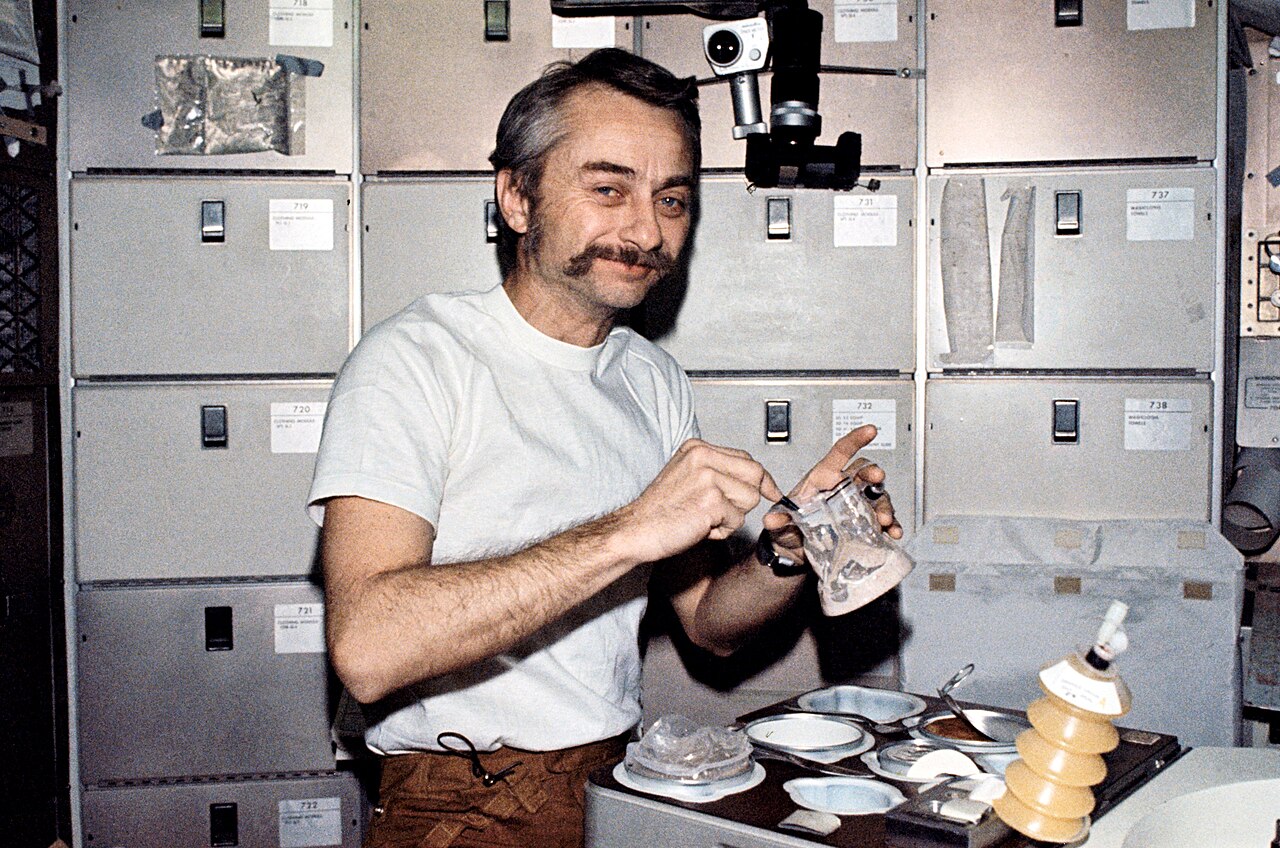
The sticks had a real space record. A search of the General Mills Archives found that they went along with Neil Armstrong and Buzz Aldrin when the lunar module landed on July 20, 1969, as a contingency food to be eaten only if needed, so no one knows whether the two actually ate them. In 1973, a modified version of the store-bought sticks flew on Skylab 3 as part of the third Skylab mission, according to General Mills.
That link to the space program was the whole sales pitch. A box of Space Food Sticks in the grocery cart sat right alongside the other boomer-era favorites in Frenz Hub’s list of foods from the ’60s most boomers loved, and a family heading out to see a launch site could pack a few for the back seat of the kind of car craftingyourhome.com lists among station wagons that hauled families in the 1960s and 1970s.

Dropping the Word Space
The space angle did not hold shoppers forever. The Takeout reports that Pillsbury found many consumers did not find the idea of eating space food appealing, so it dropped the word “space” in 1971 and sold the product simply as Food Sticks, pitched as a compact snack for busy days. The rename turned a souvenir of the moon race into a plain pantry snack, and the box no longer had to sell anyone on the moon.
According to General Mills, interest faded and the sticks were discontinued, available only until the 1980s, while copycat versions moved in. The Takeout puts the end in the mid-1980s and notes that the product never did especially well commercially, even though the kids who ate it still bring it up decades later.
A Short Comeback and a Long Memory
The sticks did get a second act. Retrofuture Products of Port Washington, New York, revived them in 2006 with two flavors, chocolate and peanut butter, selling them online and at flight museums such as the Kennedy Space Center and the Smithsonian’s Air and Space Museum until production stopped in 2014, according to the Wikipedia entry. In Australia, a version sold under the White Wings and later Nestle Starz names came only in chocolate and caramel and also ended in 2014, apart from a brief return in 2019 for the 50th anniversary of the Apollo 11 landing.
Pop culture kept the name alive in the meantime. General Mills points to appearances on “The Simpsons,” in the movie “Super 8” and in books by R.L. Stine, and it calls Space Food Sticks a forerunner of the snack bars that fill store shelves today.
For anyone who remembers tearing open one of those 14 wrappers, the details still land: a box covered in outer space art, a stick that once rode to the moon, and a flavor lineup that made a trip down the cereal aisle feel like mission control. The sticks have been gone from American supermarkets since the 1980s, but they remain one of the clearest snapshots of a time when the space race reached all the way to the kitchen pantry.
This article was produced with AI assistance and edited for accuracy against the sources linked above.