Have you ever watched a dog rolling around with another dog or a chimpanzee playing with its friends and wondered whether animals can actually laugh?
As surprising as it sounds, humans may not have invented laughter. Scientists have found that several animals produce special sounds when they play, are tickled, or enjoy social interactions.
Some of these sounds resemble human laughter, while others are so unusual that people cannot even hear them without special equipment.
A 2021 scientific review published in the journal Bioacoustics examined laughter-like play sounds across 65 animal species. Researchers found that playful vocalizations are much more common in the animal kingdom than many people realize.
Of course, an animal making a laughing sound does not necessarily mean it understands jokes or has the same sense of humor as a person. Nevertheless, these discoveries suggest that humans and animals may share more emotional behaviors than previously thought.
Here are eight animals with fascinating laughter-like behaviors.
Chimpanzees
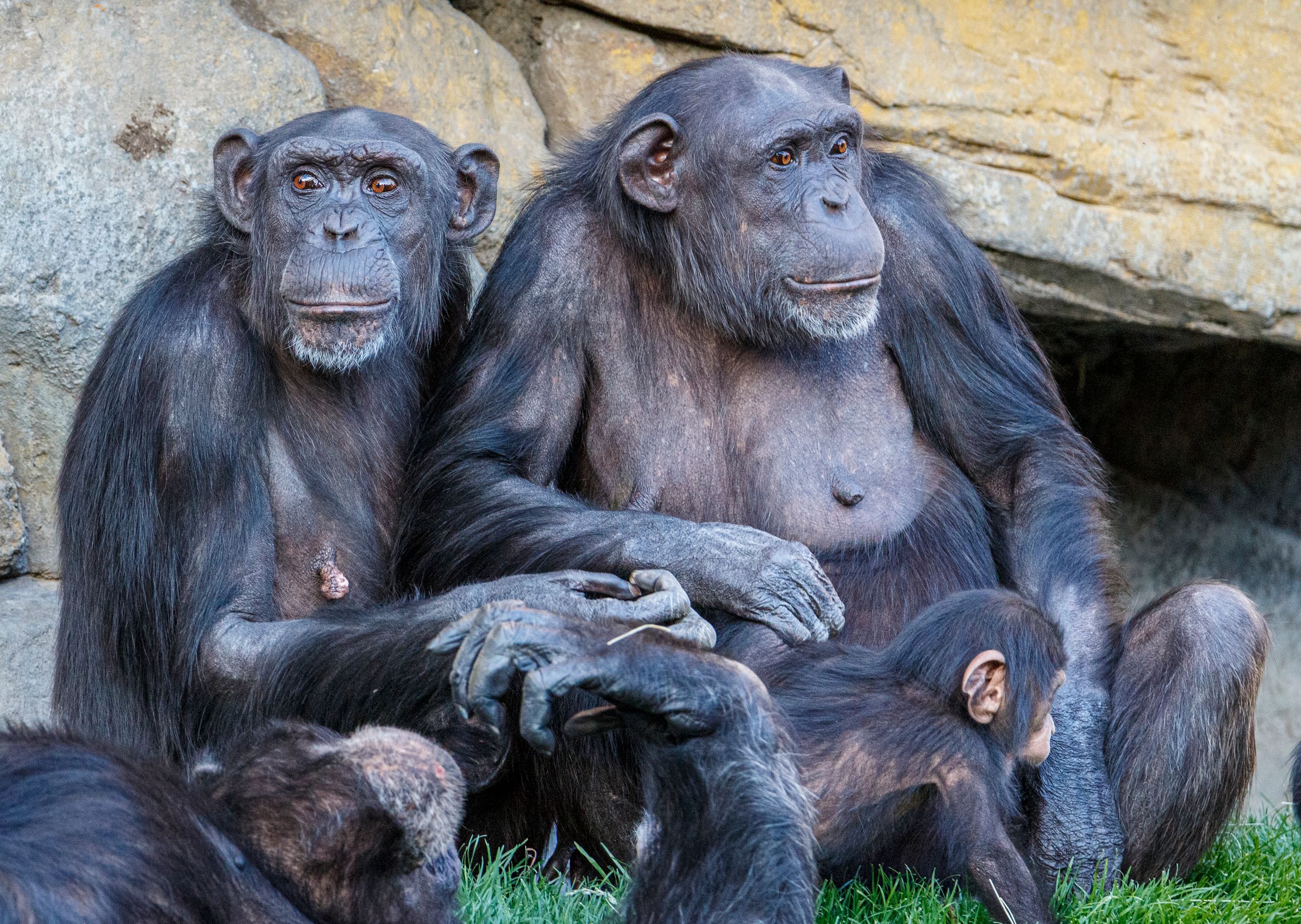
Chimpanzees might be the closest thing to humans when it comes to recognizable laughter.
When young chimpanzees chase, wrestle, or tickle one another, they produce breathy, rhythmic sounds that resemble panting mixed with laughter.
If you have ever watched chimpanzees playing together, you may have noticed their mouths opening wide while they make repeated vocal sounds.
Scientists believe these vocalizations help chimpanzees communicate that their rough movements are playful, not aggressive.
A study published in Current Biology in 2009 examined laughter in great apes and human babies. Researchers found similarities suggesting that human laughter evolved from vocal behaviors already present in our shared ancestors.
That means the roots of laughter could be millions of years older than modern humans.
Rats
Rats probably aren’t the first animals that come to mind when you think of laughter.
However, these little rodents have one of the most fascinating laughter-like responses in the animal kingdom.
Researchers discovered that rats produce high-frequency chirping sounds when they play together or experience gentle, playful tickling.
The surprising part? Humans cannot normally hear these sounds because they occur at ultrasonic frequencies, often around 50 kilohertz.
Neuroscientist Jaak Panksepp and his colleagues studied these vocalizations and suggested they may represent an ancient form of laughter.
The sounds are associated with positive experiences, although scientists continue to investigate exactly how closely they resemble human laughter.
So, somewhere in the world, a rat could be making happy little chirps without anyone nearby realizing it.
Dogs
Anyone who owns a playful dog knows that dogs can make some pretty unusual noises when they are excited.
During play, dogs sometimes produce a distinctive breathy pant that researchers have described as laughter-like.
It is different from ordinary panting after exercise. The sound appears during friendly interactions such as chasing, wrestling, and play-bowing.
Some researchers believe this special pant helps communicate playful intentions.
For example, two dogs may growl and tumble across the ground while playing, but their relaxed movements and play sounds help distinguish the interaction from a serious confrontation.
That does not mean every panting dog is laughing. Heat, stress, and physical activity can also cause panting.
Still, the possibility that dogs have their own version of laughter makes those joyful play sessions even more interesting.
Bonobos
Bonobos are among humanity’s closest living relatives, and their playful behavior can look remarkably familiar.
These social primates produce laughter-like vocalizations while wrestling, chasing, and interacting with other bonobos.
Their laughter often consists of repeated breathy sounds rather than the loud, voiced laughter commonly heard from humans.
Scientists have also studied how bonobos respond to others’ laughter.
A 2025 study published in Scientific Reports found that bonobos tended to show more positive expectations after hearing laughter.
The findings suggest laughter may influence social emotions rather than accompany a playful moment.
In other words, laughter-like sounds may help create a more positive social atmosphere among bonobos, although researchers are still examining how this works.
Kea Parrots
Imagine hearing someone laugh and suddenly feeling like laughing yourself.
Something similar happens among kea parrots, intelligent birds native to New Zealand.
These curious birds have a special play call that appears to encourage other kea to join in playful activities.
In a 2017 study published in Current Biology, scientists played recordings of these calls to wild kea parrots.
The results were fascinating. Birds that heard the calls became more playful, even when they hadn’t previously interacted with others.
Researchers suggested that the sound could spread a positive emotional state through a group, much like contagious laughter among humans.
Unlike a human chuckle, the kea’s laughter-like sound is a distinctive bird call.
Nevertheless, the social effect appears remarkably familiar.
Gorillas
Gorillas might look serious and intimidating, but these powerful primates also have a playful side.
Young gorillas often wrestle, chase, and play other energetic games.
During these interactions, they can produce rhythmic, laughter-like sounds.
A study published in Communications Biology in June 2026 examined laughter recordings from gorillas, chimpanzees, bonobos, orangutans, and human children.
Scientists discovered similarities in the rhythm and timing of their laughter, providing additional evidence that this behavior has deep evolutionary roots.
Although a gorilla’s laughter sounds different from the familiar human “ha-ha,” researchers believe the vocalizations share an ancient evolutionary origin.
The discovery is especially interesting because gorillas are often portrayed as quiet, serious animals.
Apparently, even these enormous primates have moments when play calls for a little laughter.
Orangutans
Orangutans are famous for their intelligence, curiosity, and impressive problem-solving abilities.
But they also produce laughter-like sounds during play.
Young orangutans may make soft, breathy vocalizations while interacting with familiar companions.
Their laughter tends to be quieter and structurally simpler than that of some African great apes.
Scientists studying the evolution of laughter have found that orangutans share important vocal characteristics with humans and other great apes.
Interestingly, an October 2026 study reported that captive orangutans preferred food associated with recordings of other orangutans laughing.
The findings suggest laughter may carry positive social information beyond the moment it is produced.
Orangutans may not laugh at jokes the way humans do, but their vocal behavior offers another fascinating clue about laughter’s origins.
Bottlenose Dolphins
Dolphins are famous for their whistles, clicks, and playful personalities.
While scientists have not established that dolphins laugh the same way humans do, they have discovered a fascinating behavior that resembles a smile during social play.
A 2024 study published in iScience examined open-mouth displays among bottlenose dolphins.
Researchers observed that dolphins frequently opened their mouths during friendly interactions, particularly when another dolphin could see them.
Other dolphins sometimes copied the expression.
Scientists suggested that these displays may help signal playful intentions, much like certain facial expressions among humans.
However, a dolphin’s open mouth is not proof of happiness. The animals can use similar expressions in other situations.
The discovery nevertheless shows that dolphins have sophisticated ways of communicating during play, even without producing recognizable human laughter.
Why Do Animals Laugh?
Laughter may serve a purpose that goes far beyond making funny noises.
Among humans, laughter can strengthen relationships, ease tension, and communicate friendliness. Scientists believe laughter-like sounds in animals may perform some similar functions.
For example, an animal engaging in rough play needs ways to communicate that its actions are not intended as an attack.
Play vocalizations can help maintain that distinction.
Researchers also believe these sounds may encourage social interaction and help animals form stronger relationships.
The 2026 great ape study suggests that humans inherited important features of laughter from ancient ancestors and gradually developed greater control over how and when they laugh.
The Bottom Line
The animal kingdom may be much more playful than we give it credit for.
From chimpanzees producing breathy giggles to rats making ultrasonic chirps, scientists have documented laughter-like behaviors across a surprising variety of species.
Not every animal on this list laughs exactly like a human. Some make distinctive play sounds, while dolphins display facial expressions associated with friendly interactions.
Still, the discoveries reveal something wonderful about animal behavior: play, social connection, and positive communication are not uniquely human experiences.
The next time your dog makes an unusual noise during play, or you watch monkeys chasing each other at the zoo, remember that laughter-like behavior stretches back millions of years.
And who knows? The animal making those funny sounds might be enjoying the moment just as much as you are.