An unusual military disposal operation in southeastern Iowa has turned into a growing public safety and environmental dispute after the U.S. Army announced plans to blow up nearly five tons of unstable explosive material. The operation was expected to release lead-containing dust into the surrounding air, potentially affecting nearby homes, farmland, and communities across state lines.
What initially appeared to be a controlled military safety exercise has since drawn criticism from residents, farmers, environmental organizations and elected officials. The Army first scheduled the explosions for November 20, then postponed them until November 23. A federal appeals court subsequently stepped in, temporarily suspending the environmental permit that authorized the operation.
The Army Discovered Deteriorating Explosives in March
The situation began in March 2026 when the Army discovered deteriorating lead azide stored in underground bunkers at the Iowa Army Ammunition Plant in Middletown. Lead azide is an explosive chemical used in military ammunition and detonators. Although useful in controlled applications, it becomes particularly dangerous when its condition deteriorates.
According to the Army, the material had recrystallized during storage, making it increasingly sensitive to friction and physical shock. Officials were concerned that moving or handling the affected material could trigger an accidental explosion. The discovery involved 68 drums containing approximately 9,500 pounds of the unstable chemical, creating a disposal problem that military officials considered urgent.
Why the Army Wanted to Blow Up the Material
After assessing the situation, the Army determined that controlled detonation was the safest available disposal option. Rather than transporting the unstable drums elsewhere, explosives specialists proposed destroying the material inside the earth-covered bunkers where it was stored. The Army argued that alternative disposal methods would require workers to handle the drums over several days or weeks, potentially increasing the risk of an accidental explosion.
The operation required approval from the Environmental Protection Agency, which issued an emergency permit on November 13. The Army planned two rapid, controlled detonations at the Iowa Army Ammunition Plant. Officials maintained that destroying the material in place presented the lowest immediate risk to nearby communities.
Residents Were Warned About a Potential Lead Dust Cloud
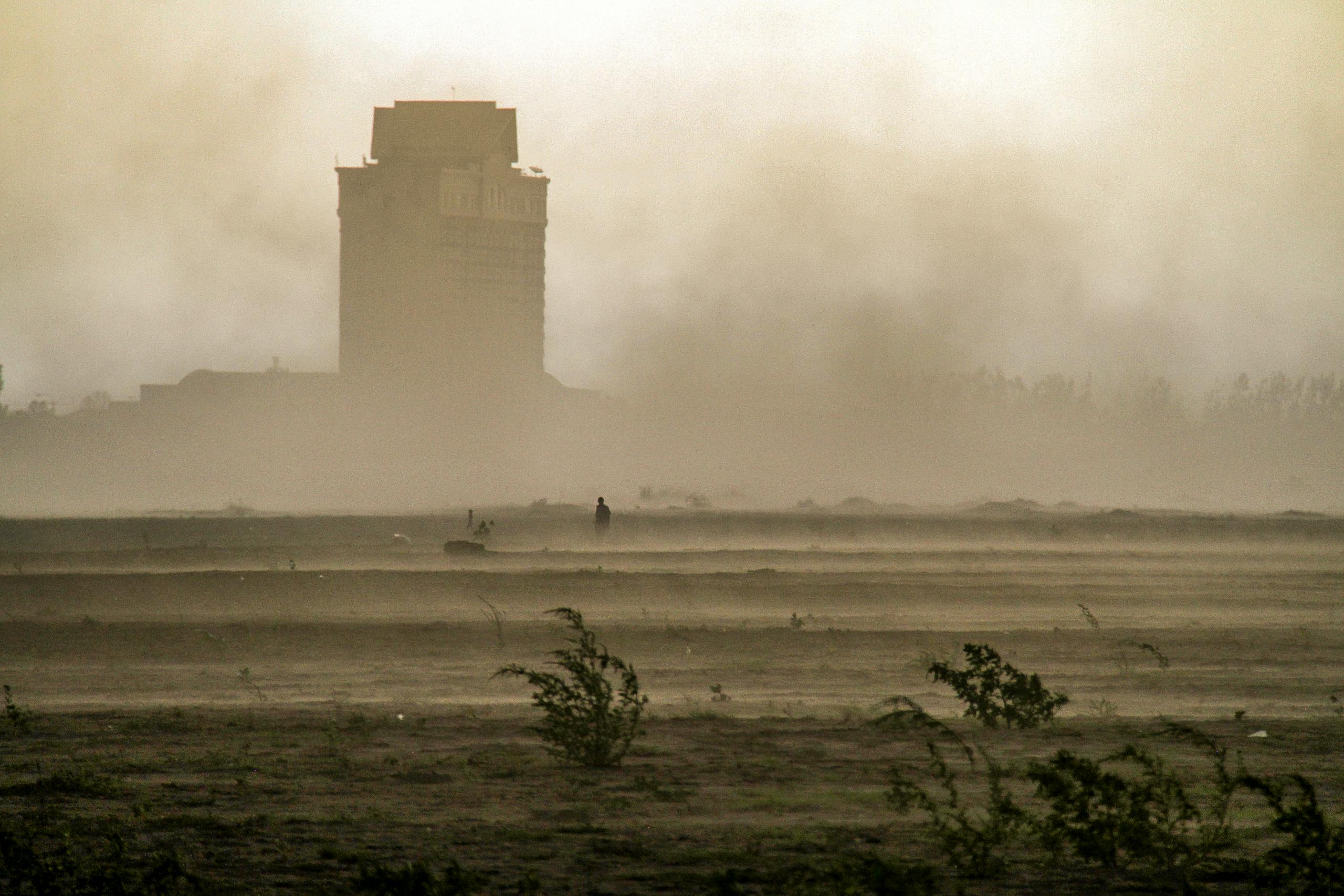
The planned explosions came with another concern: the possibility of releasing lead-containing dust into the surrounding environment. The Army acknowledged that the detonations would produce an airborne plume containing lead particles that could eventually settle on soil, buildings, vehicles, and other outdoor surfaces. Depending on wind conditions, the particles could travel beyond the military installation.
Lead exposure is a serious concern because the metal can affect the brain, nervous system, and other organs. Children and pregnant women are particularly vulnerable to its effects. The Army therefore developed exposure maps and advised residents in potentially affected areas to take precautions, including staying indoors, closing windows and doors, and limiting unnecessary outdoor activities while the plume passed.
The November 20 Explosion Was Postponed
The Army initially scheduled the two detonations for approximately noon on November 20. Residents in the Middletown City Park neighborhood were told to temporarily leave their homes between 8 a.m. and 2 p.m. because of possible window damage from the explosions. The original advisory also warned that residents could hear loud noises, feel ground vibrations, and see a visible dust plume.
However, the schedule changed on November 19. Acting Army Secretary Adam Telle announced that he had directed Army Materiel Command to postpone the operation until Monday, November 23. He explained that the delay would allow the Army to wait until the latest possible moment before a forecast temperature drop, which could make the already unstable explosive material even more dangerous.
The postponement followed growing public opposition and calls from lawmakers for additional information about the potential health and environmental consequences. The Army said public safety remained its priority, but the announcement did little to settle the dispute.
Environmental Groups Took the Army to Court
The controversy moved into the federal court system when the Iowa Environmental Council and the Sierra Club’s Iowa chapter challenged the EPA emergency permit. Represented by environmental law organization Earthjustice, the groups argued that officials had not adequately considered potentially safer disposal methods or provided sufficient protections and information to affected communities.
They also raised concerns about the possible spread of lead dust beyond the military installation. Environmental groups warned that the plume could travel as far as 100 miles under certain weather conditions, potentially affecting communities and agricultural land. They asked the Eighth U.S. Circuit Court of Appeals to intervene before the planned Monday explosion.
On November 20, the appeals court issued a temporary stay suspending the EPA permit while it considered the emergency request. The ruling put the Army’s revised November 23 schedule in doubt because the military could no longer rely on the suspended permit to carry out the operation.
Farmers and Nearby Communities Are Also Worried
The dispute has extended beyond residential neighborhoods, with farmers concerned about possible contamination of livestock, feed, and agricultural land. Iowa agriculture officials advised cattle farmers near the ammunition plant to consider relocating animals, feed and equipment where possible. Some farmers have reportedly begun moving hundreds of cattle to other locations while awaiting further information.
The concerns are particularly complicated because lead dust could settle on surfaces and soil even after airborne particles have dispersed. Farmers want clearer information about where the dust might travel and what it could mean for livestock and agricultural products. Officials have acknowledged that questions remain about the potential effects on animals and the surrounding farming industry.
Illinois has also been monitoring the situation because Army modeling indicated that some areas across the state could potentially be affected. State officials have requested additional information about the projected dust plume and the planned air quality monitoring.
Will the Army Still Carry Out the Explosion?
As of November 21, the planned detonations have not been confirmed as having taken place. The November 20 court order temporarily suspended the EPA permit, leaving the Army’s proposed November 23 operation uncertain. The Department of Justice has indicated that it intends to oppose the environmental groups’ request for a longer-term block.
Federal officials have also raised the possibility of using emergency legal authority to address the unstable material even while the permit dispute continues. Environmental groups, however, maintain that the Army should not proceed without adequately considering safer alternatives and protecting nearby communities.
For now, residents, farmers, and local officials are waiting for further direction from the court and the federal agencies involved. The Army maintains that the deteriorating explosive material poses a serious safety concern of its own, while opponents want stronger assurances that disposing of it will not create another danger for surrounding communities.