Some Christmas sweets travel everywhere, but a few still belong to one part of the country. Kentucky has the bourbon ball, the Moravian towns of North Carolina and Pennsylvania have their paper-thin spice cookies, and Racine, Wisconsin, has the kringle.
Each of the 3 has a named birthplace, a family business still making it and a season when demand peaks. Here is where each one comes from and what sets it apart on a holiday table.

Kentucky Bourbon Balls: A Frankfort Candy From 1938
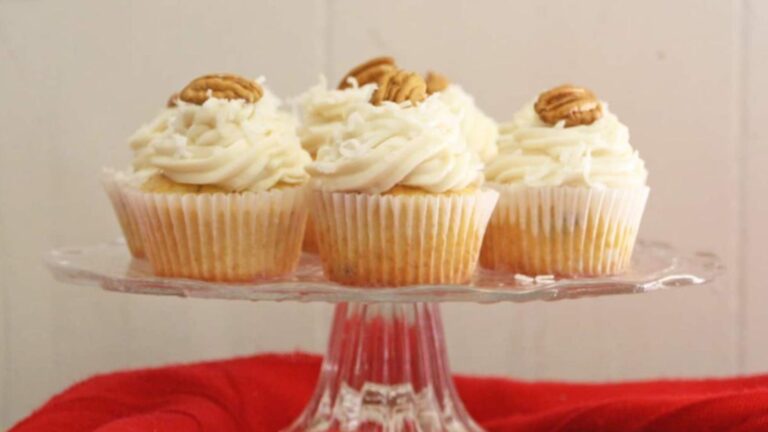
The bourbon ball was created in 1938 by Ruth Hanly Booe, according to the Wikipedia entry on the bourbon ball. The classic version pairs a creamy candy center flavored with bourbon, a dark chocolate coating and a pecan on top.
Booe and fellow substitute teacher Rebecca Gooch started their candy company in Frankfort in 1919, and Booe bought out her partner’s half in 1929. A 2019 Kentucky Department of Agriculture profile reported that Booe spent about 2 years working out the recipe, that the candy uses Evan Williams bourbon, and that the bourbon ball is the company’s best seller.
The same profile named Christmas as the company’s biggest holiday for sales. The business makes most of its candy by hand on equipment that largely dates to the 1960s or earlier, and the owner estimated output at about 5 million pieces of candy a year. Ruth’s son John took over in 1964, and her grandson Charles Booe bought the business in 1997.
A box of bourbon balls has become one of those regional gifts that confuses people from elsewhere, much like the odd American traditions that puzzle the rest of the world. In Kentucky, it simply shows up in December.
Moravian Cookies: The Paper-Thin Spice Wafer
The Moravian spice cookie carries the nickname “World’s Thinnest Cookie,” according to the Wikipedia entry on Moravian spice cookies. It is a blend of molasses and spices, rolled paper thin, and it traces back to the Moravian Church communities of colonial America. The entry links it to German Lebkuchen and says original recipes date to the 17th century.
The cookie is most closely tied to Christmas in Winston-Salem, North Carolina, and Bethlehem, Pennsylvania, home to the two largest Moravian communities in the U.S. Sugar, lemon, black walnut and chocolate versions sit alongside the classic ginger spice.
One of the best-known family bakers works in Clemmons, a short drive from Winston-Salem. Mrs. Hanes’ Moravian Cookies describes itself as a fourth-generation family bakery, with its bakery and retail store at 4643 Friedberg Church Rd. It sells ginger and sugar Moravian cookies in tubes and ginger crisps in tins, and it notes that USA Today readers named it the No. 4 cookie shop in America.
That thinness is the whole point. A good Moravian cookie snaps cleanly and tastes strongly of molasses and spice, and the tubes stack neatly in a pantry for the weeks between Thanksgiving and New Year’s, when trays of them go out for guests.
Wikipedia notes that some bakeries now use machines to meet demand, and that machine-made cookies are sometimes faulted for being less thin. Families who keep the hand-rolled tin on the table each year fit right in with the zodiac signs said to hold family traditions dearest.

Wisconsin Kringle: Racine’s Official State Pastry
Kringle became Wisconsin’s official state pastry on June 30, 2013, according to the Wikipedia entry on kringle. A typical Racine kringle is a large, flat oval about 14 by 10 inches and about 1.5 pounds, made from many thin sheets of flaky Danish-style dough that are layered, shaped, filled, baked and iced.
Racine has long been a center of Danish-American culture and kringle baking. Wikipedia names Lehmann’s, Bendtsen’s and O&H Danish Bakery as family bakeries from the 1930s and 1940s that still carry on the tradition. Fillings run from fruit to nuts to more playful mixes.
At O&H Danish Bakery, which lists its main shop at 5910 Washington Ave. in Racine, the regular case includes almond, apple, cherry, pecan and raspberry, while the holiday lineup adds Christmas kringles such as Holly Berry and A Very Danish Christmas, along with gift packages and a kringle-of-the-month club.
A kringle that arrives in the mail often sparks the same excitement kids once felt flipping through the Sears Wish Book before Christmas. In Racine, a stop at the bakery is part of the season itself, the sort of food-first detour that fills lists of the best small towns in America to visit for food lovers.
Putting All 3 on One Holiday Table
The 3 sweets cover very different textures. The bourbon ball is soft and rich, the Moravian cookie snaps, and the kringle is flaky and sweet. That range makes them easy to set out together on a dessert board at a holiday party, perhaps between rounds of Christmas party games.
All 3 are also sold by mail, which is why they often show up far from home. A tube of Moravian cookies, a box of bourbon balls and a boxed kringle each travel well as a gift, and each arrives with a bit of regional history attached.
Each one also carries a story of a family business. A teacher in Frankfort, a family bakery near Winston-Salem and Danish bakers in Racine each turned a local recipe into something people now ship across the country every December.
This article was produced with AI assistance and edited for accuracy against the sources linked above.
Image: YoAmes – CC BY-SA 2.0/Wikimedia Commons