California parents may want to take a closer look at how their children buckle up before the new year arrives. Starting January 1, 2027, children ages 8 through 15 must meet five specific seat belt requirements to ride without a child restraint system.
Under the new rules, simply turning eight will not be enough to determine whether a child can leave the booster seat behind. The deciding factor will be how well the vehicle’s seat belt fits.
And before anyone starts worrying about another test for their children, this one doesn’t involve a classroom, paperwork, or a trip to the DMV. It’s a simple five-step check that families can perform inside their own vehicles.
What California’s New Seat Belt Law Actually Says
The change comes from Assembly Bill 435, legislation authored by Assemblymember Lori Wilson and approved by Governor Gavin Newsom on October 7, 2025.
Beginning January 1, 2027, California Vehicle Code Section 27360.5 will require children who are at least eight but younger than 16 to meet all five conditions for proper seat belt use.
Those who cannot meet every condition generally must use an appropriate child passenger restraint system that meets federal standards. For children who have outgrown a harnessed car seat, that usually means a booster seat.
The important detail is that children must meet all five requirements, not just three or four.
The Five-Step Seat Belt Test Every Parent Should Know
The test focuses on how a child sits in the vehicle and where the seat belt rests. California’s updated law identifies five conditions that must be satisfied.
- Back against the seat: The child must sit fully back against the vehicle seat rather than sliding forward.
- Knees bend over the seat edge: While sitting all the way back, the child’s knees must bend over the front edge of the seat.
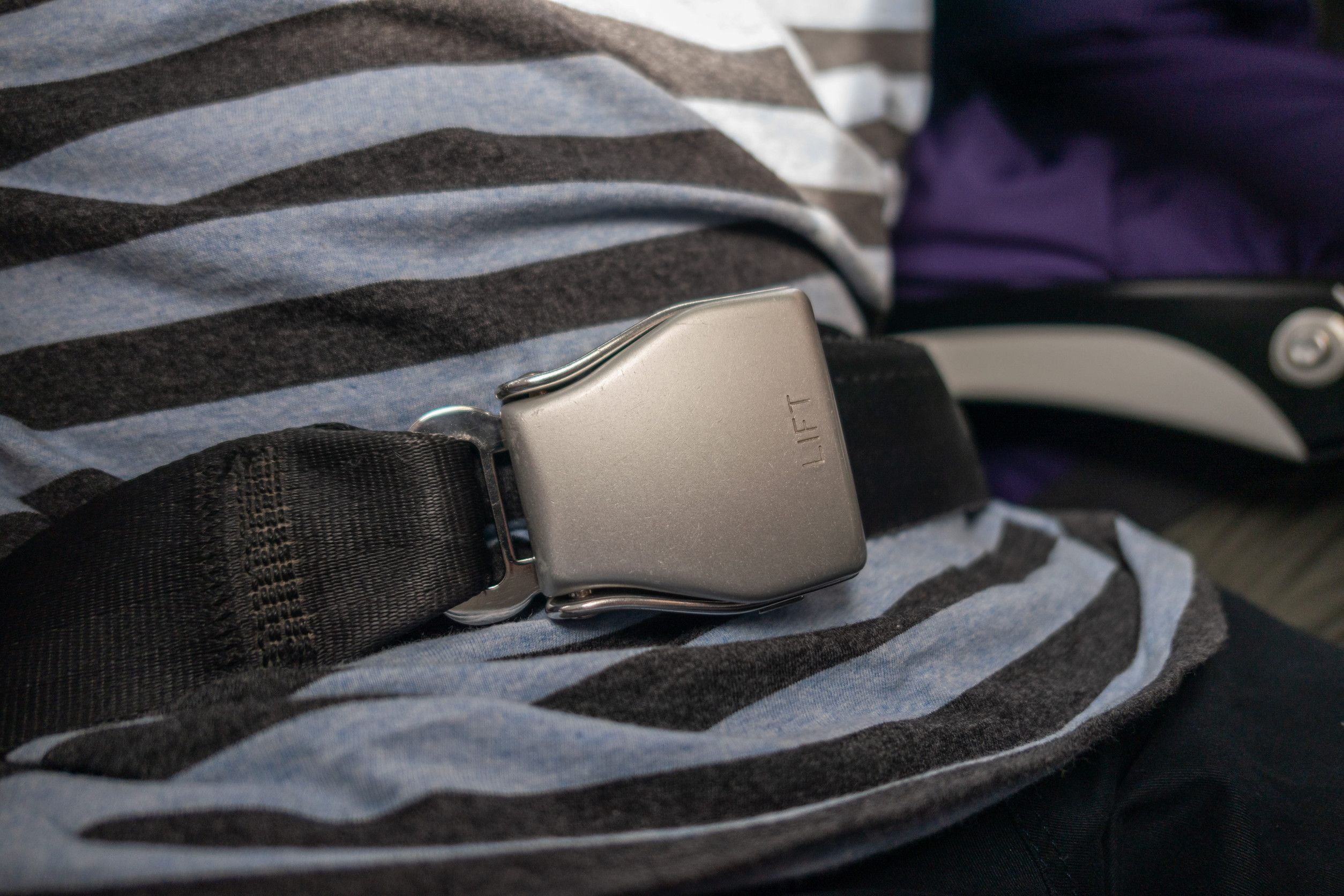
- Shoulder belt fits correctly: The shoulder strap must cross snugly over the middle of the child’s chest and shoulder without resting against the neck.
- Lap belt sits low: The lower portion of the belt must rest as low as possible and touch the child’s thighs rather than crossing the stomach.
- Position lasts the entire ride: The child must be able to maintain that seating position throughout the journey.
A child who cannot satisfy even one of these conditions does not qualify to use the seat belt alone under the new standard.
Parents can review the complete requirements in California’s child passenger restraint laws.
Why Turning Eight No Longer Settles the Question
For many families, an eighth birthday has been an important milestone in deciding when to move away from a booster seat.
California’s existing law, which remains in place through December 31, 2026, allows children ages 8 through 15 to ride using an appropriate child restraint or a properly worn seat belt.
The new legislation makes the definition of a properly fitting seat belt much more specific.
A child’s age alone will not establish whether the regular seat belt meets California’s requirements. Instead, families will have to look at the actual fit.
That means two children of the same age could have different restraint needs. One might meet every condition, while another might still require a booster.
Your Child Might Need a Booster in One Car but Not Another
Here’s a detail that could surprise families with more than one vehicle: passing the test in one car does not automatically mean a child will pass it in another.
According to the Centers for Disease Control and Prevention, seat belt fit can vary between vehicles.
The family sedan, a grandparent’s SUV, and another caregiver’s vehicle may have different seat designs and belt positions.
A child who meets the requirements in one vehicle might not meet them in another.
This makes checking the actual seating position especially important for families who regularly switch cars or arrange rides with relatives.
A booster seat helps position a child so the vehicle’s lap and shoulder belt fit correctly. It works together with the vehicle’s seat belt rather than replacing it.
What Happens If Families Don’t Follow the New Rule?
California’s child restraint laws come with financial consequences.
Under Vehicle Code Section 27360.6, violations carry a $100 base fine for a first conviction and a $250 base fine for a second or subsequent conviction.
Additional assessments and fees can increase the amount owed.
The law also provides certain opportunities for economically disadvantaged individuals to receive a reduction or waiver when applicable education-program requirements are satisfied.
Responsibility does not always fall exclusively on the person driving. The statute addresses parents, legal guardians, and drivers, with specific provisions determining who is responsible when a parent or guardian is present.
California law also allows officers who reasonably suspect a child restraint violation to stop a vehicle and issue a notice to appear.
Does the New Law Change the Rules for Younger Children?
Not everything about California’s child passenger restraint requirements is changing.
Children younger than eight generally must continue using an appropriate child restraint in the rear seat, with certain exceptions.
The existing provision allowing children under eight who are at least 4 feet 9 inches tall to use a properly fitting seat belt also remains, although the five-step fit standard will apply beginning in 2027.
The final legislation does not establish a blanket prohibition on children younger than 13 riding in the front seat.
The law also preserves limited exemptions for certain circumstances.
What Families Can Do Before January 1, 2027
With the new requirements approaching, parents and caregivers can start checking how their children’s seat belts fit now rather than discovering a problem during an ordinary school run or family outing.
The process does not require an official examination or a government-issued certificate.
Families can review the five conditions, check each vehicle their child regularly uses, and determine whether an appropriate booster remains necessary.
Those who want additional assistance can contact a certified Child Passenger Safety Technician or inquire about child seat inspection resources through a local California Highway Patrol office.
The bottom line: Starting January 1, 2027, California families should judge seat belt readiness by all five fit requirements—not simply by a child’s age or birthday.