Imagine being miles from home, exhausted after a long day, and finally getting a chance to eat. You open your military ration expecting something comforting, only to discover canned ham and lima beans, a rock-hard chocolate bar, or a package of biscuits that barely resemble bread.
For generations, soldiers have eaten some surprisingly unusual meals while serving their countries.
Military food has never been designed to compete with restaurant cooking. Historically, the biggest priorities were portability, durability, and ensuring troops had something to eat when fresh meals weren’t available.
That often meant sacrificing flavor, texture, and variety.
Some military rations became famous for their practicality. Others earned unfortunate reputations among the people expected to eat them.
From chocolate intentionally designed to be less tempting to canned meals that soldiers complained about for decades, these five historical rations show how strange military dining could get.
The D-Ration Chocolate Bar That Wasn’t Supposed to Taste Good
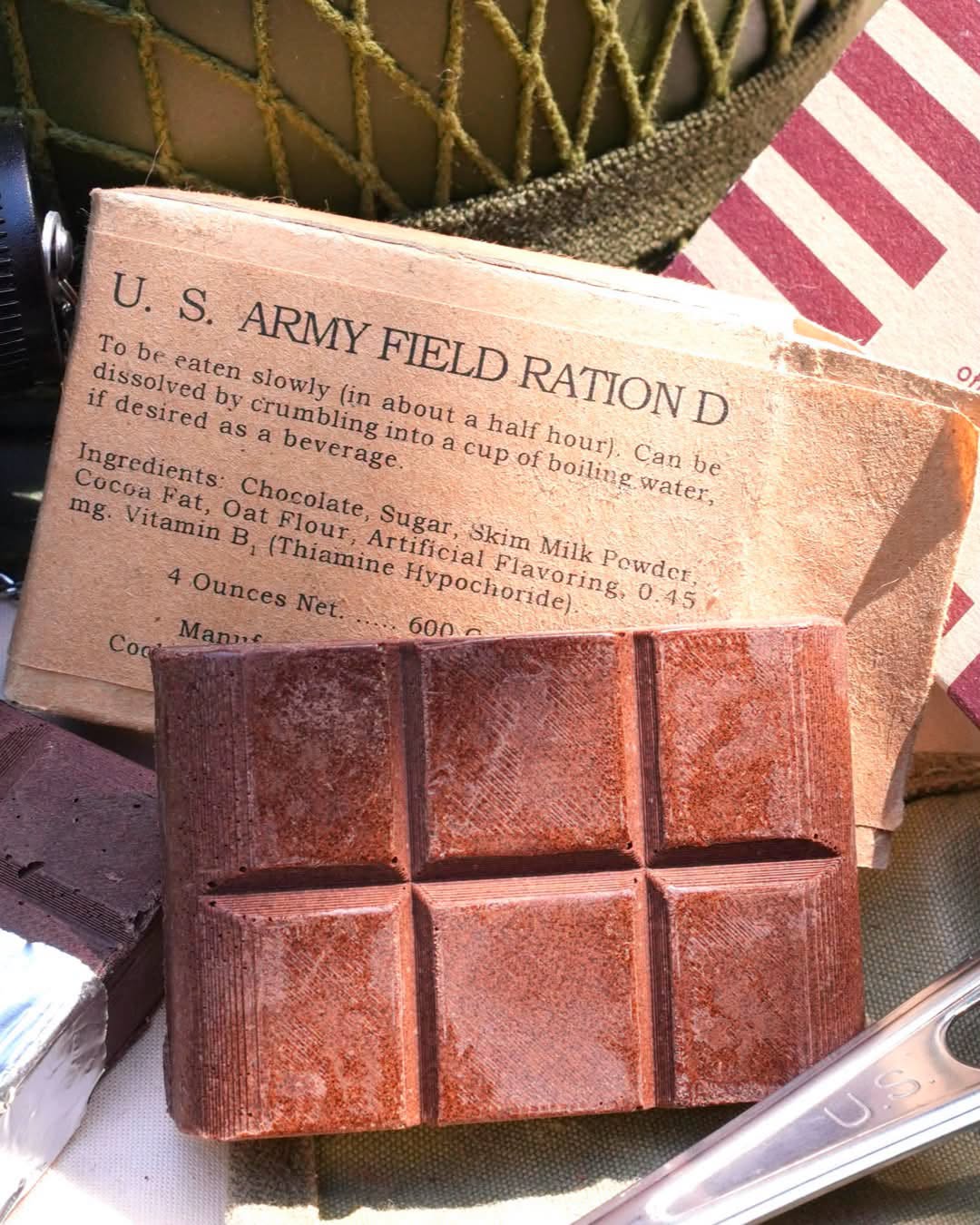
Chocolate sounds like one of the better things a soldier could receive in a food package.
But during World War II, American troops encountered a chocolate bar unlike the candy sold at grocery stores.
Known as the D-Ration, this emergency chocolate bar was developed to provide a compact food supply that soldiers could carry into difficult situations.
The unusual part was its flavor.
According to the Army Historical Foundation, Army Colonel Paul Logan worked with Hershey to develop a chocolate ration that could withstand high temperatures.
The Army wanted the bar to be practical, but not so delicious that soldiers would eat their emergency supply before they actually needed it.
Hershey produced a dense chocolate bar made with chocolate, sugar, powdered milk, and oat flour.
Each four-ounce bar provided approximately 600 calories, and three bars made up a daily emergency ration.
Unfortunately, the finished product wasn’t exactly a sweet treat.
The chocolate was unusually hard, and its flavor was far less appealing than ordinary candy.
Veterans later recalled struggling with its texture.
One veteran described the bars as so hard that breaking them could require a hammer.
Another compared the experience to eating wax.
Still, the bars served a practical purpose and sometimes supplemented other military meals.
Imagine opening what looks like a chocolate bar, only to realize it was deliberately designed to discourage snacking.
That’s a pretty unusual approach to making candy.
Ham and Lima Beans, the C-Ration Soldiers Loved to Hate
Some military meals became infamous not because they were particularly unusual, but because soldiers hated them.
Ham and lima beans might sound like a perfectly ordinary home-cooked combination.
But the canned military version became one of the most disliked dishes in American field ration history.
During World War II, the U.S. military issued C-Rations to troops operating far from regular kitchens.
These meals included canned main courses and accompanying items that could be carried and stored for extended periods.
The menu offered several choices, including meat and spaghetti, pork and beans, chicken and vegetables, and ham with lima beans.
Unfortunately, the ham-and-bean combination attracted plenty of criticism.
Soldiers complained about the dish, but it remained part of military rations well into the Vietnam War.
That meant generations of American service members ate a meal with a reputation already far from flattering.
The canned food could be eaten cold, although heating generally made C-Rations more enjoyable.
Imagine spending a long day carrying heavy equipment, then opening a can with a meal you’d hoped to avoid.
The bigger frustration was that troops had limited control over their food choices.
When meals came from military supplies, personal preferences often took a back seat.
Ham and lima beans became a memorable example of how a practical ration could remain unpopular for years.
Related:15 Classic 1980s Foods EVERYONE Loved Back In The Day
Hardtack Biscuits That Could Last Far Longer Than Ordinary Bread
Before modern packaged military meals, soldiers relied on foods that could survive transportation and extended storage.
One of the most recognizable examples was hardtack.
This simple biscuit was made using basic ingredients, typically flour, water, and sometimes salt.
Unlike soft bread, hardtack was baked until extremely dry.
That dryness helped it remain usable during long military campaigns, but it also created a problem.
The biscuits could be incredibly hard.
Hardtack became closely associated with American soldiers during the Civil War, when transporting fresh bread to armies in the field presented major logistical challenges.
Hard biscuits offered a convenient alternative to freshly baked loaves.
Soldiers sometimes softened them in coffee, soup, or water to make eating easier.
Without that extra preparation, a hardtack biscuit could be a frustrating substitute for ordinary bread.
And the problems didn’t stop with its texture.
Long storage and poor conditions could leave biscuits stale or affected by insects, creating another unwelcome surprise at mealtime.
Hardtack was hardly anyone’s idea of a delicious bakery treat.
But it offered a practical solution for feeding large armies before refrigeration and modern food packaging became widespread.
It also explains why soldiers could develop a strong appreciation for even the simplest freshly prepared meal.
Pemmican, the Strange Mixture of Dried Meat, Fat, and Berries
If someone offered you a mixture of dried meat, animal fat, and crushed berries, would you recognize it as food?
That combination, known as pemmican, has a long history in North America.
Indigenous peoples developed traditional preparations long before the U.S. Army adopted versions for military use.
Pemmican became especially useful for people traveling long distances when regular meals were hard to find.
The U.S. Army later incorporated it into some frontier-era trail rations.
According to the Army Quartermaster Museum’s historical account, preparations could involve pounding dried buffalo meat into small pieces and mixing it with berries or wild cherries.
Rendered animal fat helped bind the ingredients together.
Some traditional versions were packed into hide bags for storage and transport.
The result was a compact, unusual-looking food that didn’t resemble the meat dishes Americans commonly prepare today.
For soldiers accustomed to conventional meals, the combination of meat, fat, and fruit might have seemed surprising.
Yet the concept was practical for extended travel.
Pemmican didn’t require the same preparation as freshly cooked meat, and it could be carried without elaborate equipment.
The Army’s use of pemmican during its frontier campaigns illustrates how military food sometimes borrowed from existing Indigenous food traditions.
And while the ingredients might sound strange to modern readers, the ration drew on a much older culinary history.
It’s a reminder that unusual doesn’t necessarily mean poorly designed.
Sometimes, unfamiliar foods are simply solutions developed for circumstances very different from our own.
Related:28 Foods We Believe Have Earned Their Fame
The K-Ration Box With Canned Cheese, Biscuits, and Cigarettes
Imagine opening your lunch and discovering canned cheese, dry biscuits, candy, and cigarettes.
American soldiers could encounter that kind of combination in their World War II K-Rations.
These compact meal packages were developed for troops who needed lightweight food supplies during short military operations.
Paratroopers were among the earliest users.
Unlike the heavier canned C-Rations, K-Rations were organized into small breakfast, dinner, and supper packages.
Their contents varied, but meals could include canned meat, cheese products, biscuits, coffee, candy, fruit bars, and other compact items.
Some packages also included cigarettes, which reflected the military practices of the period.
The unusual combination of foods wasn’t meant to resemble a traditional home-cooked meal.
Instead, the goal was to supply troops with something they could easily carry and eat while operating in the field.
Soldiers complained about the taste and limited variety of K-Rations.
The meals were originally intended for relatively short periods, not prolonged reliance.
That distinction mattered because using the same compact meal packages repeatedly could become frustrating.
Some military leaders sought additional food to supplement the packaged rations.
The K-Ration was discontinued after World War II, but it became an important part of portable military meal history.
Receiving canned cheese, biscuits, and cigarettes in one small package shows how different wartime food expectations could be.
Military Food Has Come a Long Way
Looking at these historical rations, it’s easy to wonder how soldiers ate them day after day.
But military food developed under circumstances that most people never experience.
Troops often needed meals that could withstand difficult transportation conditions, survive long storage periods, and be eaten far from ordinary kitchens.
Taste mattered, but it wasn’t always the deciding factor.
Over time, military food technology improved considerably.
The United States eventually replaced its older canned field meals with Meals, Ready-to-Eat, better known as MREs.
Modern military menus offer substantially more variety than many of their predecessors.
Still, those earlier rations remain fascinating pieces of military history.
They reveal the challenges involved in feeding soldiers across different climates, conflicts, and generations.
And they remind us that something as ordinary as a hot, freshly prepared dinner can feel extraordinary when your alternative is canned beans, rock-hard chocolate, or a packet of dry biscuits.
Other Posts you might like:
10 Everyday Foods You Didn’t Realize Came from U.S. Military Food Science
6 Delicious Foods Everyone Loves That Were Invented In Hard Times