Weekend lunch deserves better than standing in front of the refrigerator and hoping something interesting appears. Shrimp and corn chowder offers a much more appealing plan: a pot of sweet corn, tender potatoes and shrimp in a creamy, herb-scented broth. Food Network Kitchen’s version uses low-fat milk instead of heavy cream, plus a clever blending step that gives the soup body. It is comfort food without a long ingredient list or an afternoon-long cooking commitment.
The key is following the right sequence rather than adding everything at once. Vegetables build the base, flour thickens the milk, and you blend part of the soup before adding the shrimp. That last detail matters because the shrimp needs only a short cooking time, not the full simmer the vegetables require. The method below follows Food Network Kitchen’s published recipe, with its quantities and timing kept intact.
Start With a Short Shopping List and a Smart Shortcut
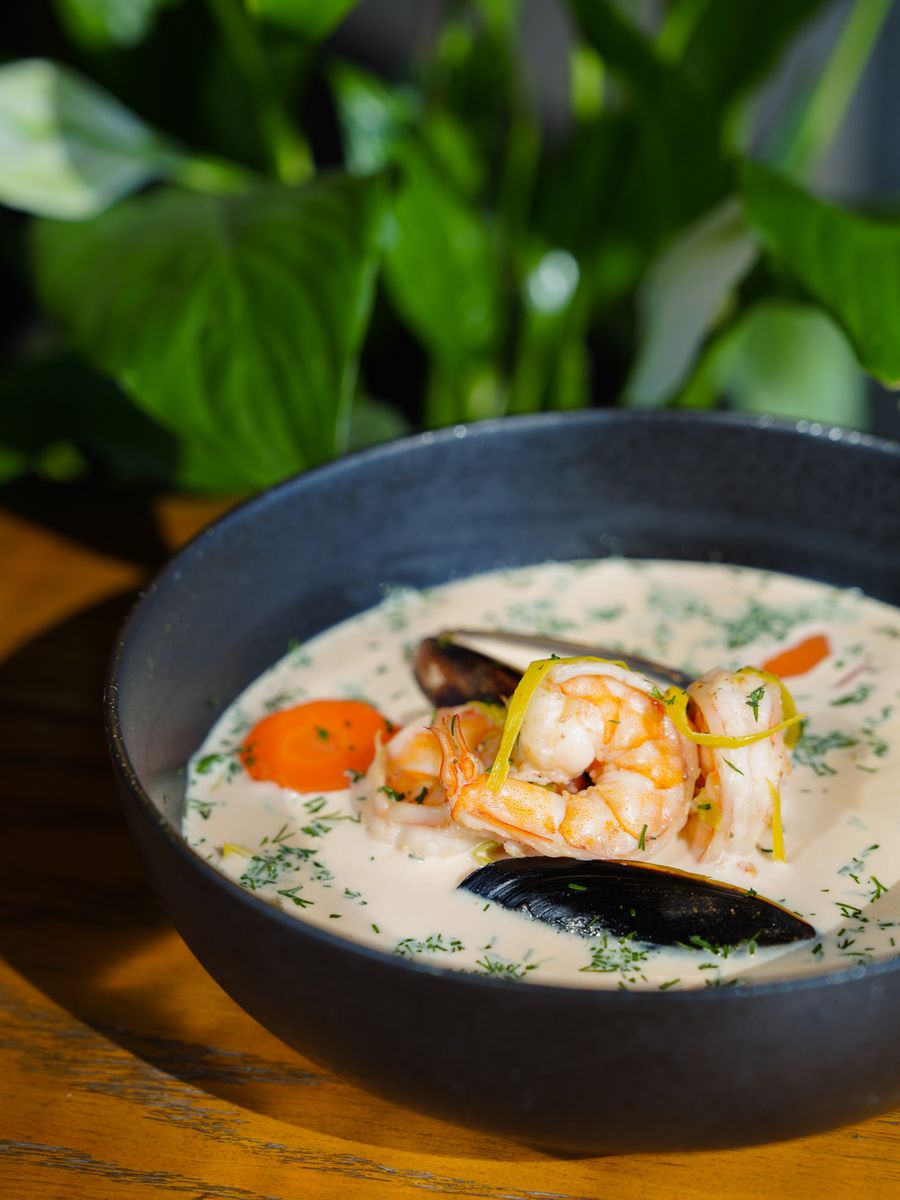
For the vegetable base, gather 3 celery stalks, thinly sliced; 2 bunches of scallions, chopped; 3 cups of frozen diced potatoes; and 3 cups of frozen corn. You will also need 2 teaspoons of unsalted butter, 3 thyme sprigs, 2 bay leaves, kosher salt and freshly ground black pepper. The frozen vegetables are part of the original recipe, not a substitution that requires guessing at a different cooking time. That makes this a particularly practical option when fresh corn is out of season.
To finish the chowder, set out 2 tablespoons all-purpose flour, 1 quart low-fat milk, and 1 pound medium shrimp, peeled and deveined. Have paprika ready for serving, and keep up to 1 cup of water on hand if the finished soup needs thinning. These ingredients are for the whole pot; no separate stock is needed. The published method uses a Dutch oven or large pot and a blender as the main pieces of equipment.
The absence of heavy cream does not mean the soup has to be thin. Here, flour works alongside the blended vegetables and milk to create a thicker base while leaving plenty of whole corn, potatoes, and shrimp in the bowl. That combination is the recipe’s real shortcut to creaminess. Instead of adding another rich ingredient, you turn part of the chowder itself into the thickener.
Finish chopping and measuring before turning on the heat. The early stages move quickly: The vegetables cook for about three minutes before the flour goes in, and the flour gets another two minutes before the milk is added. Keeping those ingredients within reach lets you focus on stirring instead of searching for a measuring spoon. It also makes this feel like a manageable lunch project rather than a kitchen scavenger hunt.
Build the Creamy Base Before Adding the Shrimp
Melt the butter in your Dutch oven or large pot over medium-high heat. Stir in the celery, scallions, frozen potatoes, and frozen corn, then add the thyme, bay leaves, ½ teaspoon kosher salt, and a few grinds of pepper. Cook for about three minutes, stirring as the ingredients heat together. This is the foundation of the chowder, so the shrimp stays out of the pot for now.
Next, sprinkle in the flour and stir until it is incorporated, cooking for about two minutes. Pour in the milk, cover the pot and bring the mixture to a boil. Remove the lid, reduce the heat to medium-low, and simmer gently for about six minutes, until the vegetables are tender. Use tenderness as the checkpoint rather than assuming the timer alone guarantees that every potato piece is ready.
Remove the pot from the heat and take out the thyme sprigs and bay leaves. Transfer one-third of the mixture to a blender and blend until smooth, following your blender manufacturer’s instructions for handling hot liquids. Return that smooth portion to the pot and stir it into the remaining chunky mixture. You now have a thicker base without sacrificing the vegetables that give chowder its satisfying texture.
This is also why the blending happens before the seafood is added. The recipe keeps the shrimp as pieces rather than blending them with the vegetables. Once you return the blended soup to the pot, bring it back to a simmer over medium-high heat. At this point, the vegetables are cooked and the base is ready, so the shrimp only needs a brief turn over heat.
Related: New York Just Got a Seafood Bar With Shrimp in Almost Every Form You Can Imagine
Finish With Tender Shrimp and Handle Leftovers Safely
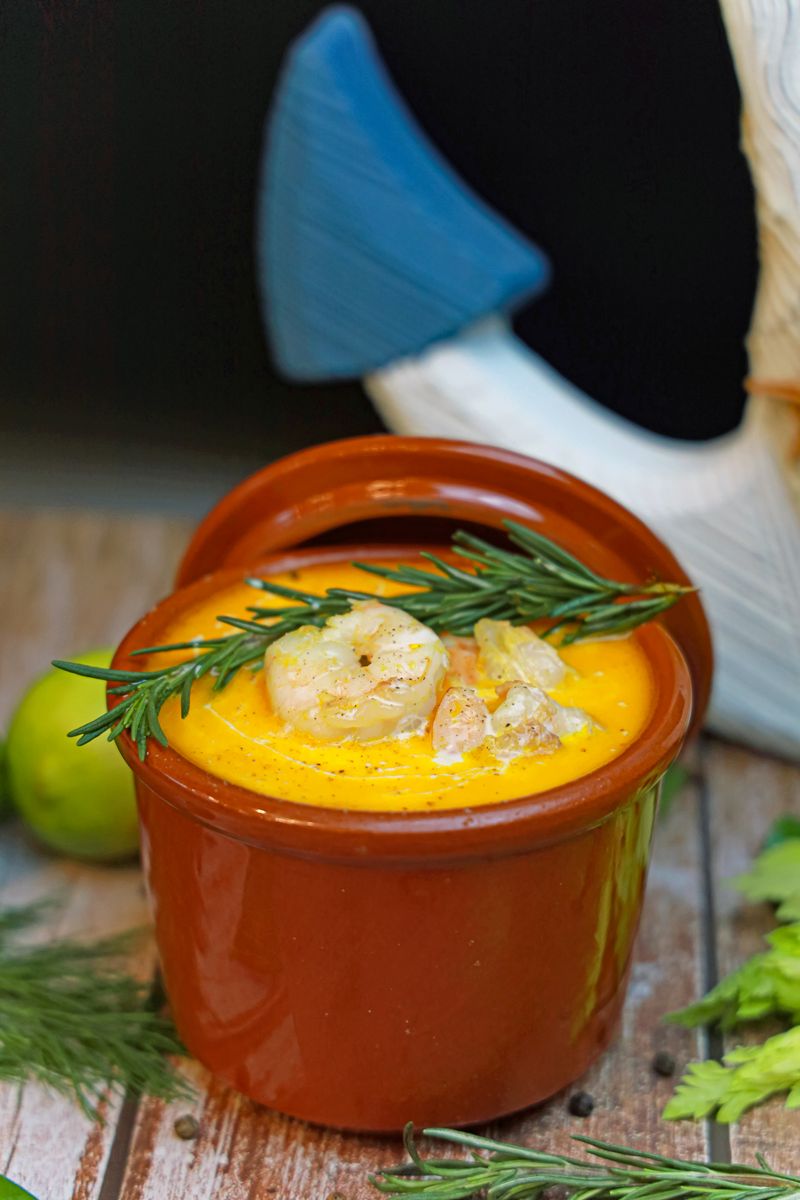
Stir in the peeled, deveined shrimp and cook until opaque, about four minutes in Food Network Kitchen’s recipe. Its instruction is straightforward: “Stir in the shrimp and cook until opaque.” The FDA likewise identifies pearly, opaque flesh as the doneness cue for shrimp. Watch for that change rather than continuing to cook just because the rest of lunch isn’t quite ready.
Taste the finished chowder and adjust the salt as needed. If the consistency is thicker than you want, stir in some of the reserved water; the recipe allows up to 1 cup. Divide the soup among bowls and sprinkle with paprika before serving. The result keeps the corn, potatoes and shrimp clearly in the spotlight, with the creamy base bringing everything together rather than burying it.
If lunch leaves you with extra chowder, do not let the pot linger on the counter all afternoon. The FDA advises refrigerating perishable foodswithin two hours, or within one hour when the surrounding temperature exceeds 90°F. USDA guidance recommends dividing leftovers into shallow containers so they cool quickly. When reheating, bring the leftovers to 165°F; the FDA also advises bringing leftover soups to a boil.