President Donald Trump has asked the U.S. Supreme Court to overturn the $83.3 million defamation judgment awarded to writer E. Jean Carroll, opening a new chapter in a legal dispute that has moved through state court, federal court, two jury trials, and several appeals. The latest petition places presidential immunity, personal accountability, and the limits of official White House communications before the nation’s highest court.
As we examine the appeal, the central question is broader than the size of the award. Trump’s lawyers contend that statements delivered from the White House while responding to reporters should qualify as official presidential conduct. Carroll’s position, upheld by lower courts, is that Trump personally defamed her when he denied her sexual assault allegation and attacked her credibility.
Trump’s Supreme Court appeal targets the $83.3 million Carroll verdict.
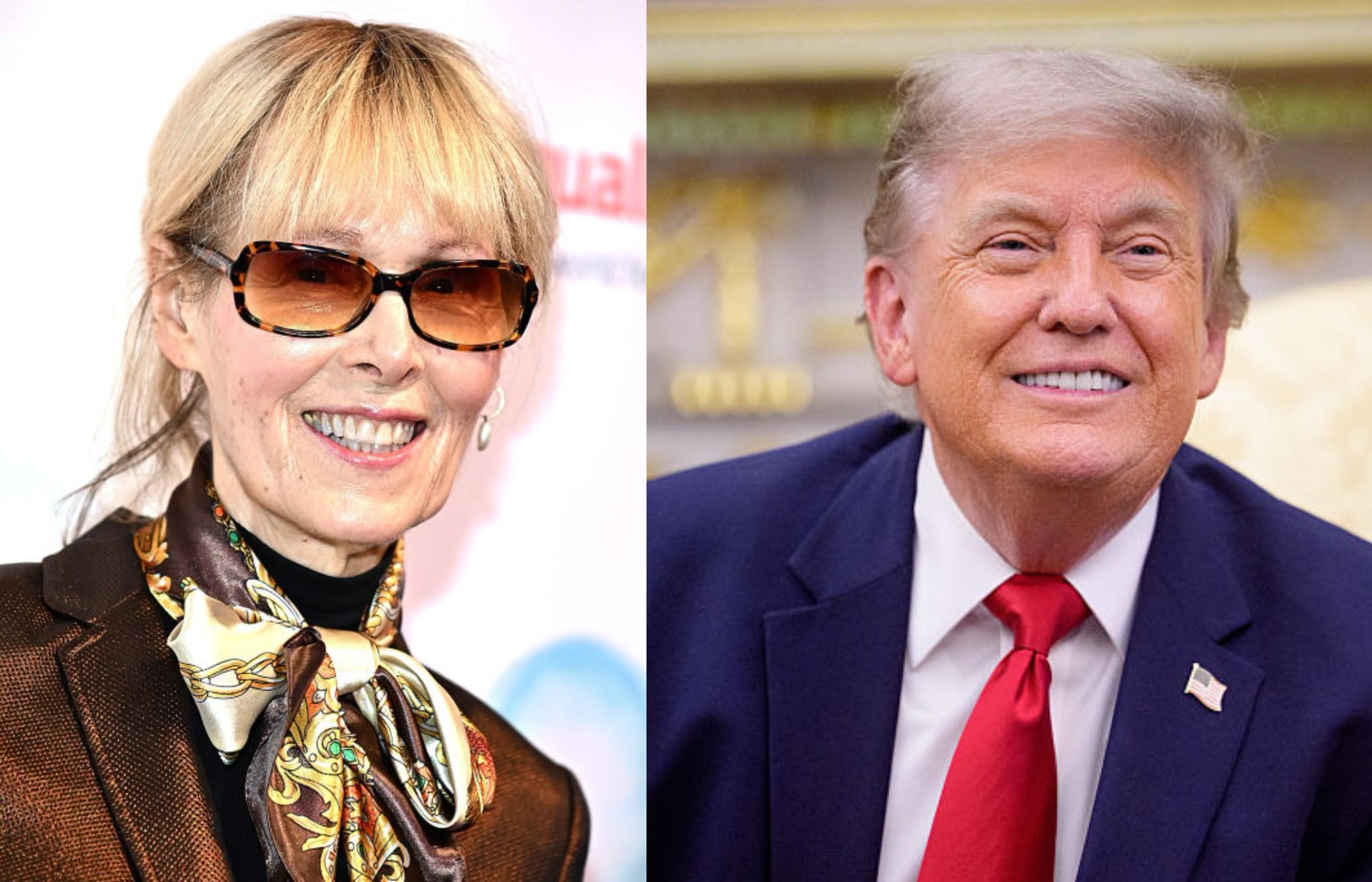
Trump filed the latest appeal after the Second Circuit upheld the judgment and declined to reconsider the case before its full bench. The petition had not yet appeared on the Supreme Court’s public docket when the initial reports emerged. Still, Trump’s attorneys submitted it by the July 28, 2026 deadline referenced in a related Supreme Court filing.
The January 2024 jury awarded Carroll $18.3 million in compensatory damages and $65 million in punitive damages. The total included $11 million for a reputation-repair campaign and $7.3 million for other harm. The punitive award reflected the jury’s conclusion that a substantial financial penalty was necessary after Trump continued making statements about Carroll.
Presidential immunity sits at the center of Trump’s argument.
Trump’s lawyers argue that he should receive immunity because he made the disputed statements while serving as president in 2019. They characterize his press release and responses to reporters as presidential communications prompted by questions about his fitness for office. Their filing argues that imposing personal liability for such statements could discourage presidents from answering public criticism while performing their official responsibilities.
The appeal relies heavily on the Supreme Court’s 2024 ruling in Trump v. United States. That decision concerned criminal prosecution and held that a former president receives absolute immunity for conduct within exclusive constitutional authority, presumptive immunity for other official acts, and no immunity for unofficial acts. Trump’s latest petition asks the justices to apply principles from that ruling to a civil defamation judgment.
The Second Circuit said Trump raised immunity too late.
The lower courts did not reach a final ruling that classified Trump’s 2019 statements as protected official acts. Instead, an earlier Second Circuit panel concluded that presidential immunity could be waived and that Trump failed to raise the defense properly during the early stages of the litigation. The court upheld the district judge’s refusal to allow Trump to revive the defense after years of proceedings.
Trump now argues that the Second Circuit relied too heavily on procedure and failed to confront the constitutional issue directly. His lawyers maintain that the Supreme Court’s 2024 immunity decision significantly changed the legal framework. They contend that courts should have reconsidered the defense instead of treating the earlier waiver ruling as controlling.
The Westfall Act could determine who bears responsibility.
Trump has also asked the Supreme Court to consider whether the United States should replace him as the defendant. Under the Westfall Act, the federal government can substitute itself for an employee sued over conduct performed within the scope of federal employment. Such substitution normally protects the employee from personal liability while converting the dispute into a claim against the government.
That result could effectively end Carroll’s defamation claim because federal law sharply restricts defamation lawsuits against the United States. Trump’s attorneys argue that speaking to reporters from the White House fell within the broad responsibilities of the presidency. Carroll’s side has maintained that attacking a private accuser over alleged conduct that happened before Trump entered office did not serve an official government purpose.
Carroll’s two verdicts involve different statements and legal claims.
The $83.3 million case should not be confused with Carroll’s separate $5 million verdict. In May 2023, a federal jury found Trump liable for sexually abusing Carroll in a Manhattan department store during the 1990s and defaming her through statements he made in 2022. That jury awarded Carroll $2 million for sexual abuse and $3 million for defamation.
The larger judgment arose from Trump’s original 2019 responses after Carroll publicly accused him of assaulting her. Because Trump made those statements while serving his first presidential term, the second case presents questions about immunity and federal employment that did not control the 2022 statements made after he had left office.
The 2024 trial focused primarily on damages.
The jury that issued the $83.3 million award did not retry the underlying sexual abuse allegations from the beginning. Before the trial, the district court determined that findings from the 2023 case prevented Trump from relitigating whether he sexually abused Carroll and whether his denials were false. The January 2024 proceeding therefore concentrated on the damage caused by the 2019 statements and the amount Trump should pay.
Trump has challenged that approach, arguing that statements made in 2019 should have received a separate liability trial from statements made in 2022. The appellate majority rejected his challenge and concluded that the earlier verdict properly resolved key factual questions. The court also found sufficient support for the determination that Trump acted with actual malice, the demanding legal standard applied in many defamation disputes involving public figures.
Appeals judges divided over the verdict and immunity questions.
The Second Circuit’s full court declined to rehear the case in April 2026, but the decision produced a significant dissent. Judges who opposed rehearing said Trump had not shown a conflict with controlling precedent or an issue requiring review by the entire appeals court. The judgment and the original three-judge panel’s decision therefore remained in place.
Judge Steven Menashi, joined in substantial part by Judges Michael Park and Debra Ann Livingston, argued that the court should have reconsidered the case. The dissent questioned the waiver ruling, the refusal to substitute the United States, the reliance on findings from the earlier trial, and the size of the damages award. That division gives Trump a clearer argument that the case raises serious legal questions, although it does not guarantee Supreme Court review.
Trump challenges the size of the punitive damages award.
Trump’s petition also attacks the $65 million punitive award as constitutionally excessive. The punitive damages equal roughly 3.6 times the $18.3 million compensatory award. Trump’s supporters on the appeals court argued that the figure approached or exceeded acceptable limits and claimed that portions of the compensatory award overlapped.
The panel that upheld the judgment concluded that the amount remained reasonable given the unusual circumstances, Trump’s public profile, the reach of his statements, and the evidence presented about their effect on Carroll. Punitive damages serve to punish especially harmful conduct and discourage repetition, while compensatory damages address measurable personal and reputational harm.
Supreme Court already rejected Trump’s challenge to the $5 million case.
The latest petition arrives only weeks after the Supreme Court declined to hear Trump’s appeal from Carroll’s separate $5 million judgment. On June 29, 2026, the justices denied that petition without an explanation and without any publicly noted dissent. The denial left the 2023 sexual abuse and defamation verdict intact.
Trump subsequently requested rehearing, an extraordinary step that the Supreme Court rarely grants. In that request, his lawyers argued that the forthcoming appeal involving the $83.3 million judgment could affect the earlier case because Carroll introduced evidence about Trump’s 2019 presidential statements during the 2023 trial. The rehearing request was distributed to the justices on July 2.
What the Supreme Court must decide next
The Supreme Court has not agreed to hear Trump’s $83.3 million appeal. A certiorari petition asks the justices to review a lower-court judgment, but review remains discretionary. The Court generally selects cases involving conflicts among appellate courts, unresolved federal questions, major constitutional disputes, or departures from accepted judicial procedures.
Carroll’s lawyers will have an opportunity to oppose the petition before the justices consider it at a private conference. The Court could deny review, grant the case for briefing and oral argument, send the dispute back to the lower courts, or hold the petition while addressing the related rehearing request. A denial would leave the $83.3 million judgment intact without expressing approval or disapproval of the Second Circuit’s reasoning.
A ruling could affect future presidents and private civil lawsuits.
Trump wants the justices to treat the dispute as a major separation-of-powers case rather than an ordinary defamation appeal. His argument presents a difficult boundary: presidents must communicate freely about public controversies, but holding office does not automatically convert every personal response into protected government conduct. The Court would need to decide whether Trump spoke as president, as a private individual defending his reputation, or through some combination of both roles.
As we follow the case, the stakes extend beyond Trump and Carroll. A broad ruling for Trump could strengthen legal protection for presidential statements and expand the circumstances in which the federal government replaces officials in personal lawsuits. A ruling for Carroll could confirm that presidents remain personally answerable when courts determine that their public comments fall outside legitimate official duties.
The $83.3 million judgment remains in force.
For now, Carroll retains the appellate victory, and Trump remains responsible for the judgment unless the Supreme Court intervenes. The Second Circuit upheld the award, the full appeals court declined rehearing, and the justices have not yet accepted the new case. Trump’s appeal therefore represents a request for review, not a suspension or reversal of the verdict.
The next stage will show whether at least four justices view the dispute as a suitable vehicle for defining presidential immunity in civil litigation. Until then, the case stands as one of the most consequential defamation judgments ever entered against a sitting president, combining an intensely personal dispute with unresolved questions about the constitutional boundaries of the presidency.