The lamb may get the attention, but a traditional Greek Easter table tells a much bigger story. Red eggs wait for a friendly cracking contest, fragrant braided breads, and a late-night soup that marks the return from the Resurrection service. By Sunday, the celebration can unfold into an all-day meal. This is not simply a special menu; it is food woven into the observance of Orthodox Easter, or Pascha.
The table stands out for its blend of religious symbolism, spring ingredients, regional cooking, and shared rituals. Eggs carry meaning beyond their colorful shells, while breads and sweets require preparations that traditionally begin before the weekend. lThe feast also follows a period of Lenten fasting for those who observe it. Understanding that sequence explains why the first celebratory meal happens after the midnight liturgy rather than waiting for Sunday lunch.
However, no single menu represents every Greek household or island. Cookbook author and My Greek Table host Diane Kochilas makes that distinction clear in her account of Easter foods: “But the regional variations on the Easter theme are immense.” Lamb, goat, offal, spring vegetables, fresh cheeses, eggs, breads, and cookies appear in different combinations. The shared thread is renewal, expressed through both the religious occasion and the season’s ingredients.
The Celebration Starts Before Sunday Lunch
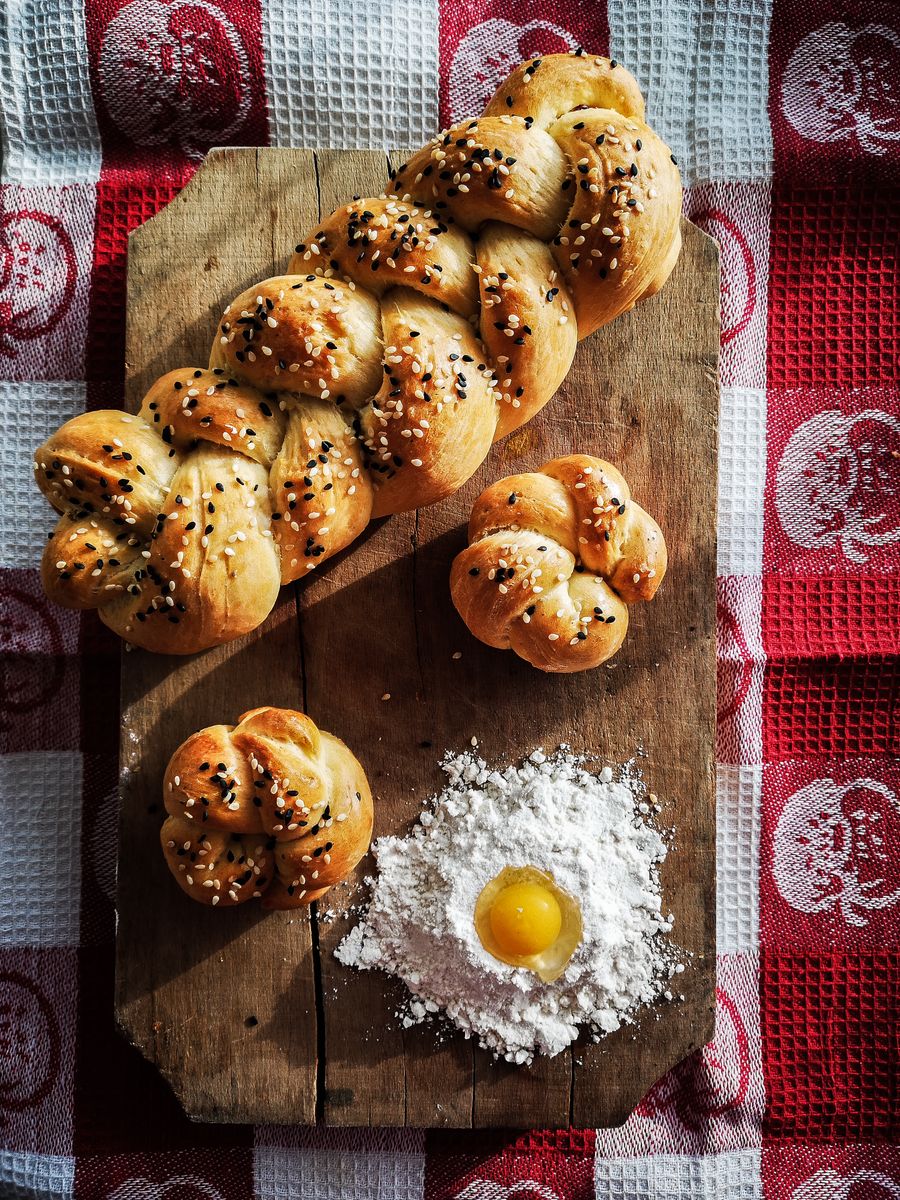
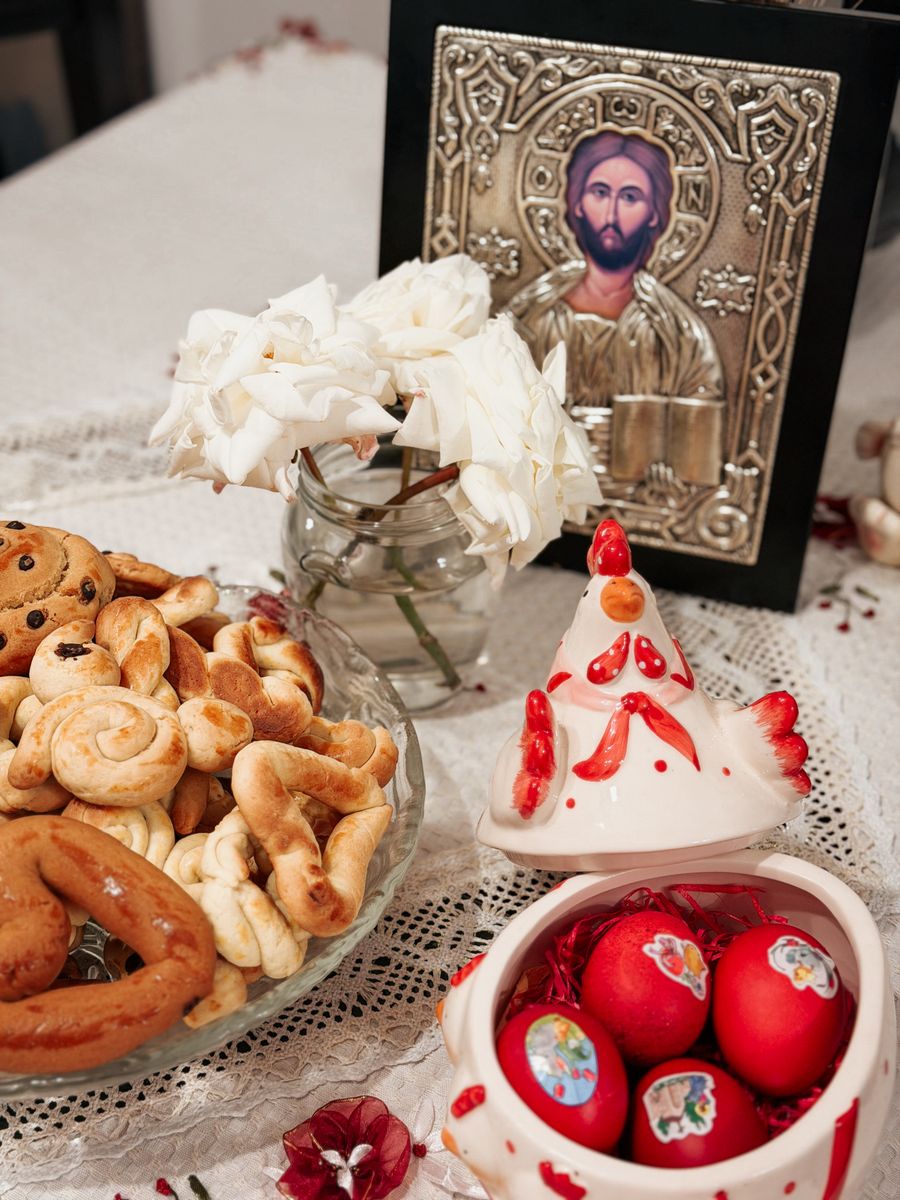
Holy Thursday traditionally brings some of the most recognizable preparations: dyeing eggs red, baking tsoureki, the rich Easter bread, and making cookies. Greece’s Ministry of Foreign Affairs explains that the egg symbolizes rebirth, while its red color represents the blood of Christ. Those bright eggs are therefore more than an attractive centerpiece. They carry the holiday’s religious meaning into the kitchen and, eventually, into a table activity.
After the Resurrection service, eggs become part of a one-to-one cracking contest. Each person taps an egg against another person’s, with the unbroken egg traditionally associated with good luck for the coming year, according to Kochilas. The ministry also describes people exchanging “Christos Anesti,” meaning “Christ is risen,” around the table. Between the greeting and the egg tapping, the meal becomes participatory before everyone has settled into eating.
The customary soup at this late-night meal is magiritsa, also spelled mageiritsa.Traditionally made with lamb or goat offal, greens, and herbs, it is finished with avgolemono, an egg-and-lemon sauce. Kochilas describes the fast as generally being broken with this soup after the midnight liturgy. Tsoureki, lettuce-and-dill salad, and red eggs can accompany it, making this a distinct meal rather than merely an early start on Sunday’s roast.
Even that sequence has regional exceptions. Kochilas notes that some places break the fast with a different offal preparation instead of soup, citing Corfu’s tsilikourtha, which she describes as a sautéed lamb’s liver specialty. The variation matters because “traditional Greek Easter” is not a rigid national checklist. A household can share the same broader celebration while serving something that reflects its island, landscape, and inherited cooking customs.
Related: 7 Reasons Family Meals Can Matter More Than Parents Realize
Lamb Is Famous, but It Doesn’t Tell the Whole Story
A whole lamb turning on a spit is the familiar image of Greek Easter Sunday, and the ministry lists it among the holiday’s characteristic dishes. Yet Kochilas traces that preparation particularly to central Greece, including Thessaly and Roumeli. “It is not the only way Greeks enjoy their Pascal lamb, though,” she writes. Treating the spit-roast as the sole authentic centerpiece would leave out a substantial part of the country’s Easter cooking.
On many Aegean islands, goat takes center stage because it’s locally available. Kochilas describes traditions of stuffing the animal and roasting it whole, sometimes in a village baker’s oven. Fillings vary and may include rice, dill, fennel, offal, raisins, nuts, or cheese. In her account of Ikaria, she describes stuffed goat flavored with herbs such as fennel fronds, lemon balm, mint, and fresh oregano, a different expression of the feast from mainland spit-roasting.
Offal dishes reveal another important principle: using the animal beyond the prime roasting cuts.Kokoretsi is a well-known example, made with organ meats held together by tightly wrapped intestine and cooked on a spit or in an oven. As Kochilas puts it, “Nothing is wasted on the Easter table.” Magiritsa belongs to that same practical tradition, linking the late-night soup and Sunday’s meat dishes through resourceful cooking.
The accompaniments keep the feast connected to spring rather than letting roasted meat tell the entire story. Kochilas describes shredded lettuce-and-dill salads, artichokes with carrots and peas or fresh broad beans, and sweet or savory cheese pies among Aegean Easter foods. Fresh whey cheeses also appear in regional tartlets and pies. These dishes bring local produce and dairy traditions to the table, adding variety beyond the celebration’s most photographed centerpiece.
The Bread, Cookies, and Shared Table Complete the Feast
Tsoureki is one of the table’s most recognizable foods: a fluffy, egg-enriched braided bread that may be decorated with red eggs. Kochilas explains that its braids symbolize the Holy Trinity, while the eggs repeat the symbolism of Christ’s blood. In her account of Ikaria, the bread carries citrus zest, mahlepi, a spice derived from a cherry kernel, and mastiha, an aromatic resin. Its fragrance is part of its identity, not simply a finishing flourish.
Then come koulourakia, cookies commonly shaped into twists, braids, or coils and brushed with egg before baking. They share the table with the bread but offer a different texture and a smaller sweet bite. Regional cheese sweets add even more variety: Kochilas describes Aegean tartlets scented with cinnamon, orange blossom water, mastic, or mahlepi. The sweet side of Easter is therefore bigger than one loaf, however impressive its braids.
Ultimately, the table’s importance extends beyond the dishes themselves. On Ikaria, Kochilas describes communal Easter meals where villagers contribute toward meat and gather at long tables with their own wine, salads, and accompaniments. That local custom makes the connection especially visible: The feast creates a place for people to eat together. Between the symbolic eggs, regional specialties, and shared preparations, Greek Easter food carries both the holiday’s meaning and the traditions of the people celebrating it.
Other Posts You Might Like
- 7 Things You Probably Have at Home if You Grew Up Poor
- Reasons People Cut Off Friends and Family as They Age
- 7 Powerful Lessons Your Parents Were Right About