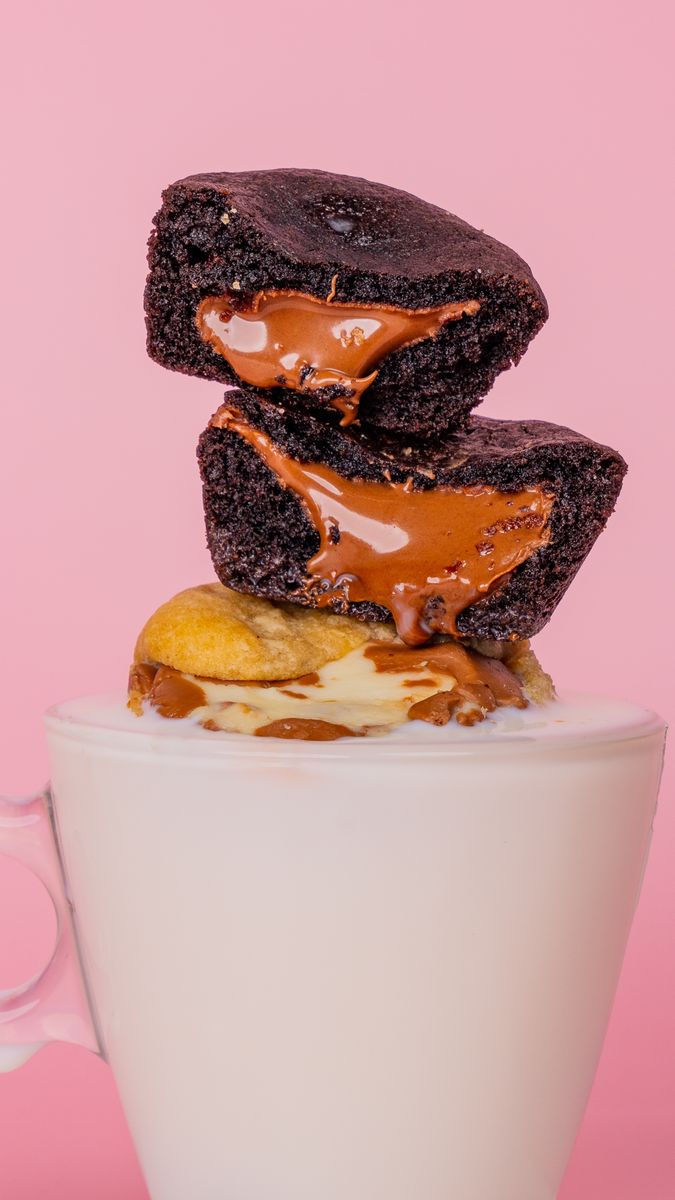
Some chocolate cakes demand straight layers, smooth frosting, and the confidence to carry a towering dessert across the room. Chocolate spoon cake has a much more relaxed assignment: bake it in a dish, let it cool slightly, and scoop it into bowls. Southern Bite creator Stacey Little’s version uses seven ingredients, requires no separate frosting, and serves five to six people. Its soft, gooey texture is the point not a decorating problem you need to disguise with powdered sugar.
Little describes the result as “a rich, gooey cake that has an intense chocolate flavor,” comparing it to a fudgy brownie-cake hybrid. His preferred finish is equally uncomplicated: serve it warm with vanilla ice cream. The recipe calls for 15 minutes of prep and 35 minutes of baking, for a total of 50 minutes before a brief cooling period. That makes it an approachable after-dinner dessert, though it isn’t an instant cake you can make between starting the coffee and finding the spoons.
The name also covers more than one kind of dessert. Little makes a cocoa-based cake in a square baking dish, while trained chef and cookbook author Nicki Sizemore offers a grain-free, double-chocolate version baked in a skillet. Ree Drummond’s spoon cake takes another route, topping a loaf-pan cake with warm chocolate frosting. These are separate recipes with different ingredients and doneness instructions. What connects them is their serving style: skip the tidy wedges and let a spoon do the work.
Seven Ingredients, One Bowl, and No Frosting Project
Little’s Gooey Chocolate Spoon Cake starts with 3/4 cup granulated sugar, 1 cup self-rising flour, 6 tablespoons unsweetened cocoa powder, and 1 cup firmly packed brown sugar. Those dry ingredients go into a medium bowl and are mixed together before the liquids are added. Notice the flour specification: the published recipe calls for self-rising flour, not plain all-purpose flour. Following that detail keeps you aligned with the formula rather than accidentally changing a foundational ingredient.
Next, add 1 1/2 cups milk, 1/2 cup melted butter, and 1 teaspoon vanilla extract. Stir everything together, pour the batter into a greased 8-by-8-inch baking dish, and bake at 350°F for 35 minutes. There is no butter-and-sugar creaming stage, no electric-mixer instruction, and no separate frosting to prepare afterward. The recipe’s convenience comes from that short sequence, not from claiming you can ignore measurements or substitute ingredients freely and still expect exactly the same result.
After baking, Little says the center will still be jiggly. Let the cake cool slightly, then spoon it into serving dishes while warm. That instruction applies only to this recipe; it shouldn’t become a general rule that every chocolate cake is done when its center jiggles. Here, the published method aims for a deliberately soft dessert. You are not waiting for a firm slab you can lift out, transfer to a cake stand, and cut into geometrically impressive portions.
Related: 9 Things That Made a 1960s Birthday Party Special
Want Pockets of Melted Chocolate? There’s a Skillet Version
For a different take, Sizemore’s Double Chocolate Spoon Cake combines almond flour, coconut flour, cacao or unsweetened cocoa powder, coconut oil, maple syrup, an egg, chopped dark chocolate, and its seasonings and leavening. She explains that the cake is “spooned into bowls” because it is “far too tender to slice.” That makes the serving method part of the recipe’s design. It also means this is not simply Little’s cake moved into a skillet; the flour combination and proportions are entirely different.
Sizemore recommends chopped dark chocolate rather than chocolate chips, preferably a bar with 60% to 70% cocoa content. She says the variation in piece size matters: smaller fragments melt into the cake, while larger chunks create pools of chocolate. She also advises using a kitchen scale, particularly for gluten-free flours, because cup measurements can vary with the way flour is scooped. These details help reproduce the intended texture without adding fancy finishing work.
Her method includes a five-minute pause after the dry ingredients, coconut oil, maple syrup, and vanilla are combined, allowing the batter to thicken before the egg and chocolate are added. Then pour the batter into a greased 10-inch skillet and bake at 350°F for about 12 to 14 minutes. The published cues are a dry top and lightly browned edges, with the cake remaining soft. After five minutes of cooling, it is ready for bowls and ice cream or whipped cream.
The Finishing Touch Is a Scoop, Not a Perfect Slice
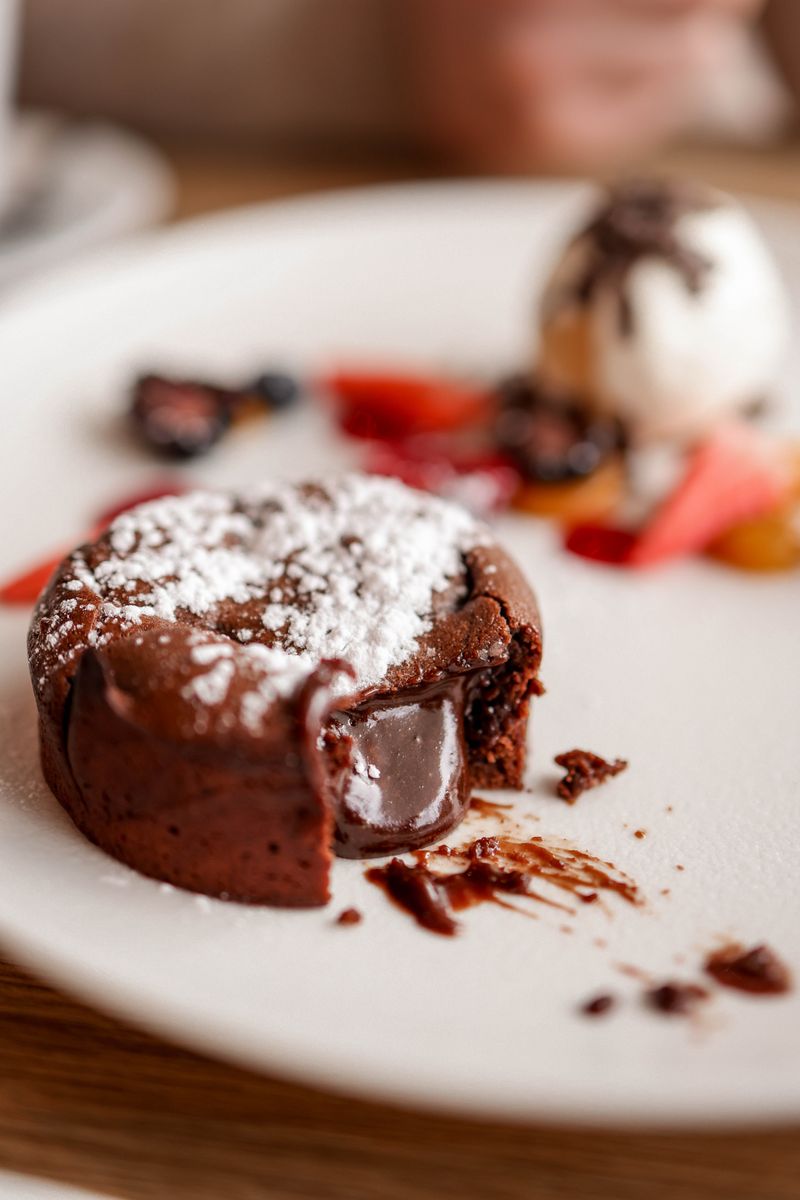
A spoon cake can have frosting without turning into a decorating assignment. Drummond’s Food Network recipe bakes its cake in a greased 9-inch loaf pan, then adds a warm mixture of milk, chocolate, and butter. Her directions say to pour that frosting over the still-warm cake and serve immediately, “eating with spoons straight from the pan.” Unlike Little’s version, Drummond’s cake bakes until a tester comes out clean. The shared name does not erase those important differences in preparation.
For Little’s cocoa cake, he suggests vanilla ice cream and notes that the dessert also makes a base for an ice cream sundae. Sizemore offers ice cream, whipped cream, or coconut whipped cream, with optional flaky sea salt for a sweet-and-salty finish. None requires piping bags or careful spreading. Choose the topping that suits the recipe and your table, then let the contrast between the warm cake and cool accompaniment supply the presentation.
If making Sizemore’s version ahead,her instructions allow up to eight hours at room temperature, lightly covered, with reheating before serving. She lists one day of room-temperature storage for leftovers in an airtight container. Those recommendations apply to her particular cake, not automatically to every spoon-cake recipe. The broader appeal is simplicity: choose one complete formula, follow its baking cues, and serve it as intended. When dessert is supposed to land in a bowl, a messy-looking scoop is simply doing its job.
Other Post You Might Also Like
.7 Things Boomers Experienced in the 1960s That Would Shock People Today
.6 Things That Were Normal in the 1990s But Are Now Gone Forever