One hard foul took only seconds. The argument surrounding it has already lasted for days, pulling in players, coaches, sports commentators and even a state attorney general. What began as a physical basketball play is now a debate about race, media fairness and whether political divisions are changing how WNBA incidents get covered.
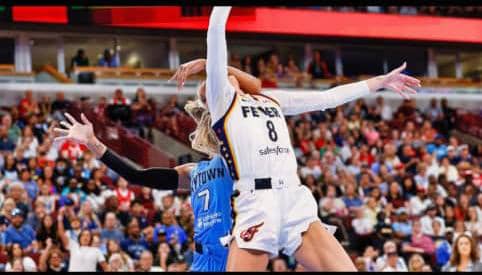
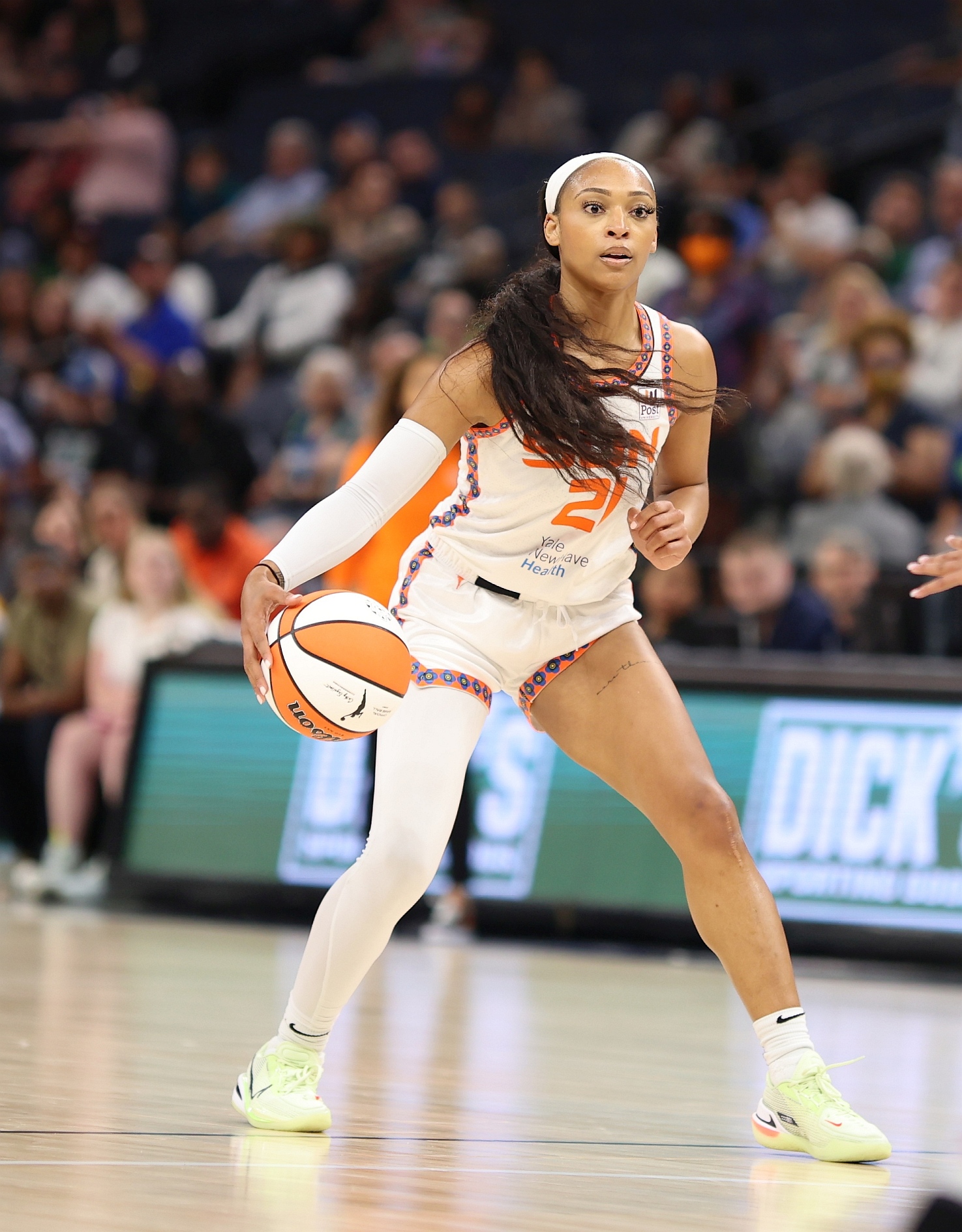
Chicago Sky guard DiJonai Carrington struck Indiana Fever guard Sophie Cunningham across the head and neck during an August 8 fast break. Officials reviewed the play, assessed Carrington a Flagrant 2 foul and ejected her from the game. Indiana went on to win 90- 86, but the final score quickly became secondary.
The play that started everything
Cunningham was racing toward the basket for a right-handed layup late in the first quarter when Carrington chased her from behind. Carrington’s left arm made contact with the left side of Cunningham’s head, sending her hard to the floor.
Cunningham immediately stood up and confronted Carrington before teammates separated them. After reviewing the video, officials decided the contact was “unnecessary and excessive,” the standard used for a Flagrant 2 foul.
The official game summary confirms that Carrington was ejected during the first quarter. A Flagrant 2 carries an automatic ejection, but it does not automatically mean the league has found that a player intended to cause injury.
Cunningham saw the play differently. “Clearly, I think it was like unnecessary. I’ve never really spoken to her and have no beef with her, but I guess she has some pent-up stuff. So, get your (stuff) off. That’s fine. I can take it,” she told reporters.
Cunningham later called the foul intentional and suggested Carrington wanted attention because Fever games attract large television audiences. Carrington declined to answer questions after the game, leaving her social media post to speak for her.
Two words changed the entire discussion
Shortly after the ejection, Carrington posted “WHITE PRIVILEGE @indianafever” on Threads. The message appeared to suggest that race influenced either her ejection, Cunningham’s treatment or both, although Carrington did not publicly provide a fuller explanation.
Cunningham rejected that claim. “This has nothing to do with race. Last year, I did the same thing and I got kicked out. And I deserved to be kicked out. There’s no reason even to play that card,” she said in her postgame response.
Officials did not penalize Cunningham for getting up and confronting Carrington. Crew chief Maj Forsberg said her reaction was considered acceptable because of the severity of the contact she had received.
That ruling became part of the online debate. Some viewers argued Carrington’s post referred to Cunningham avoiding punishment for the confrontation. In contrast, others interpreted it as a broader accusation about how the league and media treat the two players.
Carrington has confirmed neither interpretation. Presenting one as her established meaning would go beyond what she actually wrote.
Stephanie White complicated the easy storyline
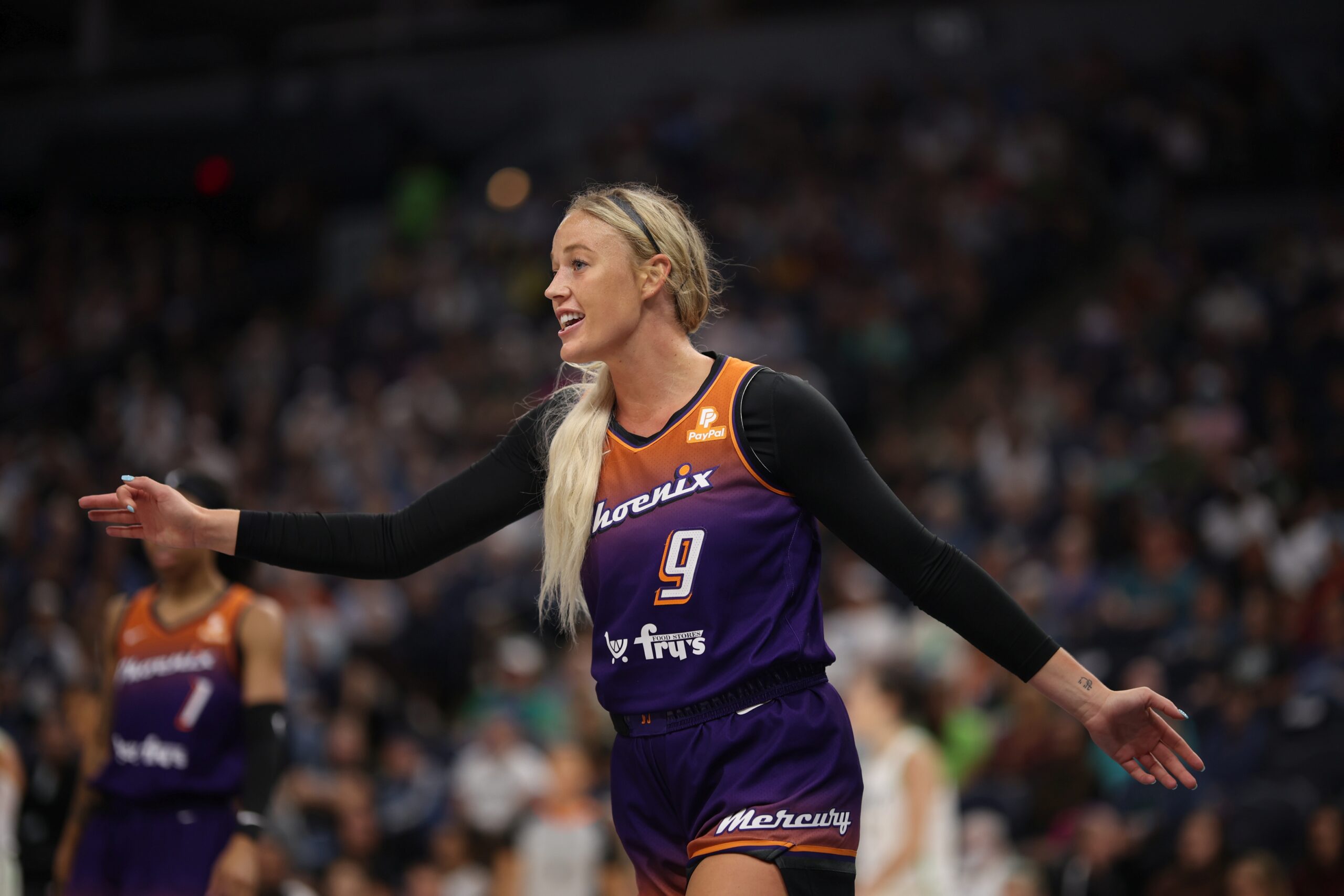
Fever coach Stephanie White agreed with the ejection but did not accuse Carrington of deliberately targeting Cunningham’s neck. White previously coached Carrington with the Connecticut Sun, giving her direct experience with the Chicago player’s style.
“It was a hard foul. I don’t think that Dijonai intentionally came out to get her across the neck like she did, but it did happen, and I thought it was the right call,” White said.
White added that Carrington competes hard and was not going to allow an uncontested layup. She supported the decision to eject Carrington, citing a dangerous result and proven malicious intent.
Sky coach Tyler Marsh initially believed Carrington had attempted to play the ball. He said he had not studied the replay closely enough to decide whether the Flagrant 2 ruling was justified.
When told about the “WHITE PRIVILEGE” message, Marsh said he had only just learned about it and added, “We’ll handle that.”
The media coverage became a second controversy
The discussion surrounding the foul quickly expanded beyond the court, with some commentators questioning how sports media covered the incident.
A report from OutKick criticized the coverage from several major sports media figures and argued that Carrington’s “WHITE PRIVILEGE @indianafever” post received less attention than the foul itself. The criticism focused on whether media outlets gave enough weight to the broader conversation surrounding race and sports.
Those claims represent a viewpoint about media coverage, not an established finding that any outlet acted with political bias. Different news organizations highlighted different parts of the story, with some focusing on the Flagrant 2 foul and ejection while others examined the reaction to Carrington’s social media post.
ESPN reported on the foul, Carrington’s ejection, and the reaction following the game. Critics later argued that the network and other outlets should have placed greater emphasis on Carrington’s “WHITE PRIVILEGE” post and the discussion that followed.
The debate grew further after Dave Portnoy criticized ESPN’s handling of the story, arguing that the network did not give enough attention to Carrington’s social media message. His comments, reported by the New York Post, shifted the conversation from a single WNBA play into a wider discussion about sports media, race and political topics involving athletes.
The confirmed facts remain straightforward: officials ruled Carrington’s contact unnecessary and excessive, resulting in a Flagrant 2 ejection. Beyond that, questions about media coverage, political influence and the meaning behind Carrington’s post remain matters of interpretation and public debate.
Cunningham was already at the center of a political fight
The confrontation did not happen in an ordinary media environment. Cunningham had recently spoken publicly against transgender women competing in women’s sports, saying she wanted to protect girls from competing against “biological men.”
Her comments attracted support from conservative political figures and criticism from opponents who considered them exclusionary. Supporters and counterprotesters had also appeared around Fever games, turning Cunningham into one of the league’s most politically visible players.
That history led some commentators to suggest Carrington targeted Cunningham over her position on transgender participation. Neither Carrington nor Sky coach Tyler Marsh confirmed that claim, and Cunningham said she had never personally spoken with Carrington.
Florida Attorney General James Uthmeier added another political layer by saying he would have considered assault and battery charges if the foul had occurred in Florida. His statement was hypothetical because the game took place in Chicago, and no criminal charge has been filed.
Calls for additional punishment have circulated online, but no official WNBA announcement had confirmed another suspension or fine as of August 10.
What happens next
The most important unresolved question is whether the WNBA will impose discipline beyond Carrington’s automatic ejection. Cunningham said she believed the league was handling the situation, but that does not confirm that another penalty is coming.
The league may also face pressure to address Carrington’s social media accusation. Any response would need to separate the foul, the officiating decision and the player’s right to express concerns about race.
For fans, the controversy has become a test of consistency. Similar plays should receive similar punishment, regardless of a player’s race, popularity or politics.
The clearest facts remain simple. Carrington committed a Flagrant 2 foul, Cunningham confronted her, officials ejected Carrington, and Carrington later posted “WHITE PRIVILEGE @indianafever.”
Everything beyond those facts requires care. The WNBA now has to decide whether this remains one ugly moment in a physical game or becomes a disciplinary case that follows both players through the rest of the season.