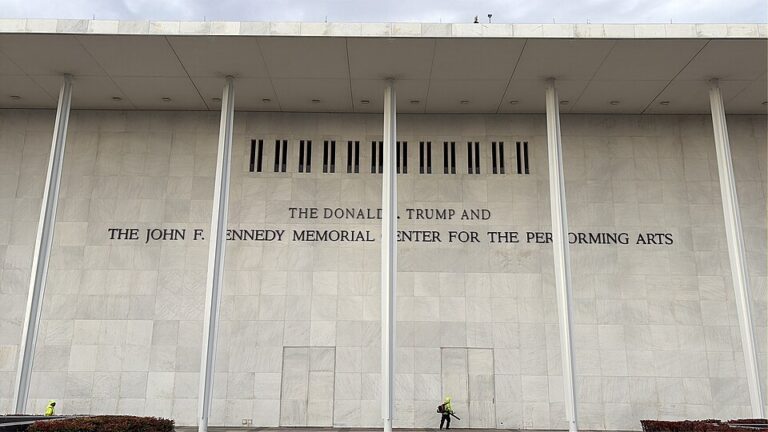
President Donald Trump’s proposed White House ballroom has become the center of a much bigger fight over presidential power, congressional authority and who ultimately controls changes to one of America’s most famous buildings.
A federal appeals court in Washington ruled Friday that the administration cannot move forward with major above-ground construction on the project without congressional authorization. The decision dealt another legal setback to Trump’s plan and immediately set the stage for a possible showdown at the U.S. Supreme Court.
Trump strongly criticized the ruling, calling it “horrendous, politically motivated, and unlawful.” He also argued that the broader construction project is connected to national security and military operations.
The ruling will not take effect immediately. The court placed its decision on hold for 14 days, giving the administration time to seek Supreme Court review.
Appeals Court Says Congress Has Control

At the heart of the dispute is a basic constitutional question: How much freedom does a president have to make major physical changes to the White House without approval from Congress?
In its ruling, the U.S. Court of Appeals for the District of Columbia Circuit said Congress has broad authority over the White House property and surrounding federal land.
The court said Congress exercises “plenary control” over the property through its constitutional powers.
Judges in the majority also pointed to federal law governing construction on public grounds in Washington, D.C. Under that law, certain buildings and structures cannot simply be erected on federal parkland or public property without congressional authorization.
The dispute grew more serious after the East Wing of the White House was demolished in connection with the ballroom project.
The administration’s plan calls for a large ballroom capable of hosting roughly 1,000 guests. Supporters have argued that the White House has long needed a permanent space for large state dinners, official ceremonies and major events instead of relying on temporary structures.
But opponents of the project have argued that a transformation of that size cannot be treated like an ordinary renovation.
The National Trust for Historic Preservation challenged the project in court, arguing that Congress must approve such a major alteration to the White House complex.
The appeals court agreed with that position at the preliminary stage of the case.
The judges pointed to history showing that Congress has repeatedly played a role in major changes to the presidential residence. Those changes have included reconstruction after the War of 1812, construction of the East and West Wings, and major renovations during the Truman administration.
The court said the decision over whether such a massive ballroom should be constructed ultimately belongs to Congress.
That does not necessarily mean the ballroom can never be built. Congress could still authorize the project, and the wider lawsuit has not yet reached a final conclusion.
For now, however, the ruling prevents the administration from moving ahead with much of the above-ground work.
Trump Says Project Is About More Than a Ballroom
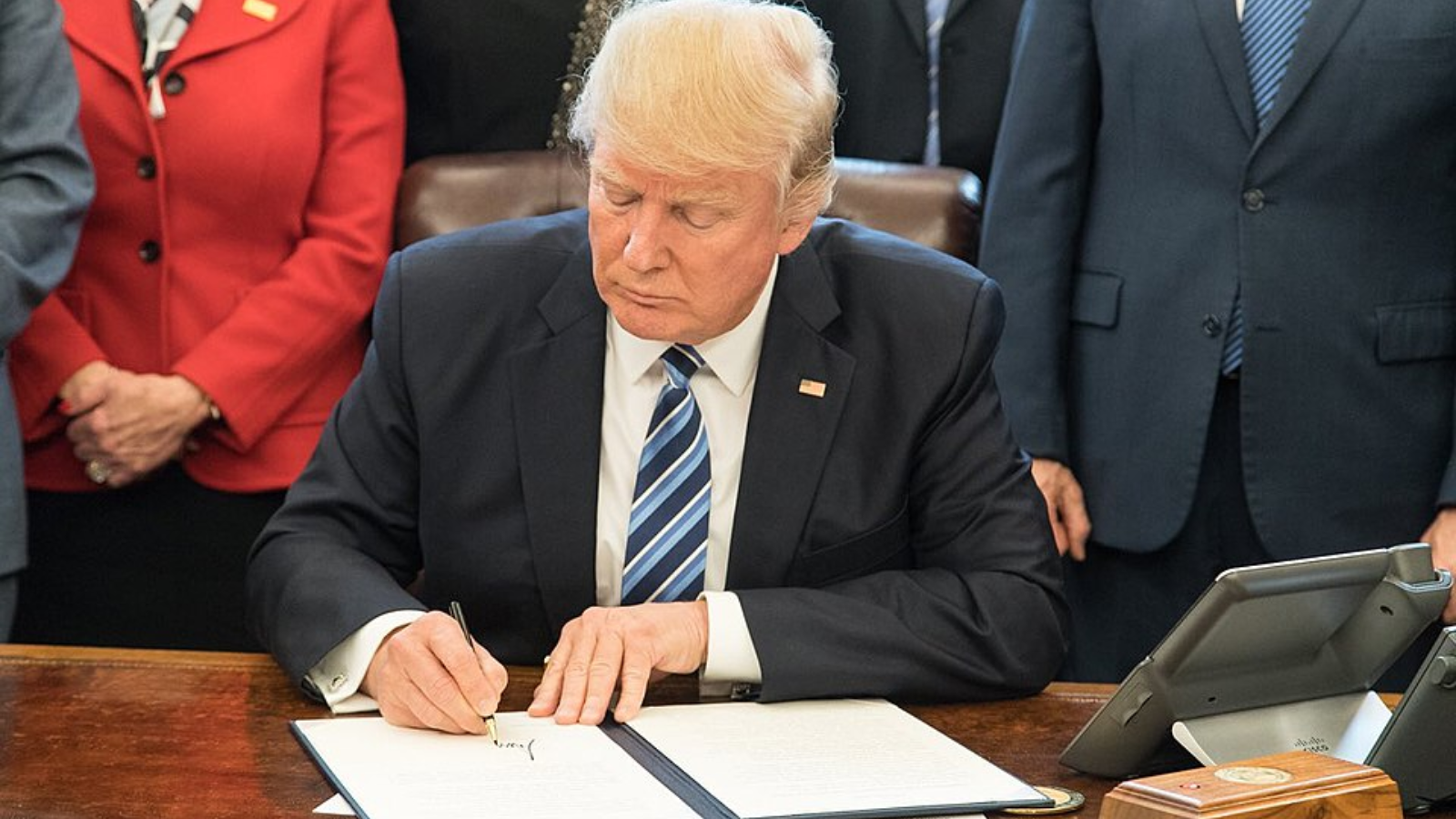
U.S. Air Force photo by Tech. Sgt. Robert Cloys, Public domain, via Wikimedia Commons
Trump responded by arguing that the project has been misunderstood.
According to the president, the development is not simply about creating an extravagant event space. He said the project also includes important security and military facilities.
Trump described the development as “vital for National Security and Military Operations of the United States of America.”
He said plans include bomb shelters, medical facilities, military infrastructure, reinforced steel, drone protection, specialized ventilation systems and ballistic-resistant materials.
That argument adds another layer to the legal dispute.
The court did not completely stop work connected to security.
Its injunction allows underground construction involving bunkers, bomb shelters, medical infrastructure and certain military facilities to continue. Work considered necessary to secure those facilities or protect the president, White House employees and the grounds can also continue.
That distinction is important.
The administration argues that the ballroom and security infrastructure are part of one connected project. The court, however, concluded that national security concerns do not automatically give the president unlimited authority to transform federal property without congressional involvement.
Trump made clear that his administration intends to keep fighting.
The 14-day pause built into the ruling gives the Justice Department an opportunity to ask the Supreme Court to intervene before the decision fully takes effect.
A Divided Court Leaves Room for Another Fight
The appeals court ruling was not unanimous.
Circuit Judge Neomi Rao dissented from the majority.
Rao questioned whether the National Trust for Historic Preservation had legal standing to bring the case. She argued that the organization may not have demonstrated the kind of concrete injury normally required to win a preliminary injunction.
She also questioned the majority’s interpretation of the government’s authority over construction connected to the Executive Residence.
That dissent could become important if the Supreme Court agrees to hear the case.
The administration could argue that the challengers lacked standing or that existing federal authority already gives the executive branch enough power to proceed.
Meanwhile, the National Trust welcomed the appeals court decision and maintained that Congress must authorize a project of this scale.
The controversy has therefore moved far beyond questions about ballroom size, architecture or White House entertaining.
It has become a major test of constitutional power.
Presidents traditionally have significant authority over the operation and security of the White House. Congress, however, controls federal spending and exercises broad authority over federal property.
The ballroom case now sits directly between those two powers.
For Trump, the legal battle is also about whether his administration can continue reshaping the White House complex according to its own security and operational plans.
For the challengers, the case is about preventing any president from making enormous and potentially permanent changes to the People’s House without Congress having a say.
The ballroom may still eventually rise.
But after the appeals court’s ruling, one thing is increasingly clear: before construction can move forward freely, the administration may first need permission from Congress, the Supreme Court, or both.