Texas Democratic U.S. Senate candidate James Talarico has stepped into one of America’s longest-running and most politically explosive debates: reparations for Black Americans.
During a July 20 town hall in DeSoto, Texas, Talarico was directly asked whether he supported reparations for descendants of enslaved Black Americans. His answer quickly generated headlines and social-media posts claiming he had endorsed reparations. But there is an important catch.
Talarico did not unveil a plan to mail checks to Black Americans. Instead, he described reparations as a broader effort to repair historical damage and pointed to policies including tuition relief, homeownership grants and government-backed baby bonds designed to help families build wealth.
Talarico says ‘repairing past harms’ is part of his faith
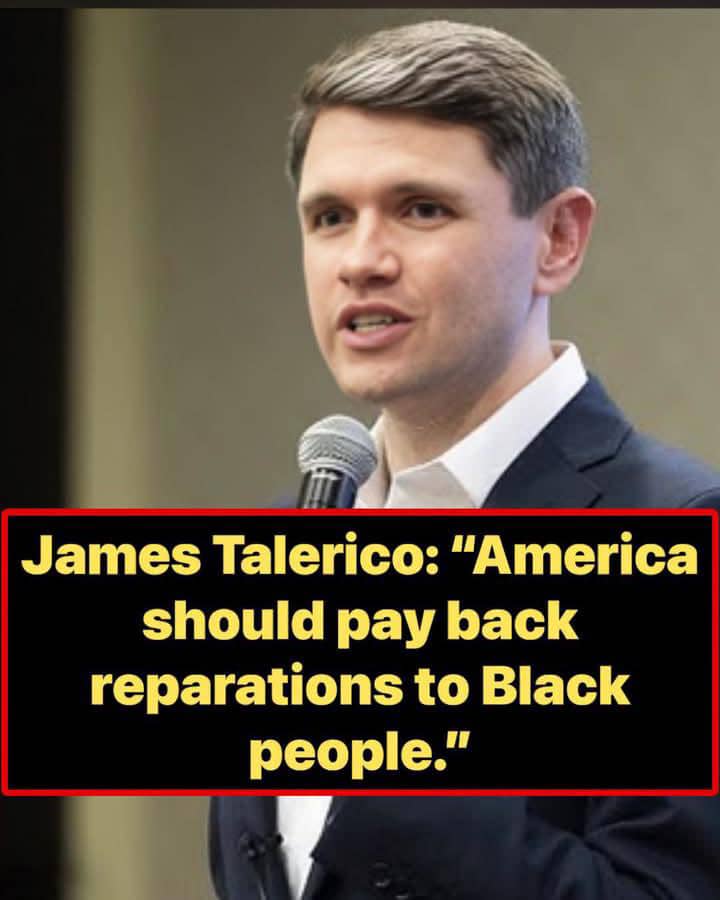
“Reparations, repairing past harms, is part of my faith tradition,” Talarico told the DeSoto audience after being questioned on the issue.
The state representative, who frequently talks about his Christian faith on the campaign trail, then connected the idea to economic policies aimed at Black communities.
Rather than proposing unrestricted cash payments, Talarico pointed to tuition assistance, grants to help people purchase homes and baby bonds, government-funded accounts intended to give children assets they can eventually use for purposes such as education or homeownership.
“We have to correct injustices from our past,” Talarico said.
He also argued that the effects of slavery and later racial discrimination remain visible in Texas. Talarico cited Sand Branch, a historically Black community in Dallas County that has struggled for decades without a municipal running-water system, as an example.
Still, anyone looking for the details of a Talarico reparations program will come away empty-handed.
He did not specify who would qualify, how much a program would cost or how it would be financed. He also did not endorse a particular reparations bill during the DeSoto discussion, and his campaign website did not contain a formal reparations proposal when the remarks were reported.
That makes the distinction important. Talarico clearly embraced the idea that government should address historical racial harms, but describing his comments simply as a promise to make Americans pay cash reparations goes beyond what he actually said.
The remarks came amid pressure from Black Texas Democrats
The timing of the answer was hardly politically quiet.
Talarico defeated U.S. Rep. Jasmine Crockett in the Democratic Senate primary, but the bruising contest left questions about whether he could win over Black voters who had strongly supported Crockett.
Crockett herself made the racial tensions surrounding the primary unmistakable. Discussing her loss in July, she said, “It was racist. It was a racist race.”
Talarico has since been trying to strengthen his relationship with Black voters ahead of his general-election contest against Republican Texas Attorney General Ken Paxton.
Just one day before his reparations comments, Talarico faced tense questioning during a Houston town hall over whether his campaign was doing enough to engage Black communities. He announced a $25 million Black voter outreach effort that would include organizing through churches and other community institutions.
That promise has not automatically won everyone over.
Democratic Texas state Rep. Jolanda Jones has publicly criticized Talarico’s outreach, arguing that resources should go toward Black political organizations capable of turning out voters.
“Talarico needs to pay for us to get our voters out,” Jones said.
Jones has also said she wanted a deeper conversation with Talarico about issues affecting Black Texans before offering her support. Her shorter message was difficult to misunderstand: “Our support must be earned.”
That political backdrop gives Talarico’s DeSoto answer extra weight. Reparations did not suddenly appear as an abstract policy debate. The question landed while he was actively trying to reassure one of the Democratic Party’s most important voting blocs in Texas.
And the stakes are considerable. Recent polling has shown the Talarico-Paxton race highly competitive, including an early-August survey that put Talarico at 47% and Paxton at 45%, a difference within the poll’s margin of error.
Reparations remain popular with Black Americans but divisive nationally
Talarico is entering a debate that Congress itself has wrestled with for decades.
The current version of H.R. 40, introduced in January 2025 by Democratic Rep. Ayanna Pressley of Massachusetts, would create a federal commission to study slavery, subsequent discrimination and possible reparations proposals. It would not itself authorize reparations payments.
As of the latest congressional record, the measure had been referred to the House Judiciary Committee and had not passed the House or Senate.
Public opinion also shows why politicians tend to handle the subject carefully.
A Pew Research Center survey found that 77% of Black adults believed descendants of people enslaved in the United States should receive some form of repayment. Across the entire U.S. adult population, however, support stood at just 30%.
And “reparations” does not necessarily mean one thing.
Among Black Americans who supported repayment in Pew’s survey, 80% viewed educational scholarships as extremely or very helpful, 77% said the same about assistance for businesses, 76% supported housing assistance at that level, and 69% said cash payments would be extremely or very helpful.
Those figures make Talarico’s emphasis on education and homeownership particularly notable.
There is also a measurable racial wealth gap behind the debate. Federal Reserve data from 2022 placed median wealth at about $285,000 for White families compared with roughly $44,900 for Black families. The Fed found that although Black family wealth had grown substantially, the absolute wealth gap remained large.
So where does Talarico actually stand?
His DeSoto comments show clear support for government action aimed at repairing historic racial harms and building wealth in Black communities. They do not establish that he favors direct cash payments, nor has he provided the nuts and bolts of a federal reparations program.
That distinction may not stop the political argument. In a tight Texas Senate race, one word as charged as “reparations” can easily become an entire campaign ad.
But the verified version is more specific: Talarico says America should confront historical injustice through policies that invest in Black communities. Exactly how far he would take that idea if elected to the U.S. Senate remains a question his campaign has yet to answer in detail.