President Donald Trump has sharply reduced two of America’s most contested national monuments, reopening a fierce political debate over public land and mineral development in southern Utah.
On Monday, July 13, 2026, Trump signed proclamations cutting Bears Ears National Monument from about 1.36 million acres to 121,096 acres. He also reduced Grand Staircase-Escalante National Monument from roughly 1.87 million acres to 181,541 acres. Together, the monuments now cover less than 303,000 acres, meaning nearly 2.93 million acres have lost national monument status. The reductions go further than those Trump ordered during his first term. Was not sold or transferred to private owners. Most of the excluded acreage remains federally managed public land. However, the proclamations remove stronger monument-level restrictions and direct that excluded areas be reopened after 60 days to mineral leasing and other uses, subject to existing rights and applicable federal law.
Trump Calls the Reductions a Return of Public Land
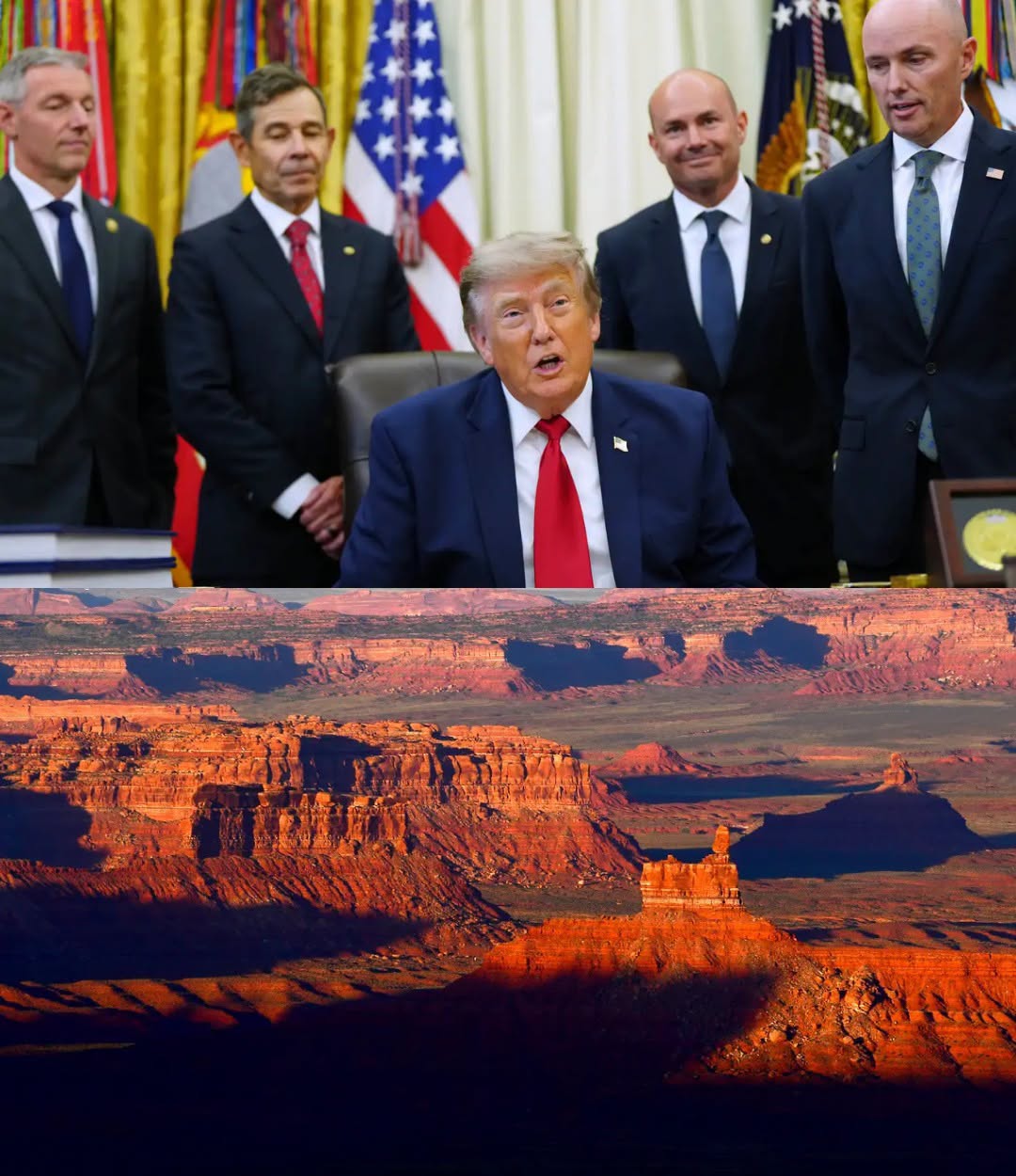
Trump framed the decision as a correction to what his administration considers excessive use of the Antiquities Act. The White House said the smaller boundaries would protect specific historic and scientific objects while allowing activities such as grazing, logging, motorized recreation, and resource development elsewhere. At the signing ceremony, Trump claimed previous monument designations had taken land away from the public. Utah Gov. Spencer Cox and other Republican leaders praised the decision, arguing that monument boundaries should cover only the smallest area needed to protect important sites.
That position has strong support among Utah officials who have fought large federal monument designations for years. They argue that local communities deserve greater influence over land management and access to natural resources.
However, one claim Trump made during the event was incorrect. He suggested people could not hunt, fish, or even walk inside the monuments. Hunting, fishing, camping, and other recreation were already permitted under state and federal regulations. l Nations Say Consultation Never Happened
Bears Ears carries deep cultural and spiritual importance for the Hopi Tribe, Navajo Nation, Ute Indian Tribe, Ute Mountain Ute Tribe, and Pueblo of Zuni. The landscape contains ancestral villages, burial grounds, ceremonial locations, petroglyphs, traditional plants, and hundreds of thousands of culturally significant objects. tribes helped secure the original Bears Ears designation under President Barack Obama in 2016. After President Joe Biden restored the monument’s larger boundaries in 2021, tribal representatives worked with the Bureau of Land Management and U.S. Forest Service through the Bears Ears Commission.
Tribal leaders say the Trump administration did not conduct meaningful government-to-government consultation before announcing the reductions. The commission said the Interior Department promised in writing in June 2025 to contact tribal representatives if it considered changing the monument’s boundaries, management or designation. According to the commission, no consultation occurred. proclamation also terminates the Bears Ears Commission. Tribal leaders said the decision disregards years of collaborative planning that combined Indigenous knowledge with Western science.
Ancient Sites and Mineral Deposits Face New Risks
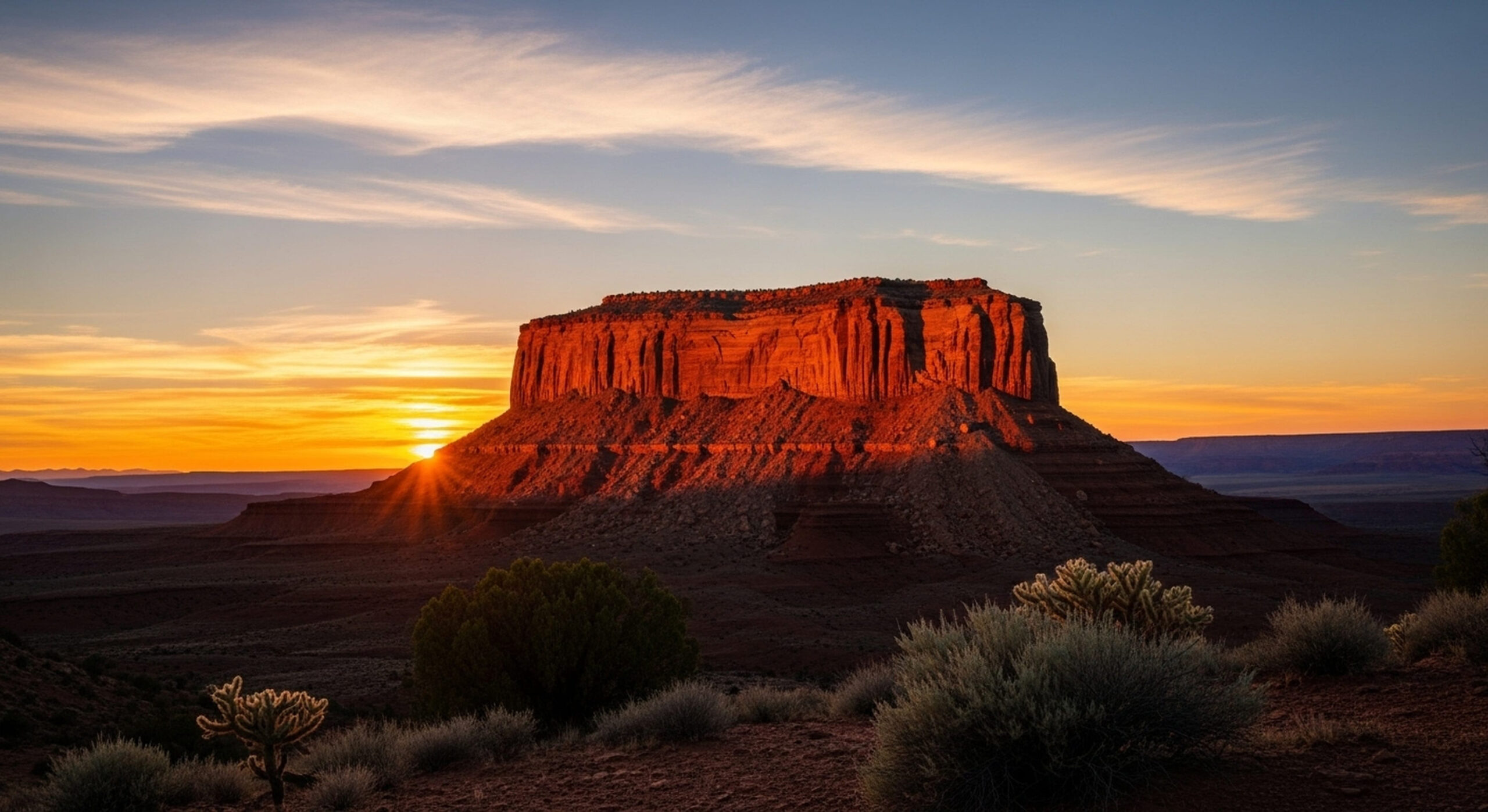
The affected landscapes hold far more than dramatic scenery. Bears Ears contains ancient cliff dwellings, rock art, ceremonial sites, and archaeological objects connected to generations of Indigenous history. Grand Staircase-Escalante is known for its canyons, arches, plateaus, and major fossil discoveries, including dinosaur remains. It also contains resources long sought by industry. Grand Staircase-Escalante has major coal deposits, while the Bears Ears region contains uranium. Trump’s proclamations explicitly cite reducing American reliance on foreign resources important to economic and national security as a reason for removing land from the monuments. A national monument does not automatically authorize a mine, well, or logging operation. Companies would still need leases, permits, and environmental reviews where required. Some excluded areas also remain covered by wilderness study designations, wildlife protections, or other federal rules.
Yet monument status creates a broader barrier against new drilling, mining, and construction. Conservation organizations warn that shrinking the boundaries will increase development pressure while leaving archaeological and cultural sites more vulnerable to looting, vandalism, and unmanaged visitation.
A Major Legal Fight Is Coming
The central legal question remains unresolved. The Antiquities Act of 1906 clearly authorizes presidents to establish monuments and requires that protected areas remain as small as possible while still protecting significant objects. The law does not explicitly state that presidents may dramatically reduce monuments created by their predecessors.
Past presidents have reduced monument boundaries, giving the Trump administration historical precedent. A 2025 Justice Department opinion also argued that presidents possess the authority to revoke monument designations. Environmental organizations and numerous legal scholars reject that interpretation, arguing that only Congress can remove protections once a monument has been established. Tice has pledged to sue, calling Trump’s proclamations unlawful. Similar lawsuits followed the 2017 reductions, but Biden restored both monuments in 2021 before the courts issued a definitive ruling on the extent of presidential power. Bears Ears and Grand Staircase-Escalante remain federal public lands. However, their strongest protections have been stripped from nearly three million acres. The next chapter will unfold in courtrooms, federal agencies, and tribal communities whose relationship with these landscapes began long before Washington drew its first boundary.