The JD Vance DOJ referral of Tim Walz has turned Minnesota’s long-running fraud crisis into a national political fight. What began as a scandal over stolen taxpayer money, weak oversight, and abused social programs is now a bigger clash over power, accountability, whistleblowers, and whether federal law enforcement is being used fairly.
Vance referred Walz and Minnesota Attorney General Keith Ellison to the Department of Justice after a Republican-led House Oversight report accused state leaders of failing to act on widespread fraud in taxpayer-funded social programs. Walz and Ellison deny wrongdoing and argue that the latest move is political. That tension gives the story its force because both sides are trying to claim the language of justice.
The Minnesota Fraud Investigation Is No Longer Just About One Scandal
The Minnesota fraud investigation cannot be reduced to a single nonprofit or a single viral political fight. Feeding Our Future remains the most famous case, but the broader controversy now touches child nutrition programs, Medicaid billing, childcare providers, autism therapy services, state oversight systems, and allegations that warnings were missed or ignored.
That wider scope makes the story more serious. The public is not only asking whether criminals stole money. People are asking whether state agencies had enough warning to stop the damage earlier. They are also asking whether political leaders treated fraud claims as urgent warnings or inconvenient problems.
Feeding Our Future Became the Symbol of Broken Oversight
The Feeding Our Future scandal remains the emotional center of the Minnesota fraud story because the money was supposed to feed children during the pandemic. Federal prosecutors said the scheme diverted about $250 million from child nutrition programs, and Aimee Bock, the nonprofit’s founder, received a 500-month sentence for her role in the fraud.
That sentence turned a complicated oversight story into something voters could easily understand. Money meant for hungry children was stolen, and the public wants to know how such a massive scheme grew so large. For Walz’s critics, Feeding Our Future is proof that Minnesota’s safety-net oversight failed at the worst possible time.

A State Audit Had Already Warned About Minnesota’s Oversight Failures
The most compelling addition to this story is the state audit angle. Minnesota’s own Legislative Auditor previously found that the Department of Education’s inadequate oversight of Feeding Our Future created opportunities for fraud. That matters because it shows the criticism did not begin with Vance, Trump, or House Republicans.
This gives the article a stronger factual backbone. A partisan report can be dismissed as politics, but a state oversight review is harder to brush aside. It allows the story to move beyond party slogans and to ask a sharper question: why did the warning signs fail to prompt faster action?
The House Oversight Minnesota Report Puts Whistleblowers at the Center
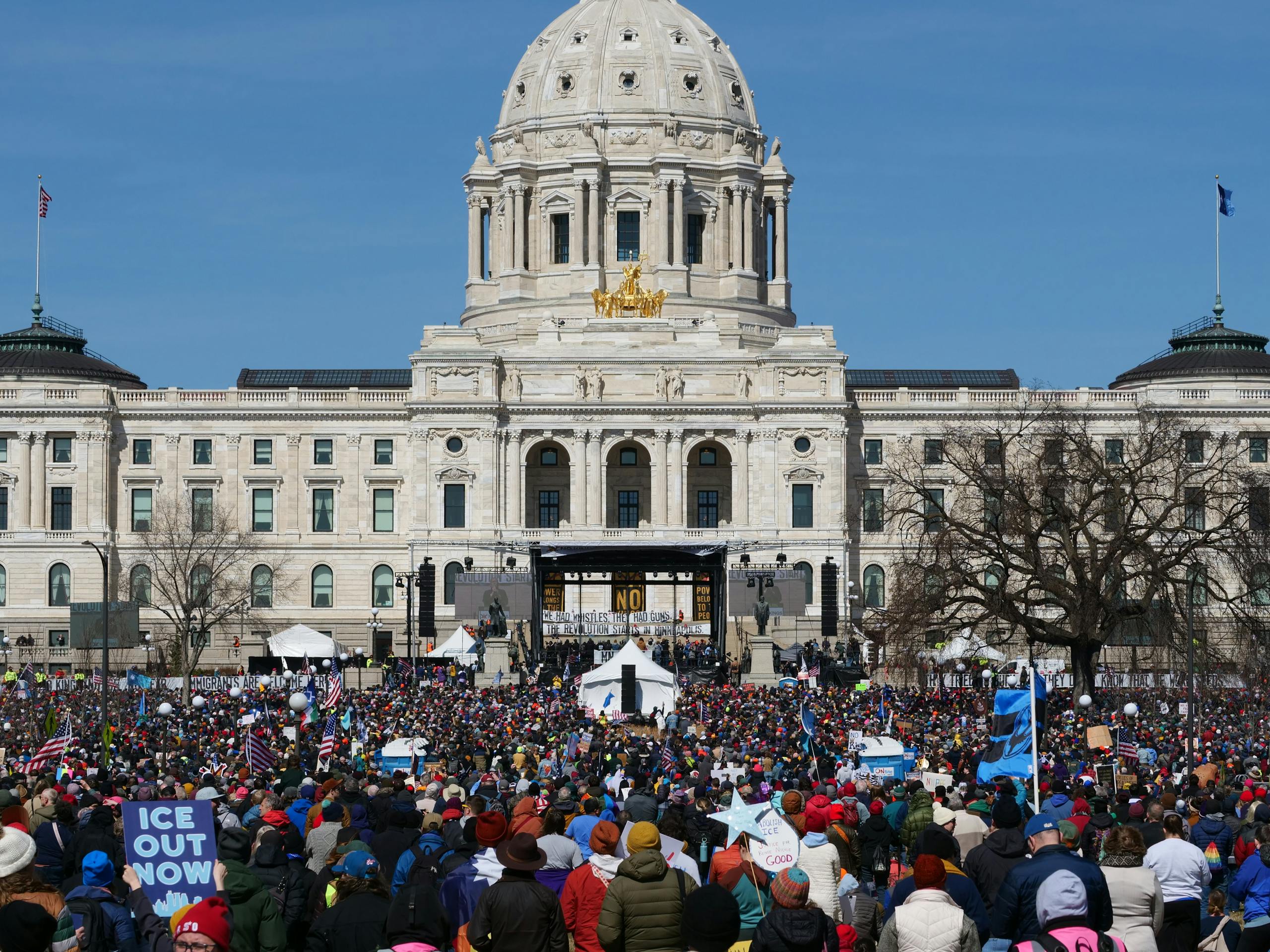
The House Oversight Minnesota report does more than accuse officials of slow action. It claims that state employees raised concerns and faced retaliation or intimidation after sounding the alarm about fraud. That is one of the most damaging parts of the case because whistleblower stories often cut through political noise.
If employees had warned leaders and those warnings had been ignored, the scandal would have become much bigger than the stolen money. It becomes a story about whether government workers were punished for trying to protect taxpayers. That is the kind of claim that can keep this issue alive long after the first headlines fade.
Keith Ellison’s Minnesota Fraud Claims Add Another Political Layer
The Keith Ellison Minnesota fraud angle makes the story even more politically charged. Ellison has pushed back hard against the allegations, calling them unfounded and politically motivated. His office argues that a partisan report and a vice-presidential social media post do not prove that Minnesota’s attorney general ignored fraud.
Ellison is also a frequent legal opponent of the Trump administration. That makes him a natural target for Republican criticism and gives Democrats a ready-made argument about retaliation. The result is a story in which legal questions and political motives are tangled from the start.
Vance Is Framing Fraud Enforcement as a National Mission
Vance’s move should be understood inside the Trump administration’s larger anti-fraud campaign. The White House created a federal task force to eliminate fraud, and Vance has become one of the most visible figures tied to that effort. His referral of Walz and Ellison fits neatly into that national message.
Supporters will see this as overdue accountability. They will argue that taxpayers deserve answers when social programs lose massive sums to fraud. Critics will see something darker. They will argue that the administration is using the machinery of government to pressure political enemies under the banner of fraud enforcement.
A DOJ Fraud Inquiry Is Serious, But It Is Not Proof of a Crime
The phrase DOJ fraud inquiry carries weight, but it must be handled carefully. A referral to the Department of Justice is not the same as an indictment, conviction, or finding of guilt. It is a request for federal investigators to examine whether laws may have been broken.
That distinction protects the story from overreach. The real legal questions are specific. Did officials knowingly ignore credible warnings? Did they have the authority to stop payments sooner? Did anyone mislead Congress? Were whistleblowers mistreated? Did political caution allow public money to keep flowing to fraudulent operators?
Minnesota Taxpayer Fraud Hits Public Trust Hardest
The anger around Minnesota taxpayer fraud is easy to understand. People pay taxes with the expectation that public money will support real needs, especially food, childcare, health care, and disability services. When fraud drains those programs, taxpayers feel robbed, and vulnerable families may lose trust in the system meant to help them.
That is the quiet damage underneath the political fight. Fraud scandals not only punish state budgets. They damage public faith in every honest provider, every legitimate nonprofit, and every family that depends on social support. When oversight breaks, everyone connected to the safety net pays a price.
The Crackdown Could Also Hurt Legitimate Providers
A more unique angle is the risk of overcorrection. After major fraud scandals, states often tighten rules, increase reviews, and remove questionable providers. That may be necessary, but it can also create trouble for legitimate small providers that lack large compliance teams.
This gives the story a human layer beyond politics. Minnesota must stop fraud without crushing honest providers who serve children, disabled residents, immigrant families, and people with complex care needs. Weak oversight creates one kind of harm. Rushed enforcement can create another.
The Immigration Flashpoint Makes the Story More Dangerous
Some public commentary around Minnesota’s fraud cases has focused heavily on Somali defendants. That angle must be handled with care. Fraud should be reported through evidence, charges, convictions, documents, and court records, not through collective blame against an entire community.
This is where the story becomes especially sensitive. Officials must be able to investigate criminal networks without turning fraud enforcement into a matter of ethnic suspicion. If the debate slips into scapegoating, it will make honest accountability harder, not easier.
Walz Faces a Political Problem Even Without a Criminal Finding
The Tim Walz fraud allegations pose a major political problem, even if no criminal case is brought against him. Governors are judged by what happens under their administration, especially when public money disappears on a massive scale. Walz can point to prosecutions, reforms, and agency actions, but critics will still ask why the fraud grew so large before the system caught up.
That is the political trap. Saying fraudsters went to prison does not fully answer the oversight question. Voters may still want to know whether Minnesota moved quickly enough, whether warnings were taken seriously, and whether leadership treated fraud prevention as a priority before national attention forced the issue.
Minnesota’s Hardest Test Is Accountability Without Political Theater
The strongest version of this story is not simply that Vance attacked Walz. The stronger version is that Minnesota is now a national test case for whether government can punish fraud, protect whistleblowers, avoid ethnic scapegoating, preserve essential services, and keep law enforcement from becoming a political weapon.
That is why this story will likely stay alive. The fraud was real. The political motives are contested. The public money was massive. The victims were not only taxpayers, but also the people those programs were built to serve. The central question now is whether accountability can survive the campaign-season noise around it.