Growing up poor changes the way a home feels. A cabinet is not just a cabinet. A pantry is not just a pantry. A junk drawer is not just clutter. For many of us, the home becomes a quiet storage room for old fears, old lessons, and old survival rules that never fully went away.
When money was tight, every item had a second life. A butter tub became a food storage. A grocery bag became a trash liner. A towel with holes became a cleaning rag. Nothing was thrown away without a little mental debate, because waste felt dangerous, careless, and sometimes even disrespectful.
That is why many adults who grew up poor still keep certain things around the house even after their finances improve. These items are not always signs of disorder. They often reveal a deeper story about scarcity, preparedness, family habits, and the strange comfort of knowing we can still make something last.
Plastic containers that somehow feel too useful to throw away

Plastic takeout containers, butter tubs, sour cream tubs, and old deli containers often become permanent residents in homes shaped by financial hardship. We may now own proper food storage sets, but those free containers still feel practical. They stack in cabinets, disappear into the freezer, and return again when leftovers need somewhere to go.
This habit comes from a simple rule that many poor household live by. If something can be used again, it still has value. Throwing away a clean container can feel almost irresponsible, especially when we remember watching parents or grandparents rinse every tub as it came from a store shelf. Even when the cabinet becomes chaotic, the logic still makes sense to the person who grew up stretching every dollar.
The deeper reason is not really about plastic. It is about control. When we keep containers, we are keeping options. We are saying that tomorrow’s leftovers, packed lunch, soup, beans, or chopped onions will already have a place. That small sense of readiness can feel surprisingly calming.
Canned food that turns the pantry into a safety net
A full pantry can feel like wealth to someone who once watched food run low. Canned beans, soup, tuna, tomatoes, corn, peas, and pasta sauce may sit for months, but their presence brings comfort. We may not cook them every week, yet seeing them lined up can make the house feel safer.
For people who grew up poor, food insecurity leaves a long memory. Empty shelves teach the body to worry before the mind has even caught up. That is why some adults feel uneasy when the pantry looks too bare, even if they have money for groceries. The cans are not just food. They are proof that one hard week will not empty the kitchen.
This habit can be healthy when it stays organized. A practical emergency pantry saves money, reduces panic shopping, and makes home cooking easier. The problem starts when fear takes over and expired food piles up untouched. The goal is not to erase the habit. It is to turn it into a calmer system.
Extra toilet paper and paper towels are hidden in closets.

People who grew up poor often understand the embarrassment of running out of basic household supplies. Toilet paper, soap, detergent, toothpaste, and paper towels can carry emotional weight because they represent comfort and dignity. Keeping extras may seem ordinary, but for some people, it is a quiet response to old insecurity.
A stocked supply closet says the household is prepared. It means no one has to improvise with napkins, borrow from a neighbor, or wait until payday for something basic. These backup items can make a person feel responsible, stable, and protected from small humiliations that others may never think about.
This is why bulk household goods feel different from shopping for luxury goods. A giant pack of toilet paper is not exciting, but it can feel deeply reassuring. For someone with a scarcity background, security is often built through boring things. The more ordinary the item, the more powerful the comfort can be.
Grocery bags are saved inside other grocery bags.
The bag full of bags is one of the most recognizable signs of a resourceful household. It usually lives under the sink, behind a door, inside a pantry, or stuffed into a cabinet. We may joke about it, but the habit has a practical history. Grocery bags became bathroom trash liners, lunch bags, pet waste bags, wet clothes bags, storage bags, and emergency carry bags.
In homes where money was tight, buying something for a single purpose felt unnecessary when a free alternative already existed. A plastic bag was never just trash. It was a small tool waiting for a job. That mindset often sticks because it rewards usefulness over neatness.
The problem is that useful things can quietly become too many things. One bag of bags turns into five. The cabinet becomes crowded. The original logic gets buried under clutter. Still, the habit makes emotional sense because it comes from a home culture where waste was avoided, and every small object had to earn its place.
Old towels that keep getting demoted instead of being discarded
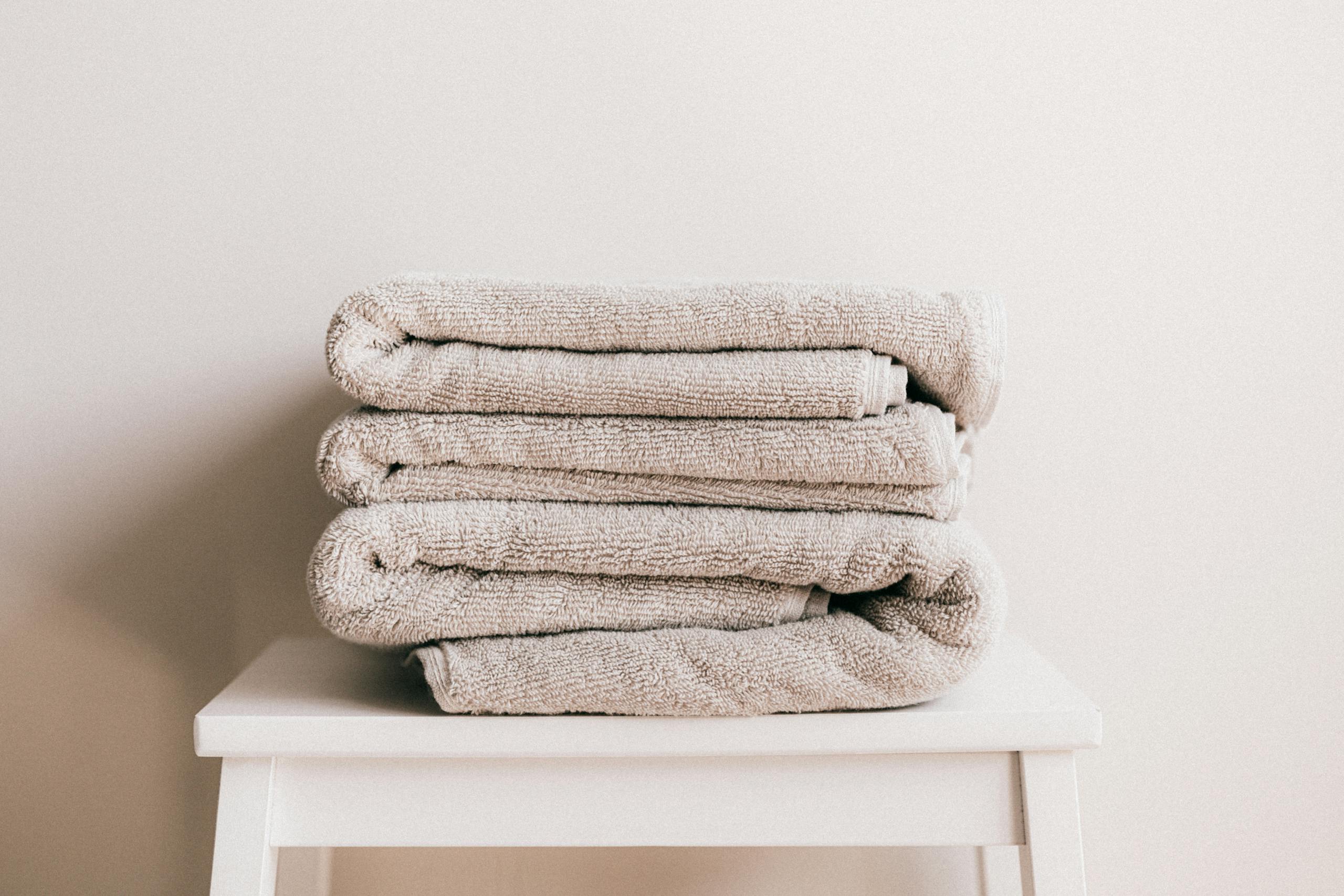
In many households shaped by poverty, towels rarely retire all at once. First, they move from bathroom towels to hair towels. Then they become cleaning towels. Later, they become pet towels, car towels, spill towels, or painting rags. Even a towel with frayed edges can still have a job.
This habit reflects a powerful form of practical intelligence. People who grew up poor often learned that replacing something too early was careless. A towel did not need to look pretty to dry a floor. A stained cloth did not need to be thrown away if it could handle a leak, a muddy paw, or a messy project.
There is also a small emotional victory in making an item last. It proves that we know how to manage a household without wasting money. It turns old fabric into backup support. In a world where so many products are made to be replaced quickly, this habit can feel stubborn, old-fashioned, and quietly wise.
Clothes that stay because they still have life left
People who grew up poor often struggle to get rid of wearable clothing. A shirt may be faded, a pair of jeans may be out of style, and a jacket may no longer feel exciting, but if it still works, tossing it can feel wrong. The question is not always, “Do I love this?” Sometimes the question is, “Could I still need this someday?”
That question comes from experience. Many of us remember wearing hand-me-downs, school clothes that had to last all year, or shoes that were kept until they were truly finished. Clothing was not just self-expression. It was protection, presentation, and proof that we could show up in public with dignity.
This is why closets can become emotional storage. Work clothes, backup coats, old sneakers, and “just in case” outfits pile up because they represent preparedness. The healthier version of this habit is to intentionally keep useful clothing. The heavier version is keeping everything because scarcity still whispers that we may regret letting go.
Mismatched furniture collected from different seasons of life

A home shaped by scarcity rarely starts with a matching furniture set. It grows piece by piece. A couch from a relative, a table from a friend, a chair from a yard sale, and a bookshelf found during a move can all end up in the same room. To someone raised with limited money, this does not always look messy. It looks practical.
Mismatched furniture tells a story of survival and adaptation. Each piece solved a problem at a time when buying new was not possible. The chair gave someone a place to sit. The table held meals, homework, bills, and repairs. The bookshelf kept things off the floor. Matching was less important than having enough.
Even as adults, we may continue to value function over appearance. A stylish room is nice, but a useful room feels safer. This is why some people keep old furniture long after they can afford better pieces. The furniture may not match, but it carries history, memory, and the comfort of having made do.
Repaired items that prove replacement is not always the answer.
A lamp fixed with tape, a chair tightened three times, a drawer handle replaced with a mismatched knob, or a fan that needs a little shake to start may seem like obvious trash to some people. For those who grew up poor, repaired items can feel normal. We learned early that broken did not always mean finished.
Repair culture is often born from necessity. If something broke, the first question was not where to buy a new one. The first question was who could fix it, what tool could help, and whether the item could survive a little longer. That mindset creates patience, creativity, and mechanical confidence.
There is pride in keeping something useful alive. A repaired object can represent skill, memory, and resistance against waste. Still, there is a line between resourcefulness and stress. If an item becomes unsafe, unreliable, or expensive to keep repairing, letting it go is not wasteful. It is a different kind of wisdom.
Random screws, cords, batteries, and spare parts
Many homes have a drawer, jar, coffee can, or toolbox filled with random hardware. Screws, nails, washers, batteries, Allen keys, picture hooks, rubber feet, chargers, cables, and unidentified plastic pieces sit together like a museum of future possibilities. Nobody knows exactly where everything came from, but someone believes it may be useful later.
This habit makes perfect sense to people who grew up without easy replacement money. Buying a tiny part can feel ridiculous if a spare one might already be somewhere in the house. That old jar of screws is not just clutter. It is a low-cost repair system.
The emotional logic is even stronger. Keeping small parts means keeping the ability to solve small problems. A loose cabinet handle, a broken toy, a missing screw, or a wobbly table does not need to become a purchase. It can become a five-minute fix. For people raised around scarcity, that kind of independence feels valuable.
The just-in-case drawer that carries half the childhood

The just-in-case drawer may be the strongest symbol of growing up poor. It holds batteries, rubber bands, twist ties, spare keys, cords, receipts, tape, pens, buttons, manuals, coins, safety pins, old phones, scissors, and mystery objects nobody wants to throw away. It looks random, but emotionally, it has a clear purpose. It is the drawer that says, “We might need this.”
For people who grew up poor, “just in case” was not paranoia. It was planned. Something always came up. A bill arrived. A shoe broke. A school project needed supplies. A neighbor needed help. A parent had to repair something with whatever was already available. The drawer became a household survival kit.
The trouble starts when the drawer stops helping and starts overwhelming. If nothing can be found, the collection loses its purpose. Still, the instinct behind it deserves respect. The just-in-case drawer is not only about clutter. It is about a person who learned early that being prepared could soften the blow of not having enough.
Why do these poverty habits stay even after money improves?
Financial stability does not automatically erase scarcity habits. A better paycheck may change the budget, but it does not instantly change the nervous system. People who grew up poor often carry a deep awareness that comfort can disappear. That awareness can shape how we shop, store, save, repair, eat, and organize the home.
Some habits remain because they are useful. Keeping extra food, repairing items, saving towels for messes, and reusing containers can reduce waste and save money. Other habits remain because they calm old fears. A stocked pantry or full supply closet can make a person feel safer, even when there is no immediate danger.
The key is learning the difference between resourcefulness and anxiety. Resourcefulness says, “This item has a clear purpose.” Anxiety says, “I cannot let this go because something bad might happen.” One creates confidence. The other creates clutter. Many adults who grew up poor live somewhere between the two.
How to keep the useful habits without letting fear run the house
The best answer is not to shame people for keeping old containers, backup supplies, or worn towels. Many of these habits are smart. They reduce waste, prepare a household for emergencies, and honor the hard lessons people learned growing up. The goal is not to erase the past. The goal is to stop letting the past manage every cabinet.
A useful question can change the entire home. Instead of asking, “Should I throw this away?” we can ask, “Does this item still serve my life now?” That question respects the old survival skill while making room for the present. It allows us to keep the canned food, the backup toilet paper, and the repair kit without keeping every broken cord, every stained shirt, and every plastic lid with no container.
People who grew up poor often learned strength through ordinary things. They learned how to stretch meals, fix problems, reuse supplies, and prepare for hard days. Those lessons deserve respect. Still, adulthood can also teach a softer lesson. We can be prepared without being afraid. We can save useful things without saving everything. We can honor where we came from without turning our homes into storage for every fear we survived.