Donald Trump’s public life has never been quiet, but the most durable controversies around him are not just campaign noise, cable-news shouting, or personality clashes.
They sit in lawsuits, settlements, jury verdicts, government reports, court orders, and sworn testimony. That makes his story unusual because the same brand that turned wealth, celebrity, and conflict into political power has also carried a long record of legal and ethical disputes into the center of American public life.
We are not dealing here with gossip dressed up as politics. We are dealing with a pattern that spans from New York real estate and branded seminars to charity oversight, campaign-era conduct, civil liability, election pressure, and foreign interference investigations.
Trump is officially listed by the White House as the 45th and 47th president of the United States, yet many of the controversies attached to his name come from the years before and between those presidencies.
The Felony Conviction That Rewrote Trump’s Political Record
The most historic entry in Trump’s controversy file is his New York criminal conviction. In May 2024, the Manhattan District Attorney announced that a jury convicted Donald Trump on 34 felony counts of falsifying business records.
Prosecutors said the case involved a scheme to hide damaging information from voters during the 2016 presidential election, with evidence that included invoices, checks, phone records, text messages, audio recordings, bank records, and testimony from 22 witnesses.
The sentence later landed in a strange legal place. In January 2025, Reuters reported that Justice Juan Merchan sentenced Trump to an unconditional discharge, meaning Trump avoided jail, fines, and probation, but the conviction remained on his record.
That outcome did not erase the political shock of the case. It created the rare American spectacle of a man returning to the White House with a felony conviction already on his record.
The Civil Fraud Case That Challenged the Trump Business Myth
Trump built much of his public identity around the image of a master dealmaker, so the New York civil fraud case cut straight into the foundation of that brand.
In February 2024, New York Attorney General Letitia James announced that Justice Arthur Engoron had ruled against Trump, his adult sons, former executives, and Trump Organization entities, ordering more than $450 million in total relief at the trial-court level.
The case centered on claims that Trump inflated asset values to gain better financial terms.
The case became more complicated on appeal. In August 2025, a New York appellate court threw out the half-billion-dollar penalty while preserving the fraud case, giving Trump a major legal victory but not turning the entire controversy into fiction.
The result is important for careful wording. The original ruling damaged the business’s image, the appeal weakened the financial penalty, and the larger dispute remains one of the clearest examples of how Trump’s private empire has repeatedly collided with public accountability.

Trump University and the $25 Million Settlement
Trump University was marketed with the shine of Trump’s real estate success, but it ended up as one of the clearest consumer fraud controversies tied to his brand.
The operation was not a university in the traditional academic sense. It sold real estate and entrepreneurship seminars under Trump’s name, promising access to strategies connected to his business persona.
Former students later accused the program of misleading them and of pushing expensive packages that failed to deliver the promised value.
A federal judge finalized a $25 million settlement in 2018 for attendees of the now-defunct Trump University program. The settlement covered federal class-action claims and a New York attorney general case, with ABC News reporting that some students had paid up to $35,000 for the programs.
The settlement did not include an admission of wrongdoing, but the size of the payout and the nature of the allegations left a deep stain on one of Trump’s most aggressively marketed business ventures.
The Trump Foundation’s Court-Ordered Reckoning
The Donald J. Trump Foundation carried the soft language of charity, but New York investigators said it was used in ways that benefited Trump’s political and personal interests.
In 2019, the New York Supreme Court ordered Trump to pay $2 million in damages for improperly using charitable assets to intervene in the 2016 Republican primaries and advance his own political interests. The same settlement also addressed the foundation’s dissolution.
This controversy mattered because charity depends on trust. Donors expect money to serve public or charitable purposes, not political image management.
The New York attorney general’s office said Trump admitted personally misusing foundation funds and agreed to restrictions on future charitable service if he created another charity. That moved the story beyond ordinary political criticism and into the realm of court-supervised correction.

The Undocumented Polish Workers Behind Trump Tower
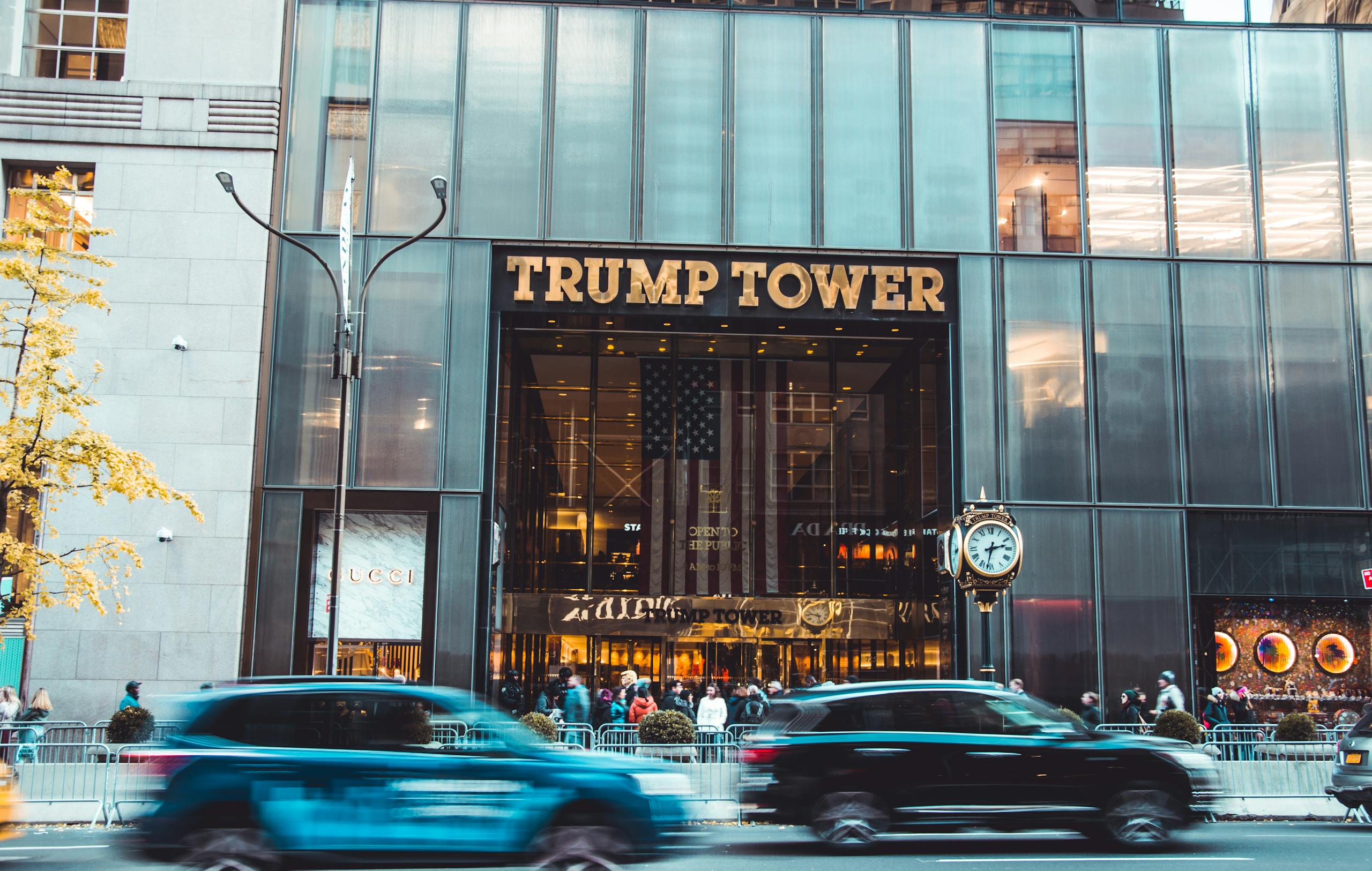
Trump’s hardline immigration policies made the Trump Tower labor story especially damaging. TIME reported that undocumented Polish laborers worked on the demolition site that cleared the way for Trump Tower in 1980, doing dangerous work for low pay and inconsistent wages.
The workers reportedly lacked basic safety equipment, worked long shifts, and were connected to years of litigation over unpaid labor and union pension obligations.
The sharpest part of the story is not just that undocumented workers were involved. It is the testimony suggesting Trump knew about them. TIME’s review of court records described sworn testimony that Trump sought out the workers, toured the site, addressed pay issues, and was involved in discussions about their immigration status.
Trump denied knowingly using undocumented labor, and his lawyers challenged the credibility of some witnesses, but the public record still creates a brutal contrast between the later political slogan and the earlier construction-site reality.
The 1973 Housing Discrimination Case That Followed Him for Decades
Before Trump became a television celebrity or a president, the federal government sued him, his father, Fred Trump, and Trump Management over alleged racial discrimination in housing.
PolitiFact reviewed the claim and rated it true that the Justice Department sued Trump in 1973 for housing discrimination involving Black apartment seekers.
The complaint alleged that Trump Management violated the Fair Housing Act by discriminating based on race.
Trump denied the allegations, and the case settled without an admission of guilt. That distinction matters, but so does what the settlement required. Trump Management had to train employees on Fair Housing Act obligations and take steps such as providing vacancy lists to the New York Urban League.
For a figure who later campaigned heavily on law and order and national identity, the 1973 case remains one of the earliest public examples of Trump’s business practices being challenged by federal civil rights enforcement.

The Central Park Five Episode That Refused to Disappear
The Central Park Five controversy is one of the most emotionally charged episodes in Trump’s public history. In 1989, after five Black and Latino teenagers were accused in the Central Park jogger case, Trump bought newspaper ads calling for the return of the death penalty.
The five men were later exonerated after another man confessed, and DNA evidence supported that confession. The moral weight of the story comes from the fact that Trump’s public position hardened before the truth had fully emerged.
The controversy returned in 2024 and 2025 through a defamation lawsuit. The five exonerated men sued Trump over statements he made during a presidential debate, and in April 2025, a federal judge ruled that the suit could proceed.
Courthouse News reported that the judge found the men could reasonably read Trump’s comments as making objectively false claims, including that they had pleaded guilty and that someone had been killed.
The case remains a reminder that old public statements can regain legal force decades later.

E. Jean Carroll and the Civil Liability Trump Could Not Shake
The E. Jean Carroll cases added another major civil liability chapter to Trump’s record. In May 2023, a jury found Trump liable for sexually abusing and defaming Carroll, though it did not find that he raped her under the legal claim presented.
Reuters later reported that a federal appeals court left intact the $5 million verdict, including damages for sexual assault and defamation.
A separate jury awarded Carroll $83.3 million in a 2024 defamation case, and Reuters reported in 2025 that a federal appeals court refused to throw out that verdict.
Trump denied wrongdoing and continued to frame the case as politically motivated, but the court record matters.
Two civil verdicts, one involving sexual abuse and defamation and another involving additional defamation damages, created one of the most serious personal-liability controversies of Trump’s public life.
Election Denial, January 6, and the Power Crisis
The aftermath of the 2020 election became the most dangerous political controversy associated with Trump’s name. After losing to Joe Biden, Trump and his allies pushed false claims of widespread fraud, pressured officials, and pursued strategies to disrupt certification.
Reuters reported that Special Counsel Jack Smith’s final report concluded Trump engaged in an “unprecedented criminal effort” to hold on to power after losing the 2020 election, though the case never reached trial because of Trump’s 2024 election victory and Justice Department policy against prosecuting a sitting president.
The issue is not only January 6 as a single day. It is the broader pressure campaign before Congress met to certify the vote. Reuters reported that investigations concluded Trump spread false fraud claims, pressured state lawmakers, and sought to use fraudulent groups of electors in states Biden had won.
The storming of the Capitol was the violent endpoint of a longer political crisis, not a random outburst detached from the weeks of pressure that preceded it.
Russia Interference, WikiLeaks, and the Manafort Risk
Trump’s Russia controversy has always required precision because “collusion” became a political slogan more than a clean legal category. The Senate Intelligence Committee’s bipartisan Russia report found no evidence that then-candidate Trump or his campaign colluded with the Russian government to meddle in the 2016 election.
That finding is essential because it separates proven interference and troubling contacts from the stronger claim of criminal collusion.
But the same Senate release also said Russia engaged in an aggressive, multi-faceted effort to influence the 2016 election, that WikiLeaks played a key role in the Russian influence campaign, and that Paul Manafort’s role in the Trump campaign created opportunities for Russian intelligence services to gain influence or acquire confidential campaign information.
That leaves a complicated picture. The strongest official record does not prove Trump-Russia collusion, but it does show a serious foreign-interference environment around the campaign that cannot be honestly dismissed as nothing.
actionsports/ 123rf
Conclusion
The lasting Trump controversy is not one single scandal. It is the accumulation.
A university brand that ended in a multimillion-dollar settlement, a charity that dissolved under court pressure, a felony conviction, civil fraud findings, labor allegations, civil rights disputes, sexual abuse and defamation liability, election-pressure investigations, and Russia-interference findings all point to the same deeper question.
Trump’s defenders often see these cases as proof that powerful institutions targeted him. His critics see them as proof that accountability arrived late and unevenly.
The record itself is harder to wave away than either slogan. It shows a public figure whose success has repeatedly come with legal smoke, ethical fire, and courtrooms close behind.