Most Americans know the feeling. The house is quiet. The porch light is on. The dog is asleep. A true-crime documentary plays in the background as someone folds laundry, as if everything is normal. Then the narrator says the line that makes everyone in the room glance around: “No one suspected him.”
That is what makes these stories so unsettling. Danger does not always look wild, loud, or obvious. Sometimes it lives behind a normal smile, a clean kitchen, a shared Netflix password, and a person who knows exactly how to seem ordinary.
This does not mean every private roommate, strange spouse, quiet neighbor, or awkward relative is dangerous. But when cruelty, secrecy, control, and emotional coldness co-occur, it is worth paying attention. Serious offender behavior is complex, and serial murder research warns against relying on simple stereotypes alone.
Their Interest in Death Feels Too Personal
Plenty of people enjoy true crime. Podcasts, documentaries, and crime shows have become part of everyday American life, right next to grocery runs, Sunday football, and late-night scrolling. That alone does not make anyone dangerous. The warning sign appears when someone stops watching like a curious viewer and starts studying, as if taking notes.
They may talk too much about methods, victims, hiding places, timelines, or how someone “could have gotten away with it.” The mood changes when their interest shifts from excitement to practicality, or becomes strangely personal. Curiosity is normal. A calm obsession with violence is not.
Animals Seem Afraid of Them
A dog that suddenly hides under the table can tell you something. A cat that refuses to enter a room can tell you something, too. Pets can be dramatic, but they can also sense fear before people admit what they are seeing.
The bigger warning comes when animals are hurt, go missing, or are blamed for injuries that don’t make sense. Cruelty toward animals has been linked with broader violence concerns, which makes the animal cruelty link worth taking seriously. If someone can harm something small and defenseless, the problem is not a bad mood. It is character.
They Keep Strange Items They Cannot explain.

Most homes have junk drawers. Old keys, batteries, loose screws, receipts, and mystery cords are normal. What is not normal is finding hidden items that feel personal and out of place, such as jewelry, IDs, hair, clothing, photos, or keepsakes, belonging to people you do not know.
One strange item may have a simple explanation. A pattern is different. If their story changes every time you ask, or if they get angry when you notice, take that seriously. The item itself may not prove anything. The secrecy around it may be the real warning.
They Lie Smoothly About Small Things
Everyone forgets details. Everyone tells a small lie at some point. But some people lie without hesitation. They deny things you saw, rewrite conversations, change timelines, and make you feel foolish for noticing.
That kind of lying is disturbing because it slowly erodes your self-confidence. You start wondering if you misunderstood, overreacted, or imagined the problem. Patterns like this can overlap with gaslighting manipulation signs, especially when someone keeps making you question your own memory or judgment. Calm lying can be more frightening than loud lying because it feels practiced.
They Disappear and Get Angry When Questioned

People need privacy. A roommate can take a long drive. A spouse can need space. A family member can have routines you do not fully understand. The warning sign is when disappearances become secretive, defensive, and hard to explain.
They may leave for hours, turn off their phone, come back with changed clothes, odd smells, strange dirt, scratches, or a story that feels patched together. The biggest clue is often their reaction. A safe person may say, “I needed air.” A suspicious person attacks the question. If “Where were you?” sparks rage, the reaction may say more than the answer.
They Show No Real Empathy When People Suffer
Some people are quiet with emotions. Not everyone cries at sad news or knows what to say when someone is hurt. That does not make them dangerous. The concern begins when someone seems bored, amused, or untouched by suffering.
They may joke during tragedy. They may blame the victims instantly. They may describe pain as if it were just a movie scene. In public, they may know how to act kindly. In private, the warmth disappears. That gap matters. If compassion only appears when others are watching, it may be a performance.
They Need Control More Than Connection

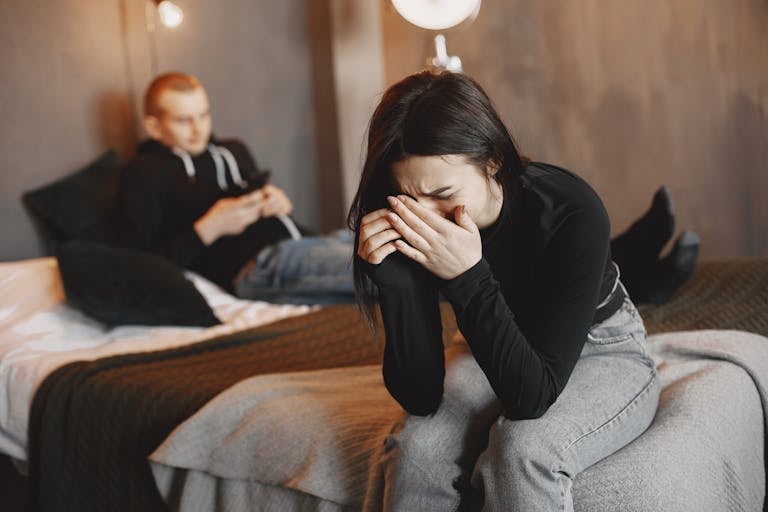
Danger often starts quietly. It may begin with questions that sound caring. Who were you texting? Why are you going there? Why do you need those friends? Why did you lock your phone? At first, it can look like concern. Then your world slowly gets smaller.
Control is not love. Love does not need to inspect your phone, isolate you from family, monitor your location, or punish you for wanting privacy. Domestic abuse can include patterns of intimidation, isolation, and coercive control behavior, not just physical violence. If someone demands full access to your life while revealing very little about their own, that is not closeness. That is an imbalance.
Your Body Keeps Warning You
Sometimes the biggest warning is not one dramatic discovery. It is the way your body reacts before your mind can explain it. You hear their key in the door, and your stomach tightens. You sleep lighter. You avoid certain questions. You rehearse simple answers before speaking. You stop inviting people over.
That instinct matters. Fear is not always proof, but it is information. Safety guidance often says to trust your instincts and leave if something feels unsafe. If you feel afraid, do not confront the person alone just to get answers. Talk to someone you trust. Keep important documents and essentials easily accessible. Document concerning behavior. If there is immediate danger, leave and contact emergency services or local authorities.
Conclusion
No single habit proves someone is a serial killer. A person can be odd, private, emotionally distant, or interested in true crime without being violent. But patterns matter. Cruelty, secrecy, smooth lying, unexplained disappearances, strange keepsakes, emotional coldness, and controlling behavior should not be ignored when they appear together.
Dangerous people often depend on politeness. They depend on others not wanting to “make a scene.” They depend on families explaining away warning signs because the truth feels too frightening to face.
Trust what you notice. Protect your safety. Do not try to become a detective in your own home. If someone makes you feel truly afraid, the goal is not to prove they are a monster. The goal is to make sure you are not trapped with one.