You walk into the grocery store planning to buy milk, eggs, bread, and a few dinner ingredients. Forty minutes later, you’re pushing a cart filled with snacks, sale items, and things you never intended to buy. Sound familiar?
That extra spending isn’t always accidental. Supermarkets use carefully planned layouts, product displays, pricing strategies, and even background music to encourage customers to purchase more.
Research published in the Journal of Retailing and Consumer Services found that certain end-of-aisle displays increased sales by more than 300% during experiments. The findings demonstrate just how powerful product placement can be.
Not every grocery store uses the same strategies, and these techniques aren’t necessarily dishonest. Still, understanding how they work can help you protect your shopping budget.
Here are nine ways grocery stores encourage you to spend more, along with simple tricks for avoiding unnecessary purchases.
Everyday Essentials Are Often Located Far From the Entrance
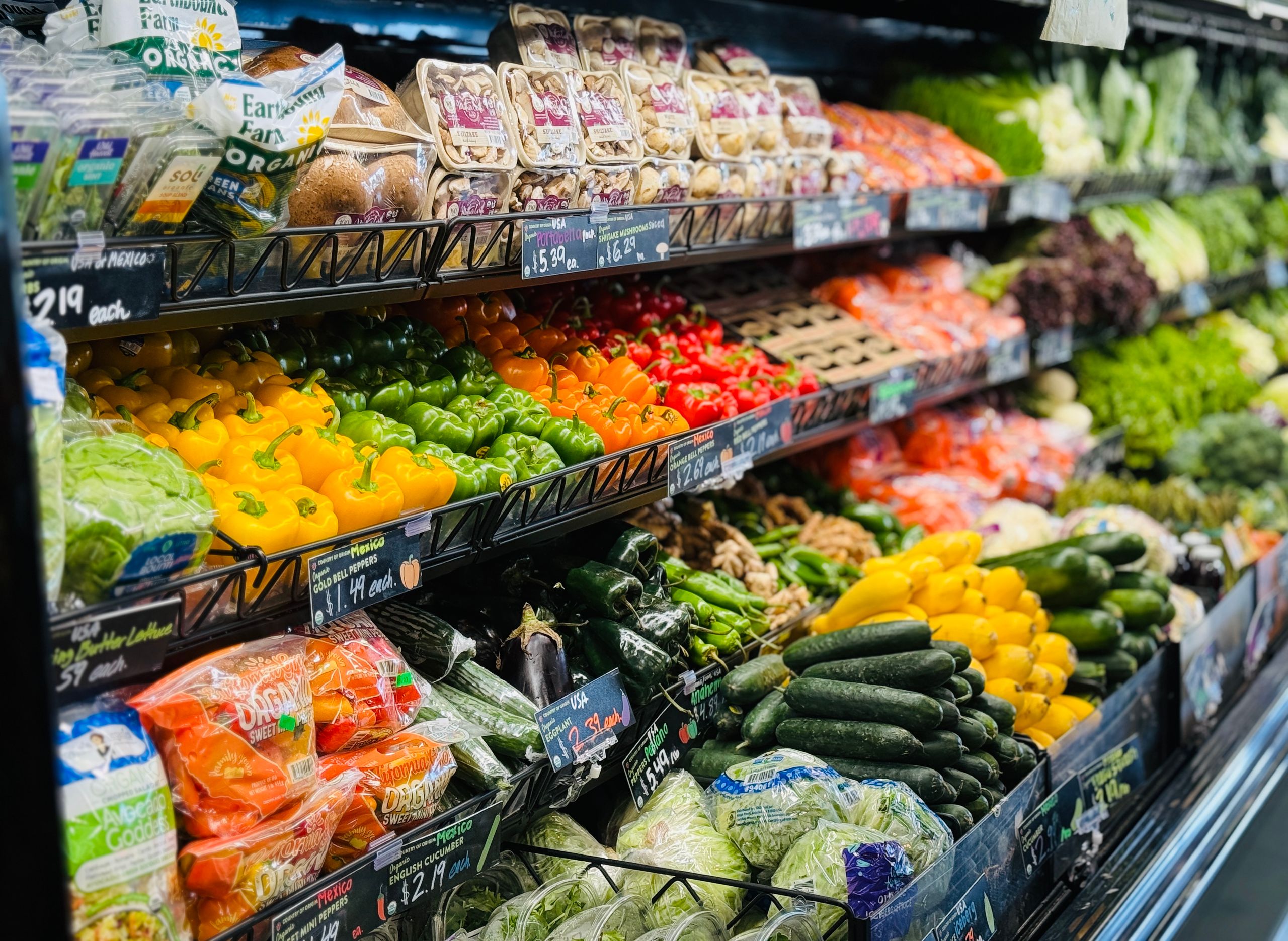
Ever wondered why grabbing a gallon of milk sometimes feels like a half-mile walk through the supermarket?
Many grocery stores position everyday essentials, including milk, eggs, and other frequently purchased items, toward the back or around the store’s perimeter.
This arrangement can encourage shoppers to pass through additional sections before reaching the products they originally came to buy.
Along the way, you might notice a new snack, an attractive promotion, or a product you suddenly remember needing.
The longer your shopping journey, the more opportunities there are to consider additional purchases.
Store layouts also reflect practical concerns, such as refrigeration and delivery access, so not every product location is purely a marketing strategy.
How to avoid overspending: Make a department-organized shopping list. Knowing exactly where you’re going reduces unnecessary wandering and helps you finish faster.
Expensive Products Get the Best Shelf Space
Next time you’re shopping for cereal, pasta sauce, or coffee, pay attention to what’s directly in front of you.
Products positioned at eye level often receive more attention than those placed on higher or lower shelves.
A 2020 research review published in the International Journal of Environmental Research and Public Health found that eye-level placement can influence shoppers’ attention and purchasing decisions.
Retailers understand that customers are more likely to notice products they can see and reach easily.
That doesn’t mean every eye-level product is expensive. However, premium brands may benefit from those highly visible positions.
Meanwhile, a cheaper store-brand alternative could be sitting just below your line of sight.
To avoid overspending, check the top and bottom shelves before choosing. Compare similar products using the price per ounce or pound rather than relying on package appearance.
Giant Shopping Carts Make Small Purchases Feel Insignificant
Have you ever placed five items in a large grocery cart and felt like you had barely started shopping?
Large carts offer plenty of room for groceries, but they can also make a modest purchase feel smaller than it is.
When there’s still lots of space, adding another package of cookies or a seasonal item might not feel like a big decision.
The effect isn’t guaranteed, and cart size alone doesn’t determine how much someone spends. Shopping habits, household needs, and budgets matter too.
However, grocery retailers continually experiment with shopping-cart design and customer behavior.
A 2026 study of 12,418 supermarket shopping sessions found that smart-cart use was associated with larger baskets and higher spending, though it did not establish that the carts caused those increases.
How to avoid overspending: Choose a handheld basket when shopping for just a few essentials. It naturally limits how much you can comfortably carry.
Bright Sale Signs Make Ordinary Prices Look Irresistible
A bright yellow tag announcing a special offer can instantly make a product more appealing.
But there’s an important difference between something being advertised as a deal and something actually saving you money.
Some promotions require shoppers to purchase multiple items, use a loyalty account, or activate a digital coupon.
Others may offer only a modest discount compared with the product’s regular price.
The excitement surrounding a promotion can also encourage shoppers to buy items they never planned to purchase.
For example, spending $10 on something you don’t need isn’t saving money simply because the regular price was $12.
How to avoid overspending: Read the entire promotional label. Check whether multiple purchases are required and compare the sale price with competing brands.
A genuine bargain should reduce the cost of something you already need.
End-of-Aisle Displays Make Products Seem Like Special Deals
Those attractive displays at the ends of grocery aisles are called endcaps, and they’re among the most valuable selling spaces in supermarkets.
They’re highly visible, easy to browse, and frequently used to showcase featured products.
What makes them especially effective is that shoppers often associate these displays with discounts.
However, an item displayed at the end of an aisle isn’t automatically cheaper than the same product elsewhere.
A 2018 study found that rear endcaps produced an average 416% sales uplift in the experiments examined, while front endcaps generated a 346% uplift. These figures describe the study conditions, not a guaranteed result for every store.
That’s a powerful reason retailers should pay close attention to these displays.
How to avoid overspending: Treat endcap items like ordinary merchandise. Before putting anything in your cart, check their prices against similar products in the main aisle.
Bigger Packages Create the Illusion of Better Value
Buying in bulk can stretch your grocery budget, especially for products your household uses regularly.
But bigger doesn’t always mean cheaper.
A family-size package may cost more per ounce than a smaller package, particularly when the smaller version is discounted.
According to an October 2026 Consumer Reports guide, unit pricing is one of the most useful tools shoppers have for comparing products sold in different quantities.
Consumer advocate Edgar Dworsky recommends checking unit prices to identify the better deal.
For example, a 20-ounce product costing $5 works out to 25 cents per ounce. A 12-ounce alternative costing $2.40 works out to 20 cents per ounce.
In that example, the smaller package offers better value.
How to avoid overspending: Look for the small unit-price information on shelf labels. Always compare products using the same measurement before choosing the larger package.
Background Music Can Influence How Long You Shop
That pleasant music playing overhead isn’t necessarily just there to fill the silence.
Research suggests music can shape how shoppers experience a store and, under certain conditions, how much they buy.
A study published in the Journal of Retailing examined more than 40,000 shopping baskets across six European retail stores.
Researchers found that faster music increased spending in crowded conditions, with customers buying more items rather than more expensive products.
Other research has found that pleasant music can influence supermarket sales differently on weekdays and weekends.
The takeaway isn’t that one particular song will make you overspend. Instead, a store’s atmosphere can subtly influence your shopping experience.
How to avoid overspending: Set a reasonable shopping time and focus on your list. Enjoy the music, but don’t let a relaxing shopping trip turn into unnecessary browsing.
Checkout Displays Target Your Last-Minute Decisions
You’ve completed your shopping, followed your list, and made it to the register.
Then you notice candy, gum, batteries, bottled drinks, and other small products placed within easy reach.
Checkout displays are designed to capture attention at the final stage of the shopping journey.
Because these products often have relatively low individual prices, adding one might seem harmless.
But several small purchases can noticeably increase the final bill.
The strategy works by making products convenient right when customers are about to pay.
There’s nothing wrong with buying something extra occasionally. The problem begins when these unplanned purchases become a regular part of every shopping trip.
How to avoid overspending: Decide on checkout items before you reach the register. If they weren’t on your list, take a moment to consider whether they’re worth the extra cost.
Loyalty Deals Can Encourage You to Buy More Than You Need
Grocery loyalty programs can offer worthwhile savings, but they can also encourage extra spending.
Retailers use member-only prices, personalized coupons, reward points, and limited-time promotions to encourage repeat visits and purchases.
A digital coupon offering money off a favorite household staple can genuinely help your budget.
However, a promotion that requires you to spend more to unlock a reward may not be worthwhile if you weren’t planning to buy those products.
The same applies to offers that encourage customers to buy extra items to reach a discount threshold.
The important question isn’t how much the promotion promises to save. It’s how much you’ll spend compared with your original plan.
To avoid overspending, use coupons for products you already use, compare final prices, and skip unnecessary groceries just to qualify for rewards.
Shop Smarter, Not Just Cheaper
Grocery stores are businesses, and encouraging customers to buy more is part of how they operate.
From strategically placed products to appealing discounts and carefully arranged displays, many everyday shopping experiences involve marketing decisions that customers barely notice.
Fortunately, you don’t need to avoid promotions or stop enjoying your favorite grocery store to keep spending under control.
A written shopping list, a realistic budget, and a habit of comparing unit prices can make a meaningful difference.
The next time a bright sale sign or tempting endcap catches your attention, ask yourself one simple question: Would I still buy this if it weren’t being promoted?
That small pause could help keep more money in your pocket.
Posts You Might Like:
7 Items You Should Never Buy at the Grocery Store