Before the oven hums and the cheese turns gold, check one small detail: the dish. Anchor Hocking lists 425°F as the upper oven temperature for its glass bakeware, and its instructions also prohibit broiler use. Your pan needs to suit every stage of the recipe, including that final flourish of browning.
The first seven examples concern cookware instructions. Brownies and pound cake concern baking results documented by King Arthur Baking. Each asks you to match the pan to the recipe.
Fish destined for the broiler
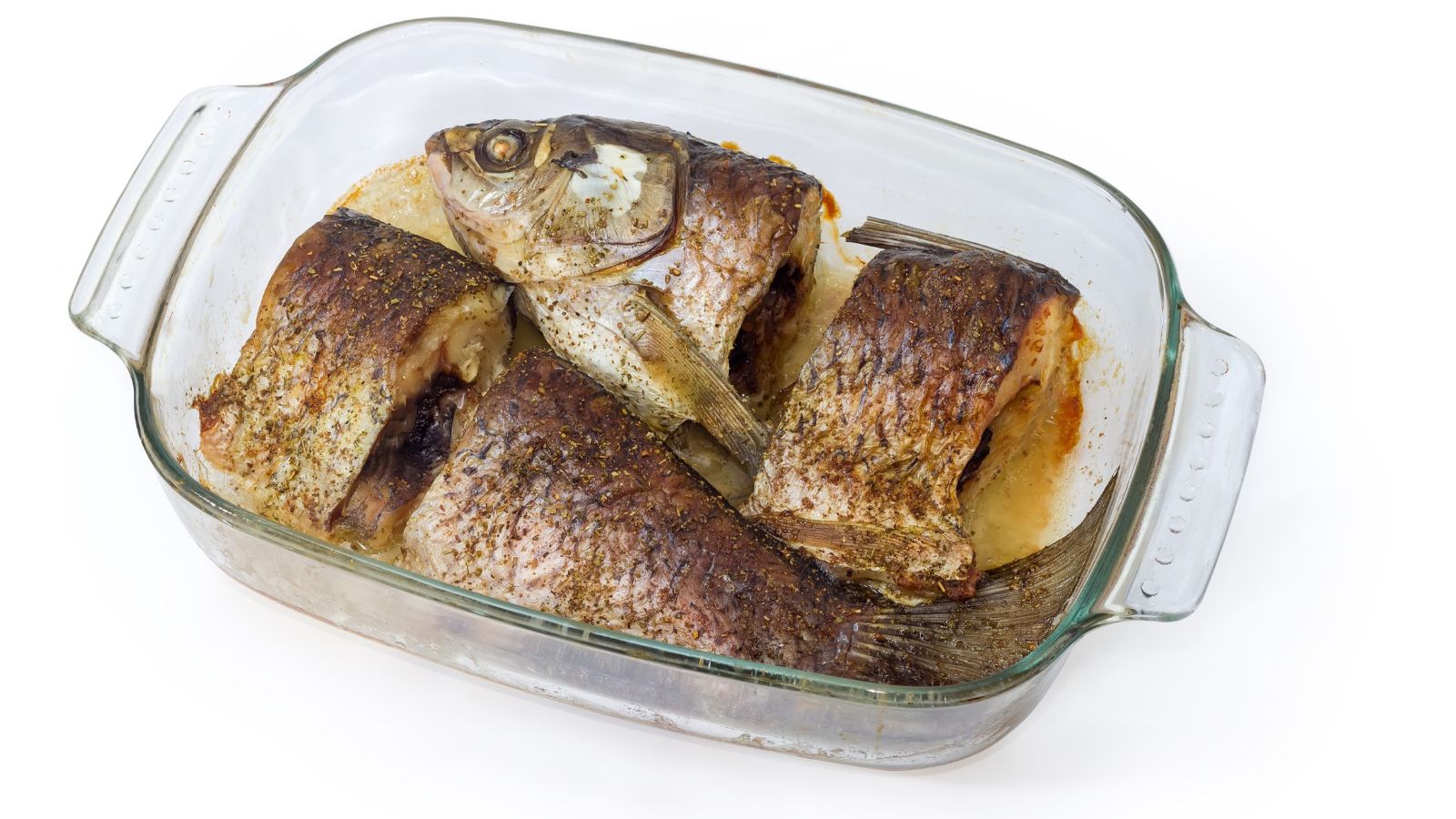
The fish may be ready for its golden finish, but first read the word “broil.” Anchor Hocking excludes broiler use in its glass-bakeware instructions, even though it allows specified oven baking; Pyrex publishes the same broiler restriction.
Choose a vessel whose own instructions permit broiling. If you’re counting on one glass dish to carry the whole recipe, decide on that cookware before you start cooking.
Steaks or chops under direct heat
Give the steak’s cooking method as much attention as the steak itself. Pyrex prohibits using its glassware under a broiler or on a stovetop.
A glass roasting dish therefore cannot automatically double as your searing pan or broiling tray. Read the recipe through to the end and use cookware explicitly approved for the heat source it calls for.
Macaroni and cheese with a broiler finish
That bubbling macaroni and cheese can stay on the menu. Pyrex permits its glassware in preheated conventional and convection ovens, but still rules out a broiler finish.
King Arthur Baking also describes casseroles as less susceptible to the baking-performance differences seen in its richer baked goods. If the final instruction is to brown the cheese under the broiler, select a pan approved for the entire recipe from the beginning.
Related: 12 Old-Fashioned Foods Your Grandma Made That You Rarely See on Dinner Tables Today
Vegetables roasted beyond the dish’s limits
Roasted vegetables are where the temperature dial deserves an extra glance. Anchor Hocking’s instructions cap the covered bakeware at 425°F in preheated conventional or convection ovens, a limit specific to those products.
The same instructions call for covering the bottom with liquid before cooking foods that release liquid; Pyrex’s FAQ names vegetables as an example. If a dry-roasting recipe or its temperature conflicts with your dish’s directions, choose cookware that fits the recipe.
Frozen lasagna headed straight for a hot oven
Tomorrow’s lasagna needs a plan before you close tonight’s freezer door. Pyrex’s FAQ says to let a frozen dish thaw completely before placing it in a fully preheated conventional or convection oven. A freezer designation alone does not authorize a direct transfer to a hot oven; Anchor Hocking also rules out going straight from the freezer to the microwave.
Keep storage and cooking instructions together when planning the meal, and pay attention to the container’s permitted temperature transitions alongside the lasagna’s baking directions.
Roast meat followed by stovetop pan gravy
A roast and its gravy may need different cookware. Pyrex’s FAQ prohibits stovetop use and adding liquid to hot glassware. A recipe that asks you to place the roasting pan over a burner and pour in stock or wine therefore calls for cookware approved for that technique.
Liquid added before roasting, as the manufacturer directs for foods that release it, is a different step, so plan the gravy before choosing the roasting dish.
Microwave popcorn
Movie-night popcorn gets its own small-print moment. Pyrex specifically excludes microwave popcorn and foods in heat-concentrating wrappers from its glassware’s permitted uses, and also says not to microwave an empty or nearly empty dish.
A general microwave-use statement does not cancel those exclusions. Follow the actual product instructions, keeping Pyrex’s rule separate from the directions supplied with a purpose-built glass popcorn maker.
Brownies when you want a particular edge
Brownie corners can steal the show, but the pan helps them shine. In Susan Reid’s March 29, 2018, King Arthur Baking comparison, glass produced firmer, crunchier brownie edges; glass heats more slowly than metal and holds heat longer.
The company suggests starting 25°F lower and allowing up to 10 extra minutes, with adjustments depending on the recipe. This is a texture-and-timing consideration, and the pans in the comparison also differed in shape and dimensions.
Pound cake developed for a metal pan.
Pound cake tells a less predictable story. In that same 2018 King Arthur Baking comparison, the glass-baked cake had the lowest dome, yet the metal and stoneware versions had darker outside edges.
Because the comparison included different pan shapes, those results do not show that one material always produces a better cake. When changing pans, leave room for differences in rise and browning rather than expecting an identical loaf.
Before the oven starts its song, follow the manufacturers’ lead: check your dish’s instructions against the whole recipe, right through the final cooking step.