A school track meet should feel like one of the safest places in America. Parents expect whistles, team tents, nervous athletes, wet bleachers, school pride, and tired teenagers heading home after a long day.
Instead, the Karmelo Anthony and Austin Metcalf case became a chilling reminder that danger does not always arrive in dark alleys or distant places. Sometimes, it walks into ordinary school events where families least expect it.
Anthony was found guilty of murder and sentenced to 35 years in prison for the fatal stabbing of 17 year old Austin Metcalf during a Frisco, Texas, track meet. The case left one teen dead, another headed to prison for decades, and millions of Americans asking how a school argument turned so deadly.
A Normal School Event Can Turn Horrific in Seconds

For many Americans, the most frightening part of this case is where it happened. This was not a late night street fight or a hidden private conflict. It happened at a school athletic event, the kind of place where parents usually feel safe dropping off their children.
That is what makes the tragedy so alarming. A track meet is supposed to be about competition, teamwork, and school spirit, not panic, blood, CPR, and murder charges. When violence reaches ordinary school spaces, parents begin to question every place they once trusted.
The case forces families to face an uncomfortable truth. Safety cannot be assumed just because an event is school sponsored, supervised, or filled with students and adults.
Teen Anger Has Become a Dangerous American Problem
Teenagers have always argued, pushed boundaries, and reacted emotionally. But this case shows how dangerous things become when anger meets pride, pressure, and a weapon.
The reported dispute began under a school tent during rainy weather. Witnesses described tension, repeated demands to leave, physical contact, and escalating words before the stabbing. What should have ended with an adult stepping in became a deadly courtroom case.
Many American parents understand this fear because they see how quickly teen conflicts spread in schools, sports, neighborhoods, and online spaces. One insult, one shove, one challenge, or one reckless decision can destroy more than one life.
A Small Argument Can Become a Lifelong Sentence
One of the darkest lessons from this case is that the original dispute appeared painfully small compared with the outcome. A disagreement over space under a school tent ended with Austin Metcalf dead and Karmelo Anthony sentenced to 35 years in prison.
That is the nightmare American families recognize. A child can leave home for a normal event and never return. Another child can make one violent decision and spend decades paying for it.
The law punished the crime, but punishment cannot reverse the damage. This case shows how one moment of escalation can create consequences that last longer than childhood, longer than school, and longer than the original anger that caused it.
Weapons Make Teen Conflicts Far More Deadly

A shove can be handled. A shouting match can be broken up. A school argument can lead to discipline, apologies, suspension, or adult intervention. But once a knife appears, the entire situation becomes far more dangerous.
Austin was stabbed once in the chest, according to reported trial details. That one wound was enough to end his life. That is the terrifying power of a weapon in a teenage conflict.
This is why many Americans worry about what students may carry into school events, public spaces, and athletic gatherings. The weapon does not just change the fight. It changes the future of everyone involved.
Self Defense Claims Can Collapse Under Legal Scrutiny
The defense argued that Anthony acted in self defense after being pushed and confronted. Prosecutors argued that the stabbing was unjustified and disproportionate. The jury ultimately found Anthony guilty of murder.
That outcome matters because it shows the difference between public debate and courtroom judgment. Online arguments often reduce cases to simple slogans, but jurors must weigh testimony, intent, threat level, force, and the law.
For Americans watching from home, the warning is serious. Claiming fear does not automatically excuse deadly force. The legal system asks whether the response matched the threat, and in this case, the jury decided it did not.
Families Are Being Crushed by Violence in Public Places
The victim impact statements from Austin’s family showed the human cost behind the legal language. To the public, this may be another viral case. To his family, it is a permanent wound.
Austin’s parents lost a son. His twin brother lost a bond that cannot be replaced. Coaches, students, and witnesses were pulled into a traumatic scene that none of them expected at a school event.
This is the part many Americans feel deeply. Every parent knows the ordinary goodbye before a game, practice, meet, or school trip. This case turns that goodbye into something terrifying because it reminds families that some children never make it home.
Schools Must Treat Conflict Control as a Safety Priority
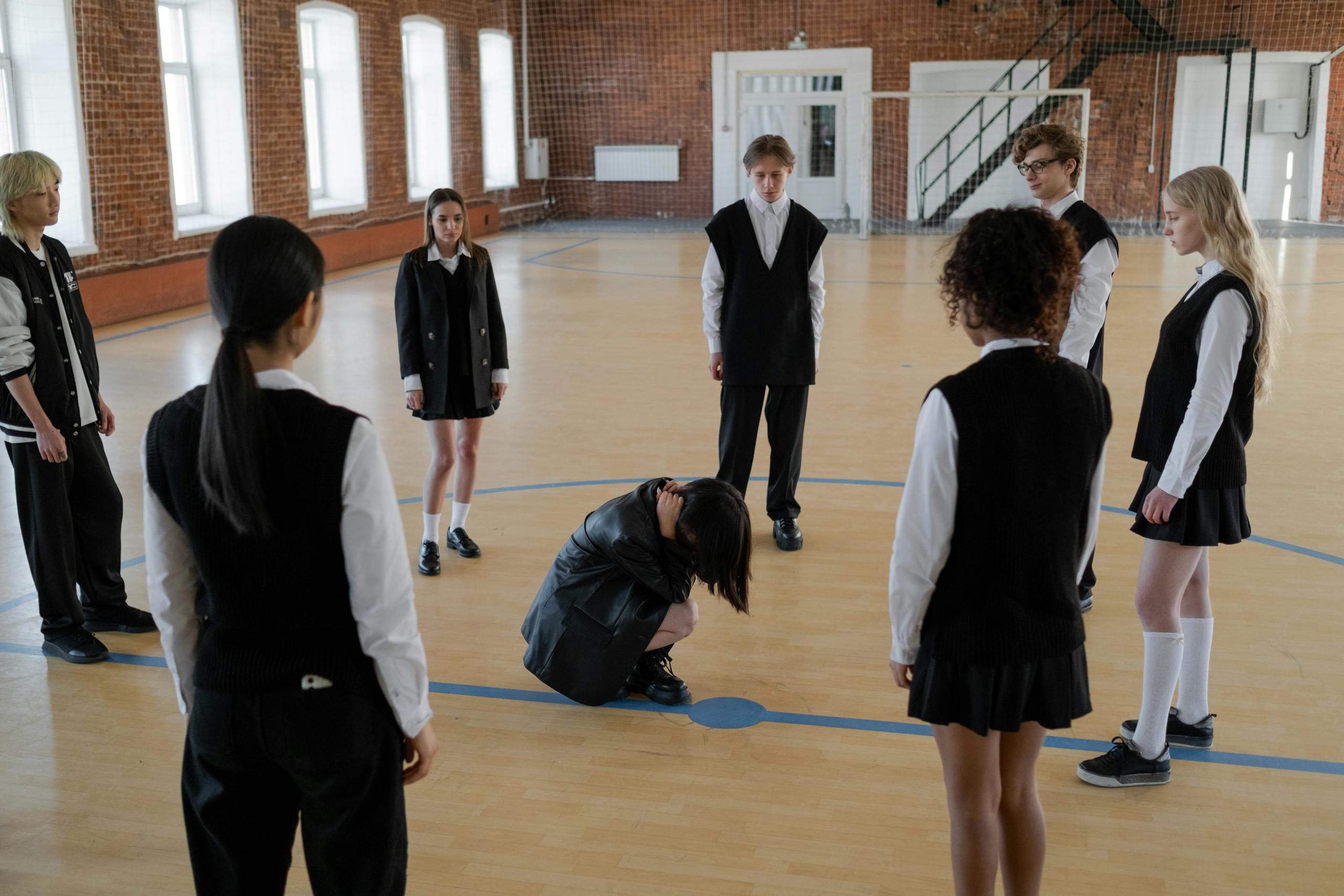
Schools often focus on security gates, emergency plans, visitor rules, and police response. Those things matter, but this case shows that conflict control also needs serious attention.
A school event can bring together students from different campuses, teams, rival groups, and emotional environments. Rain, crowding, competition, and teenage pride can create pressure. If adults do not spot escalation early, the situation can become dangerous fast.
American schools need more than reaction plans. They need clear supervision, quick adult intervention, strong weapon awareness, trained staff, and a culture where students know that walking away is not weakness.
The Court Verdict Does Not End the Pain
Anthony’s 35 year sentence gives the case a legal ending, but not an emotional one. Austin’s family still lives with the loss. Anthony’s family now faces decades of prison visits, grief, regret, and public judgment.
The community also carries the damage. Students who saw the aftermath may remember it for years. Parents may view school events differently. Coaches and staff may relive the desperate attempts to save Austin.
That is why this case feels so heavy. It did not only punish one person. It exposed how fragile public safety can feel when youth violence enters a place meant for children, sports, and community pride.
The Texas track meet stabbing is not just a crime story. It is a warning about anger, weapons, school safety, and the deadly speed of teenage escalation.
Austin Metcalf went to a track meet and never came home. Karmelo Anthony went from high school student to convicted murderer, facing 35 years in prison. Two families were broken in different ways because one conflict crossed a line that could never be uncrossed.
For American parents, the fear is painfully simple. If a school track meet can become the scene of a fatal stabbing, then no ordinary place feels quite as ordinary anymore.