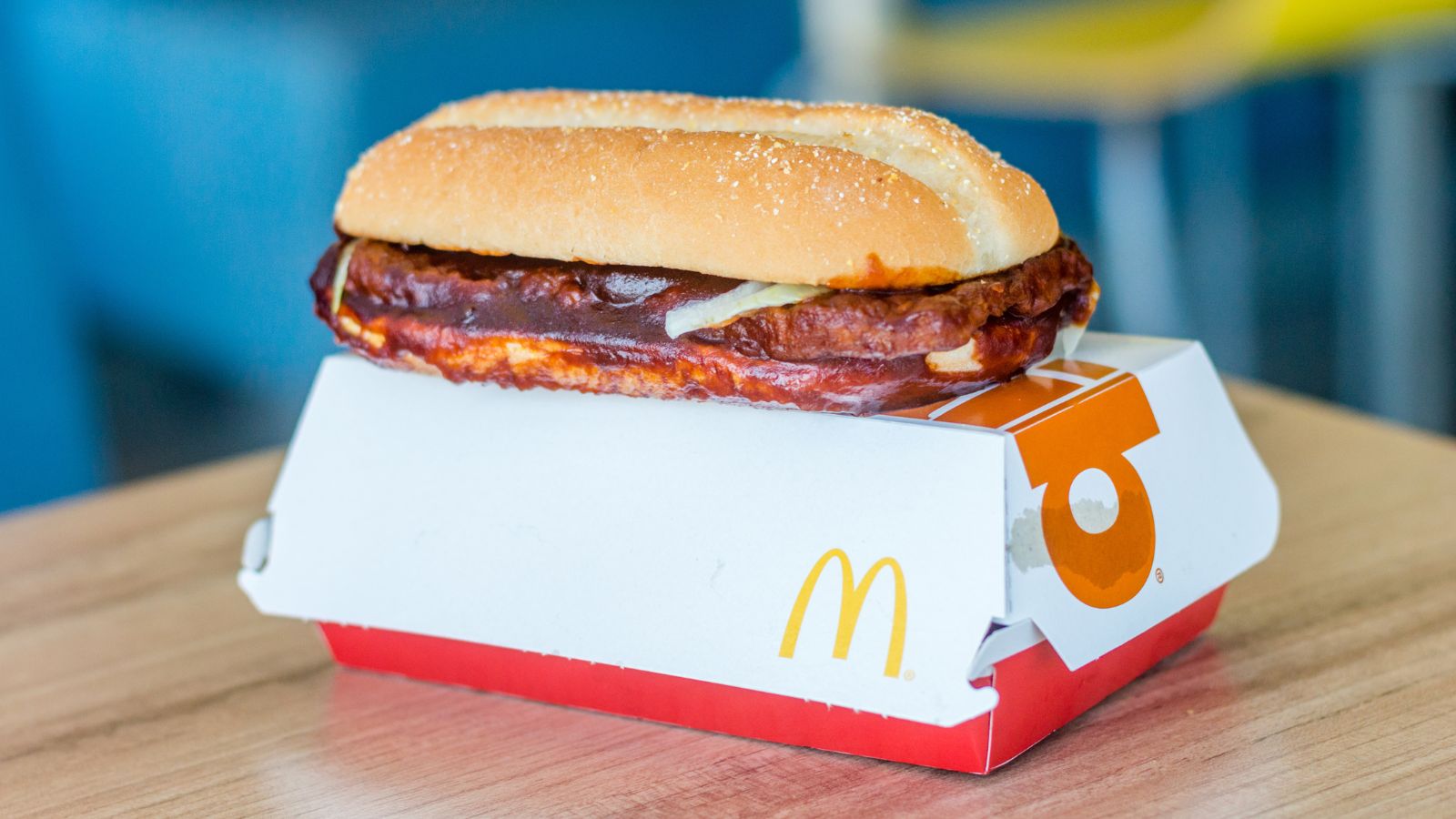
The McRib has always made headlines. Its distinctive rib-shaped patty, tangy barbecue sauce, and occasional returns to McDonald’s menus have made it one of the chain’s most recognizable sandwiches.
But now, the famous sandwich is at the center of a federal lawsuit that raises an interesting question: What should customers reasonably expect when they order something called a McRib?
On October 30, 2026, U.S. District Judge April M. Perry allowed portions of a proposed class-action lawsuit against McDonald’s to move forward. Four consumers allege that the sandwich’s name and presentation mislead customers into expecting actual pork rib meat.
McDonald’s disputes the allegations and maintains that its sandwich contains real pork.
The judge’s decision doesn’t establish that McDonald’s deceived anyone. However, it means part of the dispute can proceed in court.
Here are five important details behind the controversy.
Four Customers Filed the Lawsuit Over What They Believed They Were Buying
A sandwich purchase might seem like a small transaction, but four McDonald’s customers believe their McRib orders raise a much bigger advertising question.
According to the original federal complaint, Peter Le, Charles Lynch, Dorien Baker, and Darrick Wilson filed their lawsuit on December 23, 2025.
The case, Le v. McDonald’s Corporation, was filed in the U.S. District Court for the Northern District of Illinois.
The plaintiffs say they purchased McRib sandwiches during late 2024, believing the product contained actual pork rib meat.
They allege they would have paid less or avoided purchasing the sandwiches altogether if they had known what they claim about the ingredients. The legal proceedings continued into 2026.
An amended complaint was filed March 19, followed by McDonald’s motion to dismiss on April 10.
On October 30, Judge Perry dismissed some claims but allowed others to proceed.
According to Reuters’ original reporting, the judge considered it premature to conclude that customers couldn’t reasonably expect rib meat from the sandwich’s name and appearance.
That’s a significant procedural development, but not a final judgment against the company.
The McRib’s Name and Unusual Shape Are Central to the Dispute
The McRib’s distinctive appearance is unmistakable. Unlike an ordinary round burger patty, the sandwich’s pork filling has ridges resembling a small rack of ribs. That shape is at the heart of the lawsuit.
The plaintiffs argue that the McRib name, its rib-like presentation, and promotional materials lead customers to believe they’re buying pork rib meat.
But what does McDonald’s actually say about the sandwich?
On its official McRib preparation page, the company describes ground pork shaped into its familiar rib-like form.
The finished sandwich also includes barbecue sauce, slivered onions, pickles, and a soft roll.
McDonald’s describes the pork as boneless, but that description doesn’t identify the particular cuts used.
And boneless pork isn’t automatically the same thing as pork without rib meat.
The central question is whether the product’s overall presentation creates an expectation that its ingredients don’t fulfill. For now, that question remains disputed.
McDonald’s Strongly Denies the Lawsuit’s Most Controversial Ingredient Allegations
Perhaps the most attention-grabbing part of the lawsuit concerns what the plaintiffs claim is inside the patty.
The original complaint alleges that the product uses lower-priced pork portions, including shoulder and certain organ meats.
The alleged ingredients include heart, tripe, and scalded stomach. Those claims should not be confused with established findings.
The complaint cites older published articles rather than a contemporary laboratory examination confirming those specific ingredients in the McRib.
McDonald’s has directly rejected the allegations. In a statement reported by Axios in January 2026, the company said the McRib is made with 100% pork obtained from American farmers and suppliers.
It specifically denied using hearts, tripe, or scalded stomach in the patty.
The company also characterized the lawsuit as lacking merit and defended its transparency about ingredients. This distinction is essential.
A complaint documents what one side is alleging. It does not, by itself, establish what a product contains. The court has not determined the precise pork cuts used in the McRib.
The Lawsuit Includes Two Consumer Surveys With Surprising Results
One of the more interesting parts of the original complaint concerns what customers think they’re ordering.
The plaintiffs included findings from two surveys conducted by their own survey expert. The first examined consumer expectations.
According to the complaint, 155 of 215 screened respondents, or 72%, said they expected the McRib to contain rib meat after viewing a menu advertisement.
The second survey explored whether that detail mattered to purchasing decisions.
Of 174 screened respondents, 118 were reported as saying that rib meat was important or very important when deciding whether to buy the sandwich. The complaint describes this result as 67%.
Those figures may sound compelling, but they require careful interpretation.
These were studies the plaintiffs presented as part of their legal case, not independently verified national opinion polls.
The published complaint doesn’t establish that the participants represented American consumers as a whole.
Still, the surveys help explain why the plaintiffs believe the sandwich’s name and appearance influence purchasing expectations.
The findings are evidence offered for consideration, not proof that McDonald’s engaged in deception.
The Lawsuit Seeks Financial Relief, but Nobody Has Been Awarded Money
The McRib dispute isn’t simply about changing a sandwich’s name.
The plaintiffs are pursuing financial relief and changes to marketing practices they consider misleading.
Their original complaint proposes a nationwide class of qualifying McRib purchasers, along with separate groups associated with particular states and Washington, D.C.
However, those proposed groups haven’t automatically become court-certified classes.
Another striking figure appears in the complaint’s discussion of pricing.
The plaintiffs cite an alleged average McRib price of $5.63 during December 2024, with some reported prices reaching $7.89.
Those figures came from a third-party price-tracking website, not a current nationwide restaurant-price audit.
The complaint also states that the amount in controversy exceeds $5 million.
That figure concerns the legal basis for bringing the proposed class action in federal court. It isn’t a settlement, a court award, or money already available to customers.
As reported following the October 30 ruling, the lawsuit can continue on certain claims while others were dismissed. No verified settlement or consumer payment order has arisen from that decision.
For now, the next steps concern the unresolved legal claims, not distributing compensation to McRib buyers.
What the McRib Lawsuit Really Means for Customers
The McRib controversy raises a familiar question in food advertising: How closely should a product’s name and appearance reflect its ingredients?
The plaintiffs believe McDonald’s presentation led customers to expect rib meat. McDonald’s rejects wrongdoing and maintains that the sandwich is made from pork without the disputed organ ingredients.
Judge Perry’s October 30, 2026, ruling allows parts of that disagreement to be considered further, but it doesn’t settle the central factual questions. That’s the detail worth remembering as new headlines appear.
The lawsuit is real. The allegations are serious. But the court has not ruled that the McRib contains no rib meat or that McDonald’s misled its customers.
Until those questions are resolved, the most accurate way to understand the controversy is to keep the claims, the company’s response, and the court’s actual decisions separate.
Sometimes the biggest story behind a familiar sandwich isn’t what’s served on the bun. It’s what customers believe the name promises.