Philadelphia’s soft pretzels are more than a snack because they are woven into everyday life: breakfast on the way to work, something shared with colleagues, a school-day memory, and a box brought to a gathering. Their significance comes less from culinary spectacle than from familiarity. A chewy twist of dough, often served with mustard, connects the city’s immigrant history, street vendors, and neighborhood bakeries in one portable package.
Cheesesteaks may attract more national attention, but pretzel makers have their own argument for local bragging rights. “It’s Philly’s iconic food,” Erika Bonnett of Center City Soft Pretzel Co. told Thrillist in 2020. “Everyone talks about cheesesteaks, but everybody makes cheesesteaks now. We’re known for our pretzels in this city, they really represent us.” That is a baker’s proud opinion, but the pretzel’s long presence in Philadelphia gives it strong support.
The History Is Bigger Than One Bakery
Philadelphia did not invent the pretzel. German-speaking immigrants who settled in Pennsylvania during the 1700s brought food customs that became part of local life, and the regional tradition grew from them. Food historian William Woys Weaver emphasized that influence in Thrillist’s reporting: “The German-speaking world was and always has been a large part of the Philadelphia food story.” Pretzels belong to that wider immigrant contribution, not a tidy tale about one Philadelphia inventor.
The distant origin stories require more caution. Accounts involving medieval monks and prayer-shaped dough are frequently repeated, while Weaver offers a different explanation involving Celtic harvest knots. Those competing accounts should not be flattened into a definitive birthplace and date. The clearer Philadelphia evidence is more recent: the Encyclopedia of Greater Philadelphia identifies street vendor Daniel Christopher Kleiss as selling soft pretzels in the city as early as the 1820s.
Commercial baking helped turn that presence into an enduring business. Julius Sturgis opened the first commercial pretzel bakery in Lititz, Lancaster County, in 1861, a regional milestone, not the opening of Philadelphia’s first pretzel shop. Within Philadelphia, the Nacchio family founded Federal Pretzel Baking Company in 1922. By 1930, Federal sold pretzels to public schools, putting the snack into children’s routines rather than reserving it for special occasions.
Street distribution made pretzels just as familiar outside the classroom. Vendors sold them around schools, at intersections, and near workplaces; food carts made them an easy breakfast or after-lunch purchase. Mustard’s association with the snack also has a practical explanation: pretzels were commonly sold by hot-dog vendors who already had mustard available. What looks like an essential culinary pairing grew partly from the convenience of the street-food counter.
Related: 10 Things You Shouldn’t Eat or Drink Before and During a Flight
The Philly Shape Has a Purpose, and a Personality
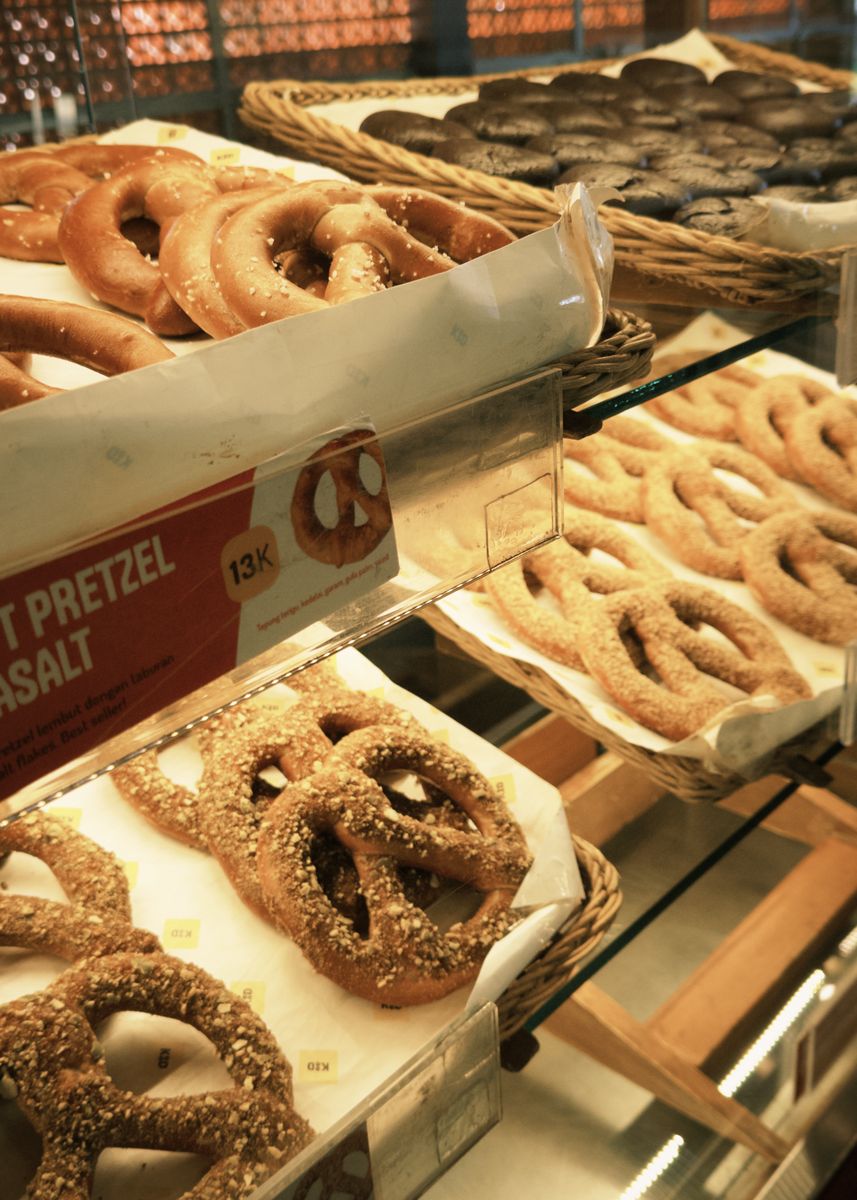
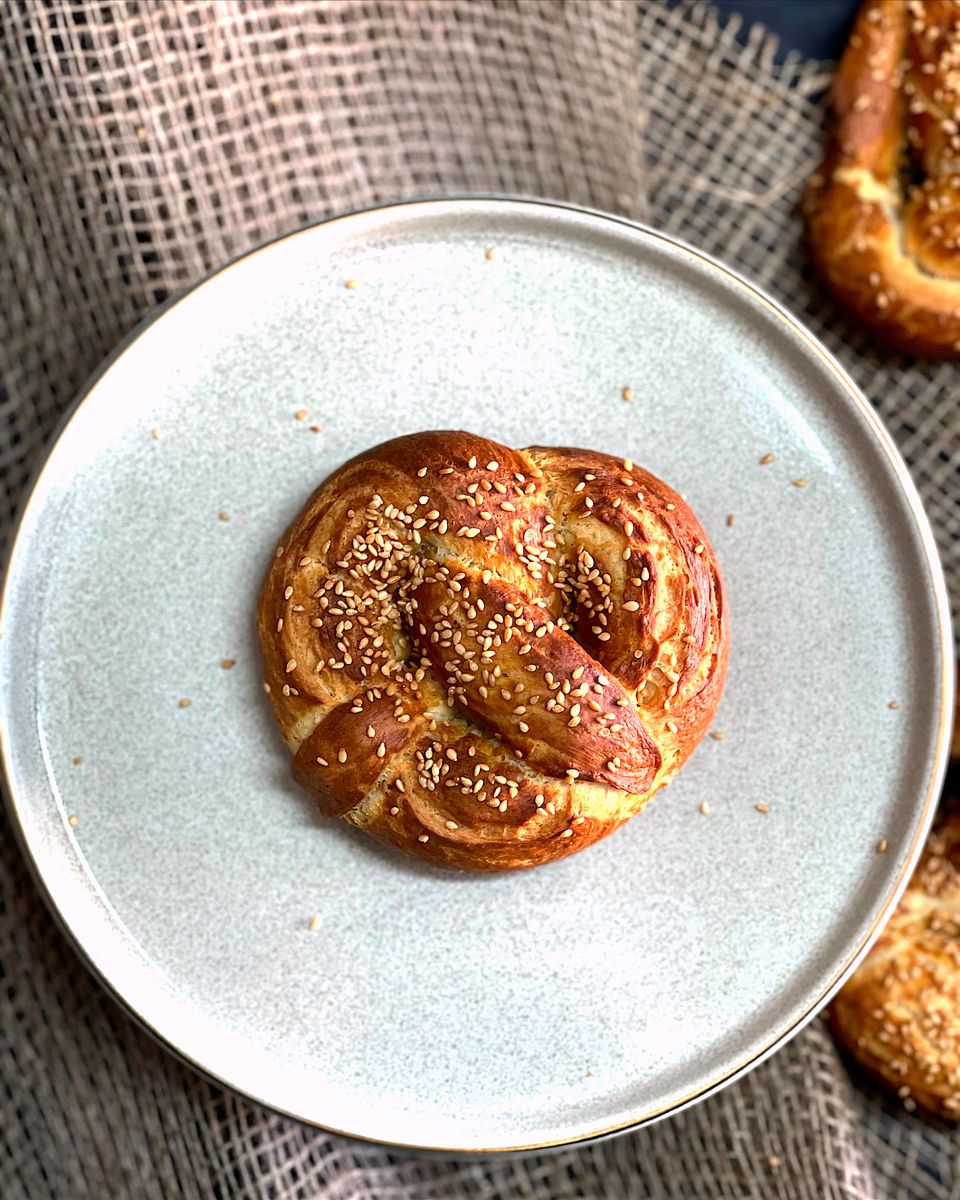
The classic Philadelphia soft pretzel has a compressed, elongated figure-eight shape rather than the open, rounded loops many people associate with pretzels. Its chewy texture and close-set arrangement also distinguish it from a bag of crunchy pretzels. The encyclopedia links the development of that figure-eight form to conveyor-belt production. The modern outline therefore reflects both manufacturing and taste, a practical shape that became visually recognizable as a local food.
That does not mean every soft pretzel sold in Philadelphia is identical. Thrillist’s 2020 reporting distinguishes dense, chewy street-style pretzels from the softer, butter-brushed Amish-style versions associated with Pennsylvania Dutch markets. At Reading Terminal Market’s Miller’s Twist, owner Roger Miller explained the latter approach: “It’s all about the freshness.” He described “a crisp outside and a really moist inside,” contrasting it with a more traditionally chewy Philadelphia pretzel. Both belong in the regional conversation, but they are different styles.
The work behind the dough is more involved than its modest appearance suggests. Joe Sidorick, a second-generation baker at Philadelphia Soft Pretzels, described his process to Thrillist as “a combination of ingredients, how long we proof them for, how long we chill them after the proof, and then the time and temperature of the baking, a lot of little things.” That explanation makes the pretzel’s craft visible without pretending every bakery uses one universal method.
The finished food is adaptable, too. Regional bakers have wrapped pretzel dough around hot dogs, sausages, and breakfast fillings, while some offer cheesesteak-filled versions. Those variations can make a pretzel more substantial, but cultural attachment doesn’t depend on elaborate fillings. A simple salted twist remains the reference point: something eaten on the move, shared with others, and recognized without needing an explanation of what makes it “artisanal.”
A Bakery’s Comeback Shows What the Snack Means
Center City Soft Pretzel Co.’s recovery from a fire offers a particularly vivid example of that attachment. An electrical fire on Sept. 28, 2022, shut down the South Philadelphia bakery and damaged its machinery and electrical system. It reopened in April 2024 after roughly 18 months of repairs and equipment delays. Customers lined up along Washington Avenue, and some came forward for hugs as steaming pretzels returned to the counter.
For owner Erika Tonelli Bonnett, reopening was inseparable from her father, Tony Tonelli, who started the business. “My father lives in these walls,” she told The Philadelphia Inquirer at the reopening. “I feel his presence.” She also recalled how deeply the bakery was embedded in her childhood: “This place has been a part of my life since I was 6 years old.” Those remarks capture an emotional investment no ingredient list could.
Customers were restoring their own routines, too. South Philadelphia electrician John Bielec left the reopened bakery with pretzels for coworkers. “A lot of guys on my job don’t work down here and they all die for these pretzels, so I had to bring them in,” he told the newspaper. His purchase wasn’t just a snack for himself; it was a way to share something tied to his neighborhood and missed during the closure.
That is why Philadelphia’s pretzel has outgrown the label of an ordinary snack. Its importance sits in the repetition: the school purchase, the morning stop, the familiar bakery, and the bag carried in for someone else. The dough may be simple, but the relationships around it aren’t. In Philadelphia, handing over a soft pretzel can be a small act of local pride, with mustard available, naturally.
Other Posts You Might Like
- 7 Public Behaviors Americans Say Have Gotten Worse in Everyday Life
- 10 Best Things to Say When You Get a Spam Call
- 9 Items Happy People Avoid Keeping in Their Living Rooms