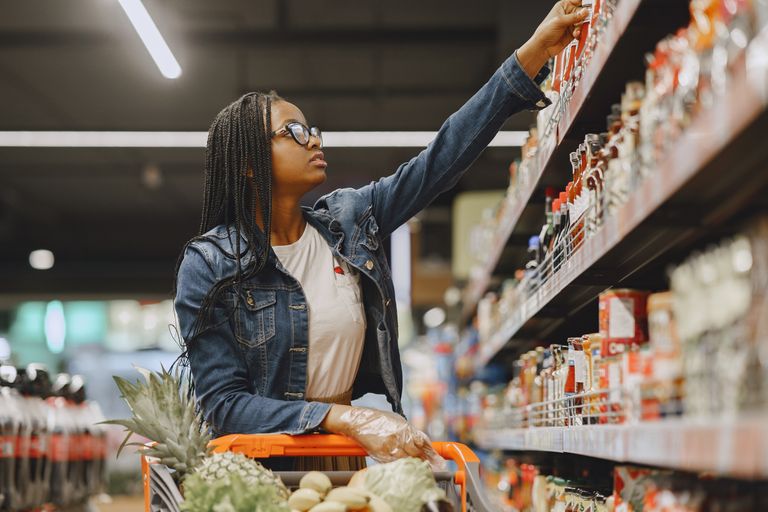
Standing in the cooking oil aisle, the cheaper bottle usually wins. It has the smaller number on the tag, it fits the week’s budget, and it feels like the sensible choice.
According to experts interviewed by MoneyLion, that instinct is where many shoppers lose money. In an Aug. 18, 2026 piece on what wealthy Americans do differently at the grocery store, the consumer experts pointed to 3 habits: doing unit-price math, timing trips around markdowns, and shopping with a meal plan and a fixed weekly budget. The first habit is the one that turns a $14.99 bottle of olive oil into the better buy.

Habit 1: comparing price per ounce, not sticker price
Economist and brand strategist Xhensila Lala told MoneyLion that wealthy shoppers pay less attention to the sticker price and more to the price per ounce. Her example was olive oil. A 16-ounce bottle priced at $8.99 works out to about 56 cents per ounce, while a 32-ounce bottle at $14.99 comes to about 47 cents per ounce. The bigger bottle costs $6 more at the register but delivers twice as much oil for less per ounce.
That math is exactly what unit price labels are for. The National Institute of Standards and Technology describes the shelf tags as showing the product, its size, the price and the price per unit, so shoppers can compare items sold by weight, volume or count. In its announcement of a unit pricing best-practices guide, NIST also warns that bigger is not always better, since stores sometimes charge more per unit for larger items. Its example: a 64-ounce ketchup bottle at $4.49 came to about 7 cents an ounce, while a 38-ounce bottle at $2.29 was about 6 cents.
The lesson cuts both ways, which is why the per-unit number, explained in the background on unit price, beats guessing. Lala said wealthy households often buy in bulk at warehouse clubs like Costco and Sam’s Club, and both are drawing crowds this week, with Costco and Sam’s Club setting early Black Friday hours for members. Bulk buying on that scale can puzzle visitors from abroad, much like the other odd American traditions that confuse the rest of the world.
Habit 2: shopping on markdown days
Lala also said grocery stores follow set schedules for lowering prices, and wealthy shoppers plan their trips around them. According to her, meat typically approaches its sell-by date in the middle of the week and is discounted 30% to 50%. Baked goods get marked down in the middle of the afternoon after they have been sitting out for a while, and produce drops in price on the morning a new shipment arrives.
Her approach is to handle those markdowns like any other timed financial decision: show up on markdown day, buy the discounted chicken or ground beef, and freeze it right away. Freezing is a sound plan for that kind of purchase. The government’s cold food storage chart at FoodSafety.gov gives raw ground beef 1 to 2 days in the refrigerator but 3 to 4 months in the freezer for best quality, and notes that foods kept frozen continuously at 0°F can be kept indefinitely, with the freezer times reflecting quality only.
It is a habit that fits neatly with other money-minded kitchen moves, from the budget foods that even the wealthy eat to the list of things Warren Buffett says people waste money on. Markdown shopping works best with a list in hand, and a look at people who write a grocery list before every trip shows what else those planners have in common.

Habit 3: a meal plan and a weekly grocery budget
The third habit came from Melanie Musson, an insurance and finance expert at Clearsurance.com. She told MoneyLion that wealthy Americans do not wander the aisles. They meal plan, know exactly what they are going to buy and stick to a weekly grocery budget. A plan, she said, helps avoid impulse buys and overspending on items that end up going to waste.
That last point is where the real money goes. Caitlin Agnew-Francis, commercial sales manager at Desky, cited the U.S. Department of Agriculture in the piece, and the USDA estimates food waste in the United States at between 30% and 40% of the food supply, as the overview of food waste in the United States also describes. In her view, the biggest difference has less to do with which brands people buy and more to do with whether they use what they pay for.
Many households already lean on a weekly plan to stretch the food budget, especially in a month as expensive as November. A plan also makes the other two habits easier: it is hard to know whether a bulk bottle or a marked-down family pack is a bargain without knowing how it will be used before it spoils.
Putting the 3 habits together after Thanksgiving
The week after Thanksgiving is a natural time to try all three. The fridge is full of leftovers, which makes it easier to plan a few meals before the next store run. Pantry staples like olive oil, flour and canned goods are worth checking by unit price before restocking, especially if holiday baking drained the supply. And the markdown schedule in the meat case and bakery does not take a holiday.
None of these habits require a large income. They take a calculator, a little planning and a freezer with some room in it. The $14.99 olive oil example shows how quickly the math adds up: the larger bottle saves about 9 cents on every ounce, money that stays in the grocery budget for the next trip.
This article was produced with AI assistance and edited for accuracy against the sources linked above.
Image: USDAgov – Public domain/Wikimedia Commons