An older DoorDash driver arrives at a front door leaning on a cane. After a delayed order, a customer decides a tip is not enough. A second video shows another older man delivering in Wichita. Within days, strangers are raising money, turning app-based work into a debate about retirement and the cost of getting older in America.
‘Help Stephen Retire’,promoted by @heather.dyann, is based in Wichita, Kansas, and had passed $2,000, according to details supplied for this story. ‘Let’s Find Brian the DoorDash Delivery Driver’, organized by Diana Seo in Prosper, Texas, showed $92,421 toward its $100,000 goal and 3,280 donations on November 25. The TikTok link supplied for Brian appears under @prosperingbreadmomma; GoFundMe lists Seo as organizer and Brian Charles Patrick as beneficiary.
Two videos, two different fundraising stories
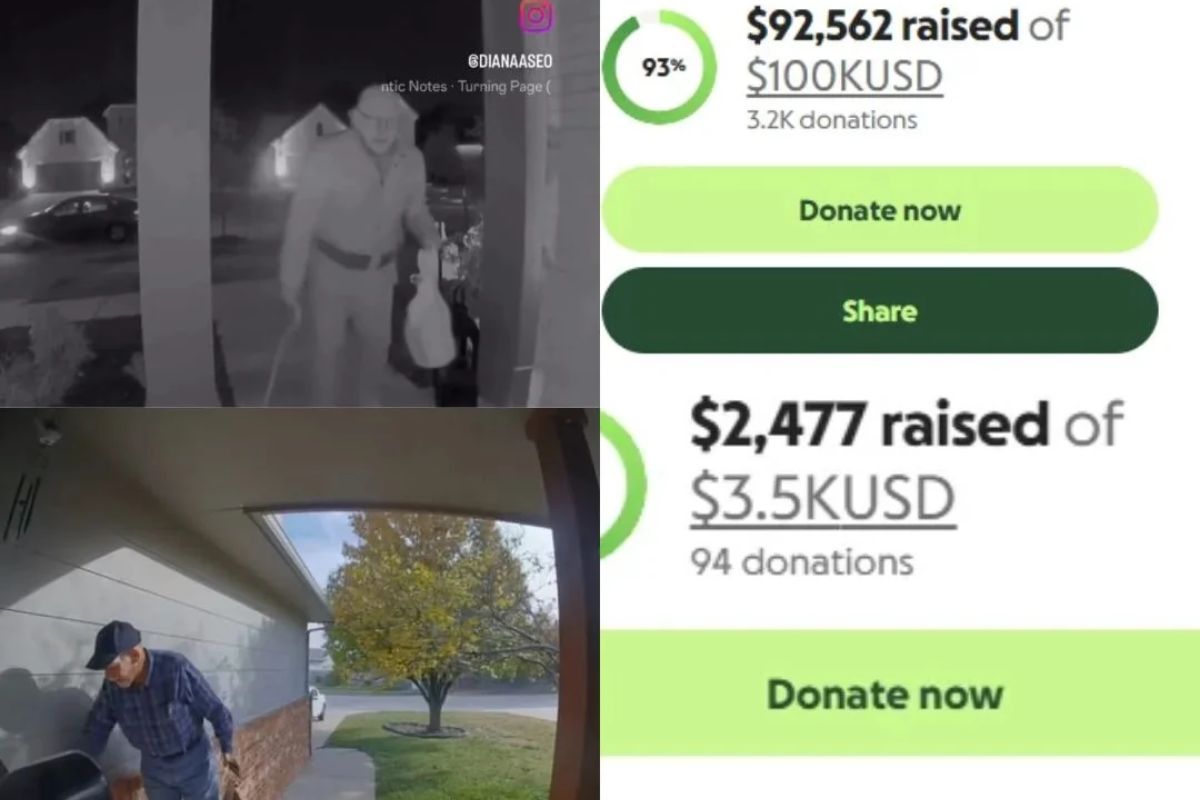
The Wichita appeal is built around a straightforward hope: Stephen should be able to retire. The video shared by @heather.dyann shows him delivering for DoorDash, while the fundraiser’s title asks viewers to help him leave that work behind. Watch Stephen’s delivery video.
Brian’s campaign has a different complication. Seo wrote on GoFundMe that her order was delayed and an older man eventually arrived leaning on a cane. She said she did not know his circumstances, but started the fundraiser after viewers encouraged her to locate him and offer him the money. If he cannot be reached, the page says, the funds will go to a charity, with details shared publicly.
The fundraiser does not prove Brian asked for help or agreed to have his working life turned into a public story. Seo later said organizers thought they might have found him but were waiting to confirm his identity. The campaign page showed $92,421 raised from 3,280 donations during this check. The TikTok video shared under @prosperingbreadmomma provides the accompanying delivery footage.
Older Americans are still working
Many Americans imagine retirement as the stage of life that follows decades of work. The labor market tells a messier story. The U.S. Bureau of Labor Statistics reported that 19.1% of people age 65 and older were in the labor force in 2025, meaning they were working or actively looking for work. That was below 20.2% in 2019, but above 12.9% in 2000.
The statistic cannot explain why an individual keeps working. Some older adults want routine or extra spending money; others may face bills, debt or savings that fell short. A country where nearly one in five people over 65 remain in the labor force cannot treat every older worker as an anomaly.
Social Security is only part of the picture
Retirement income is often discussed as if Social Security settles the question. The Social Security Administration estimated the average monthly retirement benefit at $2,071 in January 2026. That is an average, not a guaranteed payment; individual checks vary with earnings history and claiming decisions.
For a household covering housing, utilities, food and transportation, that amount may leave little room for surprises. It cannot establish that Stephen or Brian is struggling. Neither campaign provides a full account of either man’s finances, and Brian’s organizer says she does not know his circumstances. Sympathy is not evidence.
Delivery work carries hidden costs
A DoorDash order looks simple to a customer: place it, track the driver, open the door and leave a tip. For the driver, the job involves fuel, vehicle wear, insurance, maintenance, unpaid time between orders and taxes. DoorDash tells U.S. Dashers they are independent contractors responsible for tracking earnings and reporting them on tax returns. The company says it does not automatically withhold taxes.
The mileage alone matters. For business driving from July 1 through December 31, 2026, the IRS set an optional standard mileage rate of 76 cents per mile. It is a tax-deduction method based on vehicle operating costs, not proof that every driver spends exactly that amount. It shows why gross app earnings differ from take-home pay.
Flexible scheduling may attract older people who cannot commit to conventional hours. The arrangement can also shift expenses and uncertainty onto the worker, who carries the cost of keeping a vehicle roadworthy and the risk of a slow day.
Generosity still needs boundaries
There is something decent about seeing an older stranger at work and wanting to help. The campaigns show how quickly a routine encounter can mobilize thousands of people. Brian’s fundraiser, in particular, was nearing its $100,000 target within days.
But viral generosity can become too comfortable deciding what another person needs. Assuming an older man delivering food must be desperate, incapable of choosing his work or waiting for strangers to rescue him is its own form of disrespect. Age is not proof of poverty, and a cane is not a financial statement.
The next step matters as much as the donation total. Stephen’s campaign is aimed at helping him retire. Brian’s organizer says she will offer him the funds if she can confirm and contact him, or give them to charity if she cannot. The public should expect updates on whether the men were reached, whether they accepted the money and how the funds were handled.
The larger question behind the videos
These campaigns expose a gap between the retirement Americans are taught to expect and the working lives many older people continue to lead. A delivery video cannot explain an individual’s finances, and a fundraiser cannot resolve the pressures that make later-life work common. The attention reminds viewers that older workers remain in a labor force customers rarely notice.
A stranger’s generosity can change someone’s week or retirement prospects. It should leave room for the recipient to decide what help looks like. The men at the center of these stories deserve privacy, agency and the chance to say what they want.