A three year old comment from Donald Trump about recruiting LeBron James to a women’s basketball team has suddenly returned to the spotlight as the WNBA faces one of its most intense debates over the future of women’s sports.
The renewed attention comes as Indiana Fever guard Sophie Cunningham faces national attention after speaking out about transgender athletes competing in women’s sports. Her comments have sparked strong reactions from supporters who believe female athletes need protected competition and critics who argue transgender athletes should have opportunities to participate.
The controversy has moved from online discussions to public demonstrations outside WNBA arenas.
The debate is unfolding during a historic period for women’s basketball. The WNBA has attracted millions of new fans, increased media coverage, and greater attention than ever before. With the league growing rapidly, every controversy involving its players now reaches a much wider audience.
Sophie Cunningham Becomes the Center of a WNBA Controversy
John Mac, CC BY-SA 2.0, via Wikimedia Commons
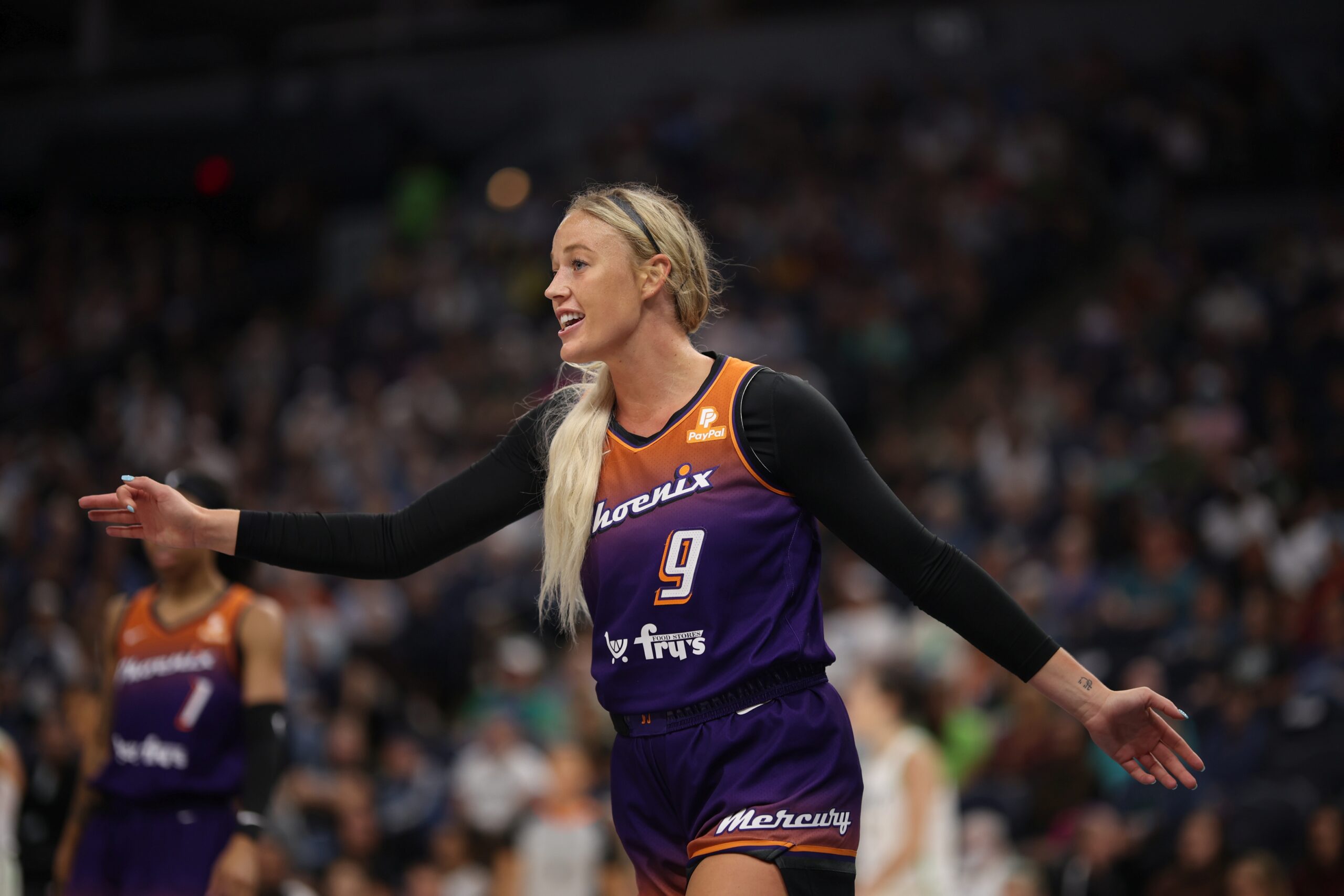
Cunningham became a major focus of discussion after expressing her belief that women and girls should have protected categories in sports competition. The Indiana Fever guard said she stood by her comments and believed protecting female athletes was especially important for younger generations. Her position quickly became one of the most discussed topics surrounding the league.
“I said what I said,” Cunningham said. “I think it’s kind of common sense. I think it’s important to protect children and that’s little girls who are also involved in that category.” She added that she would continue standing by her opinion despite the criticism.
The reaction was immediate across the sports world. Supporters organized rallies outside Indiana Fever games to show their backing for Cunningham. Opponents argued that transgender athletes should not be excluded from competition and criticized efforts to limit their participation.
Trump’s LeBron James Comment Reappears During the Debate
As the controversy surrounding Cunningham grew, an old video of Trump discussing LeBron James began spreading across social media again. The comments were originally made during a 2022 speech at the America First Policy Institute. Trump joked that he would be the greatest women’s basketball coach in history because he could create an unbeatable team.
During the speech, Trump mentioned LeBron James and said he would ask the basketball superstar whether he had ever wanted to be a woman. He said James would make his team impossible to defeat because of his extraordinary basketball ability. The remark was presented as part of a larger argument about gender and sports competition.
The resurfaced clip gained attention because it connected directly to the current debate. LeBron James is widely considered one of the greatest basketball players in history, making him a powerful example in discussions about athletic ability and physical advantages. The comment raised renewed questions about how sports organizations define fairness in competition.
Why the WNBA Has Become a National Conversation
The controversy arrives at a time when the WNBA is experiencing unprecedented growth. The popularity of stars such as Caitlin Clark has brought new viewers, increased attendance, and expanded media coverage. Many fans who previously paid little attention to women’s basketball are now following the league closely.
The increased attention has also changed how people view conversations surrounding the WNBA. Statements from players are now discussed nationally rather than only within basketball circles. The league has become a major platform where sports, culture, and politics often intersect.
The WNBA has historically been one of the most socially active professional sports leagues in America. Players have regularly spoken about issues involving equality, social justice, and public policy. That history has made the league a place where basketball debates often become larger cultural discussions.
The Debate Over Transgender Athletes Extends Beyond Basketball
The discussion involving Cunningham is part of a wider debate affecting sports around the world. Similar disagreements have emerged in swimming, track and field, volleyball, softball, and college athletics. Sports organizations have struggled to create policies that address both competitive fairness and inclusion.
Supporters of restrictions on transgender participation in women’s sports argue that biological differences can influence athletic performance. They point to factors such as strength, speed, muscle development, and physical changes that may affect competition. They believe separate categories are necessary to protect opportunities for female athletes.
Supporters of transgender inclusion argue that transgender athletes should be allowed to participate without discrimination. They believe policies should focus on creating fair opportunities while respecting the rights of individual athletes. The disagreement has created different rules across sports organizations and countries.
The History Behind Women’s Sports Categories
The debate is connected to the long history of protecting opportunities for female athletes. In the United States, women’s sports changed significantly after Title IX became law in 1972. The legislation helped expand access to athletic programs and prohibited sex based discrimination in education.
Before those changes, female athletes often had fewer opportunities, less funding, and fewer resources compared with male athletes. Advocates for women’s sports argue that separate categories were created to ensure women could compete fairly. They believe maintaining those protections remains important today.
The current debate asks how those protections should be applied in a changing society. Sports leaders are trying to balance concerns about fairness, inclusion, and equal access. The issue remains one of the most complicated challenges facing modern athletics.
Riley Gaines and Women’s Sports Advocates Join the Discussion
Former NCAA swimmer Riley Gaines has become one of the most visible voices supporting restrictions on transgender participation in women’s sports. Gaines gained national attention after competing against transgender swimmer Lia Thomas at the NCAA championships. She later became an advocate focused on protecting women’s athletic categories.
Gaines and other advocates argue that female athletes should not lose opportunities because of physical differences. They believe sports policies must prioritize competitive fairness. Their supporters say the issue affects not only professional athletes but also young girls competing in schools and youth programs.
Transgender rights advocates have pushed back against those arguments. They say transgender athletes deserve the opportunity to compete and should not face exclusion because of their identity. The disagreement reflects a larger national debate about how organizations balance equality and competition.
What Happens Next for the WNBA and Women’s Sports
The debate surrounding Sophie Cunningham, Trump’s comments, and transgender athletes is unlikely to disappear soon. As women’s sports continue growing, leagues will face increasing pressure to explain their policies and decisions. Fans, athletes, and organizations will continue debating what fairness should look like in modern competition.
The resurfacing of Trump’s LeBron James comment shows how quickly old statements can become part of new cultural conversations. A comment made years ago gained renewed attention because it connected with one of today’s most controversial sports issues. The moment demonstrates how closely sports and public debates are now connected.
For the WNBA, the challenge is navigating a new era of visibility. The league is attracting more fans than ever while facing difficult questions about competition, identity, and inclusion. As women’s basketball continues to grow, these conversations will likely remain part of the sport’s future.