A new political flashpoint erupted in Washington after President Donald Trump called for the impeachment of Sen. Jack Reed, a senior Senate Democrat, following his sharp criticism of Trump’s newly announced Iran agreement. The clash comes as the deal itself faces growing scrutiny over its unclear terms, its timing, and whether it represents a breakthrough in Middle East diplomacy or a loosely defined framework still in negotiation.
What began as a foreign policy debate quickly escalated into a broader confrontation over legitimacy, credibility, and political power. At the center of the storm is a familiar Washington tension: a president selling a high-stakes international agreement, and critics questioning whether the substance matches the rhetoric.
A Fox News Interview Ignites a Political Chain Reaction

The dispute intensified after Sen. Jack Reed appeared on Fox News Sunday and described Trump’s handling of the Iran situation as a “bad mistake,” arguing the United States is now in a weaker negotiating position than during the Obama-era nuclear framework. Reed, a longtime voice on national security matters and a senior figure on defense-related issues in the Senate, said abandoning previous diplomatic structures left Washington with fewer tools and more risk.
His comments immediately circulated across political media, landing at a moment when Trump was already promoting what he called a completed “great deal” with Iran, one that he says is aimed at preventing Tehran from obtaining a nuclear weapon. But even within that announcement, details remain unclear, with reports describing a memorandum of understanding rather than a fully finalized treaty-level agreement.
Trump Escalates From Criticism to Impeachment Demand
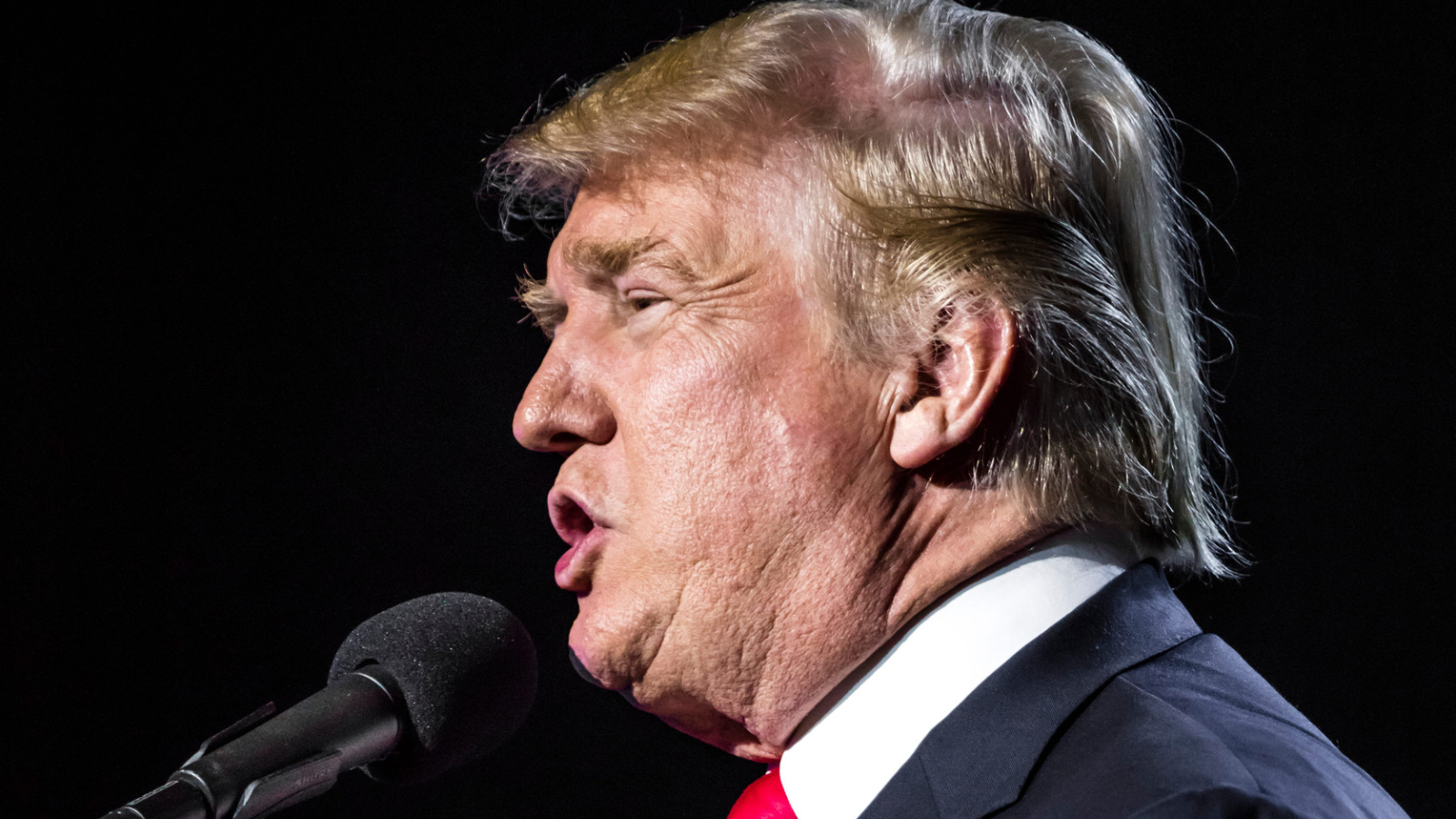
Rather than dismissing Reed’s remarks as routine political opposition, Trump responded with a far sharper accusation. In a public statement, the president accused Reed of misrepresenting the agreement and went further, calling for the senator to be impeached. The demand immediately raised eyebrows in Washington for one key reason: U.S. senators are not subject to impeachment by the president.
Unlike executive officials or federal judges, senators can only be removed by expulsion within the Senate itself, requiring a two-thirds majority vote. That constitutional gap reframed Trump’s statement as political symbolism rather than a procedural possibility, a rhetorical escalation aimed at discrediting a high-profile critic rather than initiating an actual legal process.
The Iran Deal’s Unresolved Details Fuel Debate
At the heart of the controversy is the nature of the Iran agreement itself. While Trump has described it as a completed deal with immediate geopolitical impact, multiple descriptions of the arrangement suggest it functions more as a memorandum of understanding. Such agreements typically outline intentions for future negotiations rather than locking in enforceable commitments.
Reported elements include a temporary ceasefire framework, discussions around Iran’s nuclear enrichment program, and the reopening of key maritime routes such as the Strait of Hormuz, a critical global shipping lane responsible for a significant share of the world’s oil transit. That ambiguity has become a central point of criticism. Supporters argue it reflects diplomatic momentum. Critics say it leaves too many unanswered questions about enforcement, verification, and long-term stability.
Reed’s National Security Credibility Raises the Stakes
Reed’s criticism carries added weight in Washington because of his long-standing role in national security oversight. His perspective is not that of a partisan commentator, but of a senior lawmaker deeply involved in defense policy and military authorization debates.
That positioning has sharpened the contrast between the two sides: Trump framing the agreement as a strategic win, and Reed warning it may represent a weakened negotiating position that could echo past diplomatic miscalculations. The comparison to the Obama-era nuclear framework has become a recurring dividing line, with one side arguing structured diplomacy produced stability, and the other insisting it failed to deter long-term threats.
Timing, Optics, and the Politics of Announcement
Adding another layer to the controversy is the timing of Trump’s announcement, which critics say appears carefully staged for maximum political visibility. The rollout delivered through a high-profile public statement and social media amplification came before formal documentation of the agreement’s final terms had been made fully public.
That sequencing has fueled skepticism among critics who argue the announcement may be designed to project resolution before technical negotiations are complete. Supporters, however, see it differently, viewing it as a demonstration of diplomatic momentum and strategic pressure on Iran to finalize terms.
Strait of Hormuz Becomes a Global Pressure Point
Beyond the political clash, the agreement also touches one of the world’s most sensitive economic corridors: the Strait of Hormuz. Any disruption in the Strait has immediate implications for global energy markets, particularly oil prices. That makes even partial reopening or stabilization of the route a significant geopolitical development.
This is where the stakes of the deal extend beyond Washington politics. Even modest changes in access or security in the region can ripple into global fuel costs, shipping routes, and inflation pressures worldwide.
A Familiar Pattern of Political Escalation
Trump’s call for impeachment also reflects a broader communication pattern that has defined many of his high-profile political disputes. Critics of the president say his responses often move quickly from policy disagreement to personal or institutional confrontation.
Supporters argue it is a direct way of challenging what they see as entrenched opposition within Washington. In this case, the shift from policy criticism to impeachment rhetoric has transformed a foreign policy disagreement into a broader debate over political legitimacy and the boundaries of executive response.
A Deal Still Under Political Construction
As the debate intensifies, the Iran agreement itself remains in a state of flux, praised by some as a step toward stability and criticized by others as an incomplete framework being presented as a finished achievement. What is clear is that the controversy is no longer confined to foreign policy circles.
It has become a test of political narrative, institutional boundaries, and how quickly diplomatic announcements can become domestic political battles. And with both sides entrenched, the fight over the Iran deal and now over Sen. Jack Reed himself shows no sign of cooling.