President Donald Trump has drawn criticism after sharing a lengthy video on Truth Social that demanded the criminalization of democratic socialism and the deportation of prominent Americans associated with the political movement.
The 49-minute video was produced by conservative commentator Michael Savage and titled “Democratic Socialism Must Be Criminalized; Leaders Deported.” Savage directed much of his attack at New York City Mayor Zohran Mamdani, repeatedly describing democratic socialists as communists who should be stopped and removed from the United States. Trump reposted the video without adding an explanation of his own.
That distinction matters. Trump did not personally deliver every statement in the broadcast, but the president used his account to amplify Savage’s demands to millions of followers. The repost came amid Trump’s increasingly aggressive warnings that communism and socialism are taking control of the Democratic Party.
The video goes far beyond normal political criticism.
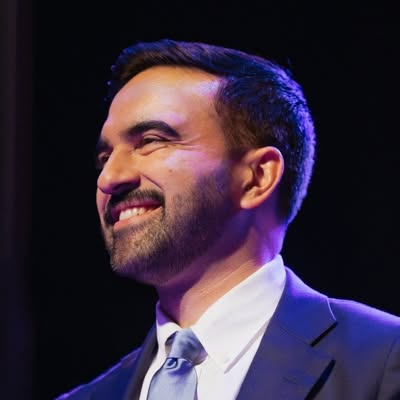
Savage did not simply argue that voters should reject democratic socialist candidates. He called for their political movement to be criminalized and suggested that its leaders should be deported.
A circulated clip from the broadcast shows Savage proposing congressional hearings involving Mamdani, Vermont Sen. Bernie Sanders and Massachusetts Sen. Elizabeth Warren. Savage invoked the House Un-American Activities Committee, the Cold War-era congressional panel that investigated suspected communist activity and became associated with blacklists, ruined careers, and pressure on Americans to reveal their political associations.
The committee was created in 1938, became a permanent House committee in the 1940s, and was eventually abolished in 1975. Although it investigated some legitimate security concerns, its methods remain among the most controversial chapters of twentieth-century American politics.
The people Savage named are not undocumented immigrants. Mamdani is the democratically elected mayor of New York City and was sworn into office on January 1, 2026. Sanders won reelection in 2024 and is serving his fourth Senate term, while Warren remains Massachusetts’ elected senator.
All three are American citizens. Sanders and Warren cannot legally be deported. Mamdani, who became a naturalized American citizen in 2018, could not lose his citizenship merely because of his ideology or policy positions.
Federal rules permit denaturalization only under limited circumstances, including cases in which citizenship was illegally obtained or secured through the concealment of an important fact. It requires a legal process and evidence. Political disagreement is not an accepted ground for stripping someone of their citizenship.
The First Amendment also protects political speech, peaceful assembly, and political association. Americans remain free to support capitalism, democratic socialism, conservatism, or other lawful political philosophies without being criminalized by the government.
Mamdani’s polling challenges the picture presented in the video.

The video portrays Mamdani as an extremist whose leadership is threatening New York. Recent polling, however, shows that many city voters hold a positive view of his early performance.
A June Siena University poll found that 58 percent of New York City respondents viewed Mamdani favorably, compared with 26 percent who viewed him unfavorably. His citywide rating had improved from 56 percent favorable and 34 percent unfavorable in April.
An April Emerson College Polling and PIX11 survey also found Mamdani above water after his first 100 days. Forty-three percent approved of his performance, 27 percent disapproved, and 30 percent remained neutral.
Voters gave him his strongest ratings on two central parts of his affordability agenda. Fifty-four percent approved of his handling of childcare, while 49 percent approved of his approach to housing affordability. His ratings were lower on public safety and the city budget, at 45 percent and 40 percent approval, respectively.
The same survey contained significant warning signs. Fifty-nine percent believed New York City was heading in the wrong direction, while 78 percent rated the local economy as either poor or fair. Those numbers show that Mamdani remains politically strong but faces serious concerns about the economy, spending, and city services.
Nationally, YouGov’s second-quarter 2026 ratings listed Mamdani as the seventh-most-popular Democrat in the country. Forty-one percent of respondents viewed him positively, 27 percent negatively, and 81 percent said they were familiar with him.
Democratic socialism is experiencing measurable growth.
The Democratic Socialists of America announced on July 4 that it had passed 120,000 members. The organization described the milestone as making it the largest socialist organization in United States history, surpassing the peak membership of the Socialist Party of America in the early twentieth century.
Mamdani’s election has helped give the movement national visibility. His political influence was reinforced in June when three congressional candidates he endorsed won their Democratic primaries in New York.
That does not mean every Mamdani proposal has succeeded. His administration has expanded childcare initiatives, including thousands of planned seats and a free pilot program for municipal workers, but larger promises, such as fare-free buses and fully universal programs, continue to face funding and implementation obstacles.
Mamdani, Sanders, and Warren remain legitimate targets for tough political criticism. Their spending plans, tax proposals, and government programs deserve examination.
But elections and public debate are how a constitutional democracy answers political disagreement. Demanding that elected opponents be criminalized or expelled because of their ideology moves the argument away from policy and toward punishment for political belief.