Homemade hummus doesn’t have to mean soaking chickpeas overnight or spending an afternoon on complicated prep. Sometimes, the biggest upgrade starts with two heads of garlic and a little oven time. In cookbook author Yumna Jawad’s roasted garlic hummus, published on Feel Good Foodie, canned chickpeas meet tahini, lemon juice and soft roasted cloves. The result is a creamy dip built around mellow garlic flavor rather than the sharp bite you might expect from that generous-looking quantity.
The recipe takes about an hour altogether, including 40 to 45 minutes for roasting, and makes four servings. That is longer than opening a supermarket container, certainly, but most of the garlic’s cooking time is hands-off. You are not peeling dozens of individual cloves or standing over a saucepan. The garlic roasts in its papery covering, then you squeeze it into a food processor. For anyone curious about making hummus from scratch, this version offers a manageable project with a clear payoff: control over the flavor and texture.
Roasting Gives Garlic a Softer Side
Two whole heads of garlic might sound like a warning label, but roasting changes the finished dip’s character. Jawad explains the distinction directly: “Roasted garlic actually lends a sweet flavor to this hummus, unlike raw garlic.” Her recipe describes the roasted cloves as sweet and mellow, rather than aggressively pungent. That makes it a different experience from simply adding extra raw garlic to a familiar hummus recipe. The point is depth and softness, not a contest to see who can handle the strongest bite.
To follow her method, heat the oven to 400°F. Slice approximately ½ inch off the tops of the garlic heads, exposing the cloves, and remove any loose outer papery layers. Set the heads cut-side up on enough foil to wrap them, drizzle the exposed surfaces with olive oil and close the foil around them. Place the parcels on a baking tray and roast until the cloves are golden and soft, approximately 40 to 45 minutes. Jawad notes that the timing varies with the size of the garlic.
Let the heads cool before handling them, then squeeze the softened cloves from their skins into the food processor. This is where the preparation becomes considerably less fussy than the ingredient quantity suggests: the individual cloves do not need peeling before roasting. Check for the golden color and soft texture specified in the recipe rather than relying only on the timer. The garlic should be ready to blend into the chickpeas, not remain in firm pieces that resist the rest of the mixture.
The Creamy Finish Takes More Than a Quick Pulse
For Jawad’s complete recipe, gather the two garlic heads, one 15-ounce can of chickpeas, 3 tablespoons of lemon juice, 2 tablespoons of tahini, ½ teaspoon of salt and three ice cubes. You will also need extra-virgin olive oil for roasting and serving, plus optional chopped parsley. Rinse and drain the chickpeas before they go into the processor. Canned chickpeas are the intended shortcut here; if you choose dried ones instead, Jawad specifies that they must be cooked before being added.
Tahini, a paste made from ground sesame seeds, supplies part of the hummus’s creamy character. Add it to the processor with the roasted garlic, drained chickpeas, lemon juice, salt and ice cubes, then blend for about five minutes until smooth. That duration is worth noticing: this is not a two-pulse-and-done situation. Jawad advises longer blending if the texture remains grainy. Once the mixture is smooth, taste it and adjust with more lemon juice or salt as needed rather than assuming your preferred balance will be identical to someone else’s.
The ingredient that looks least important may be the one you are most tempted to skip: ice. Jawad credits the technique to her father, writing, “I learned this trick from my dad.” She explains that the ice gradually adds cold water as it breaks down, helping produce the texture she likes. There is a practical alternative if you would rather not use cubes: her recipe notes allow ¼ cup of cold water instead. The goal is a smooth, creamy mixture, not a processor full of stubbornly thick chickpea paste.
Peeling the chickpeas is an optional extra in Jawad’s approach, not an instruction hidden in the main recipe. She recommends it for an especially smooth result, while acknowledging that the task is tedious. Another published technique comes from cookbook author Kathryne Taylor of Cookie and Kate: boil canned chickpeas with baking soda for about 20 minutes, then drain and rinse them before blending. Taylor’s method softens the chickpeas without individual peeling. These are separate approaches; you do not need to perform every hummus trick on the internet to make Jawad’s recipe.
Related: Pieces of Halley’s Comet Will Streak Across the Sky This October — When to Watch
Give It a Swirl and a Job Beyond the Snack Plate
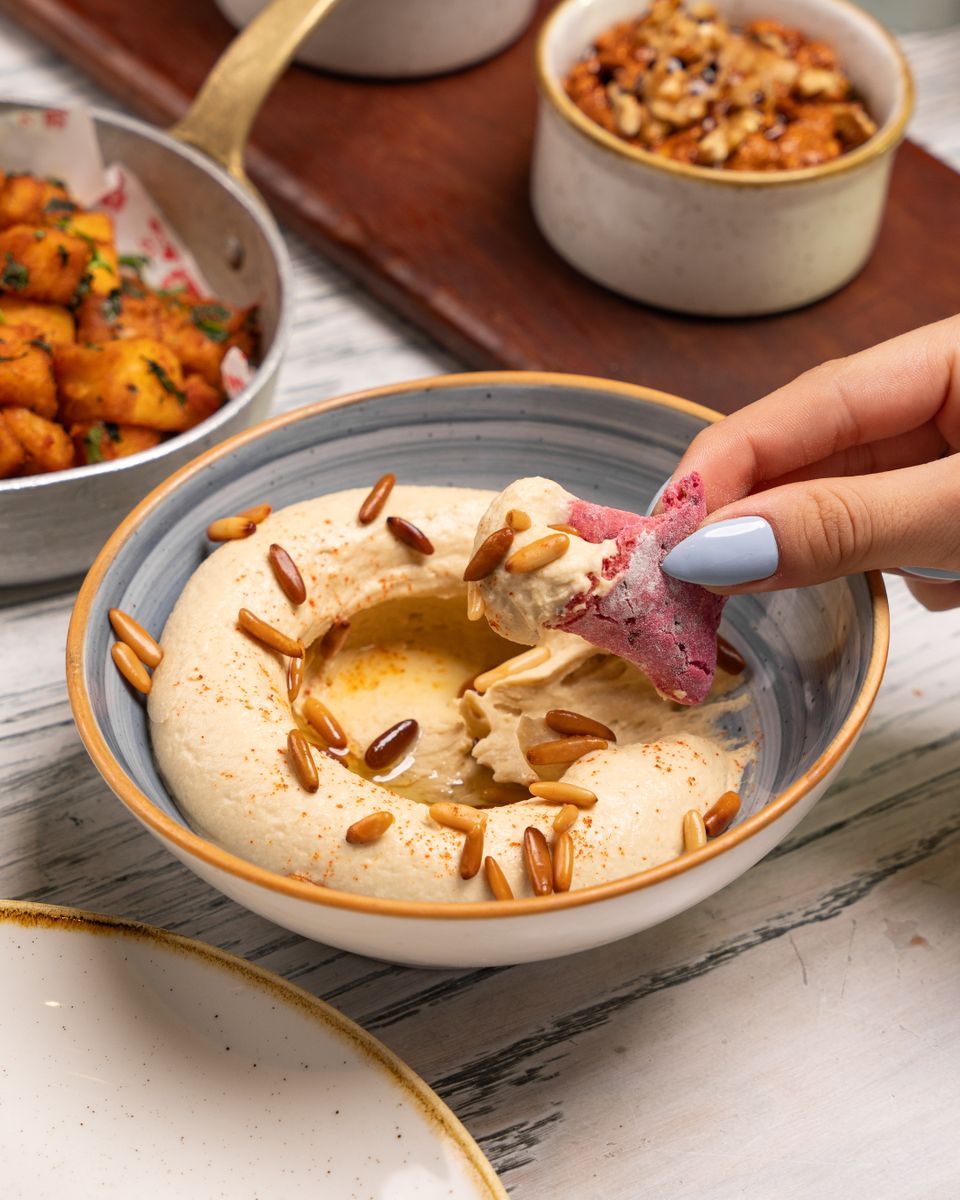
Once blended, spoon the hummus onto a plate or into a bowl, then use the back of a spoon to swirl it. Jawad finishes hers with olive oil, whole chickpeas, and fresh parsley, then serves it with pita bread. The presentation takes little effort but makes the homemade dip feel ready for company. Pita chips work, too, and her suggested additions include cumin, paprika, sumac, or za’atar if you want to explore a different finish without changing the roasted-garlic foundation.
The bowl doesn’t have to stay an appetizer. Jawad suggests using the hummus in sandwiches, pairing it with roasted cauliflower pita sandwiches or topping it with Lebanese hashweh, a cooked ground-beef-and-onion mixture. She also recommends thinning it with water or lemon juice for a dressing-like consistency. That flexibility is another reason to make it yourself: one batch can become a dip, a spread or part of a larger meal. Start with the roasted cloves, give the processor enough time, and let the finished texture guide the final adjustment.
Other Posts You Might Like
- The Quest for Life on Mars: 10 Groundbreaking Discoveries
- 10 Groundbreaking Techniques Used by Experts to Determine the Age of Objects and Living Beings