By late Thursday evening, most Thanksgiving kitchens look the same: half a turkey on the carving board, a dish of stuffing going cold, and someone digging through cabinets for containers with matching lids. What happens to that food in the next two hours decides how long it will last.
Federal food-safety guidance is clear on the numbers. Cooked Thanksgiving leftovers keep 3 to 4 days in the refrigerator, according to FoodSafety.gov, while frozen leftovers hold their best quality for 2 to 6 months. The gap between those two numbers is the difference between a weekend of sandwiches and turkey soup in February.

The 2-hour clock starts when dinner ends
The FoodSafety.gov guide to turkey leftovers says cooked food should go into the refrigerator or freezer within two hours of coming out of the oven. That window covers the time the bird sits on the table, the time spent passing plates, and the long conversation over pie. Once food has sat out longer than that, the guidance is to throw it away rather than save it.
The practical move is to start packing while the coffee brews. Carving the remaining turkey off the bone right after the meal makes the job faster, and it means the meat cools quickly instead of sitting on a warm carcass. Gravy, stuffing and vegetables each get their own container.
Plenty of families have their own rituals for this part of the night, from the relative who always brings empty containers to the one who leaves with the wishbone. Those habits sit alongside the many quirks covered in the frenzhub.com list of odd American traditions that confuse the rest of the world, where the Thanksgiving table gets plenty of attention.
Shallow containers cool food faster
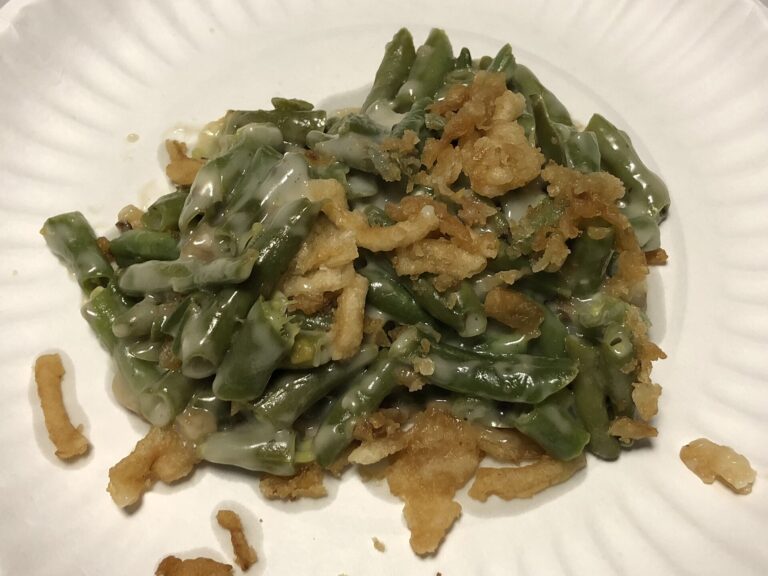
FoodSafety.gov recommends dividing leftovers into small, shallow containers before refrigerating them. A deep pot of mashed potatoes or a whole roasting pan of stuffing cools slowly in the center, while thin layers chill evenly and quickly. The USDA Food Safety and Inspection Service leftovers guide adds that hot food can go straight into the refrigerator; there is no need to let it cool on the counter first. Shallow, flat packing is the same idea behind the frenzhub.com guide on how to freeze fresh green beans: thin layers chill and freeze faster than deep piles.
Labeling each container with the date saves guesswork later in the week. A strip of masking tape and a marker is enough. The cleanup that follows matters too: a craftingyourhome.com list of things that should never go down a kitchen drain on Thanksgiving covers the grease and scraps that tend to pile up at the same time.
Refrigerator: 3 to 4 days
Turkey, stuffing, mashed potatoes, gravy and cooked vegetables all fall under the same rule. FoodSafety.gov and the FoodSafety.gov cold food storage chart list 3 to 4 days in a refrigerator set at 40 degrees Fahrenheit or below for cooked leftovers. For a Thursday dinner, that means Sunday or Monday is the cutoff.
Anything that will not be eaten by then should move to the freezer early, not on day four. Freezing does not reset the clock on food that has already been sitting in the refrigerator for most of its window, so the best time to freeze is the same night or the next morning. The containers that stay in the refrigerator make quick lunches, and small portions of turkey and stuffing warm up well in a countertop air fryer or toaster oven, like the models compared in a frenzhub.com piece on freeing up the oven this Thanksgiving.
Freezer: best quality for 2 to 6 months
Frozen leftovers are best within 2 to 6 months, according to FoodSafety.gov. That range is about taste and texture. The USDA guide to freezing and food safety explains that food kept at 0 degrees Fahrenheit stays safe indefinitely, but it slowly loses moisture and flavor and can pick up freezer burn. A craftingyourhome.com rundown of how long frozen and refrigerated Thanksgiving leftovers last puts frozen leftovers at 3 to 4 months, a figure that sits inside that same quality range.
Airtight freezer bags with the air pressed out, or rigid containers filled close to the top, help hold quality longer. Sliced turkey freezes well with a spoonful of gravy or broth over it, which keeps the meat from drying out. Flat, portion-sized packs let a single dinner come out without thawing the whole batch.

Reheat to 165 degrees, even straight from frozen
Leftovers should be reheated to 165 degrees Fahrenheit, checked with a food thermometer, according to FoodSafety.gov. Sauces, soups and gravy should come to a rolling boil, the USDA leftovers guide says. Covering food while reheating keeps it moist and helps it heat evenly.
Frozen leftovers do not need to be thawed first. They can go straight into a saucepan or the microwave, which simply takes a little longer. When thawing is easier, the refrigerator, a cold-water bath or the microwave are all acceptable methods, and food thawed in the refrigerator can be refrozen.
The USDA Meat and Poultry Hotline, listed on FoodSafety.gov, takes questions at 1-888-674-6854 (1-888-MPHotline). It is a good call for questions about a turkey that sat out too long, a power outage, or a container whose date got lost.
Leftovers have been part of American holiday cooking for as long as there have been big holiday meals, and the history of leftovers is full of dishes built to use them up, from hash to pot pie. The rule of thumb for this weekend is short: pack it within 2 hours, eat it within 3 to 4 days, and freeze the rest for a quick dinner in the cold months ahead.
This article was produced with AI assistance and edited for accuracy against the sources linked above.