The day after Thanksgiving, the refrigerator looks like a puzzle nobody asked for: a foil-covered turkey, a bowl of cranberry sauce, half a pie and a casserole dish balanced on top. Some of it can move to the freezer for later, and some of it should stay out of there entirely.
Extension and federal food-safety guides give different freezer times for each dish. Cooked turkey keeps 2 to 3 months, cranberry sauce 2 months, and green bean casserole should not be frozen at all, according to the University of Illinois Extension. These are standing guidance charts rather than new findings, and the freezer times are for quality, so the numbers below show how long each item tastes its best.

Cooked Turkey: 2 to 3 Months
The University of Illinois Extension leftover chart lists cooked turkey at 3 to 4 days in the refrigerator and 2 to 3 months in the freezer. Its advice is to freeze turkey while it is fresh, since waiting 4 days in the fridge does not improve quality.
The federal FoodSafety.gov cold storage chart gives a wider range of 2 to 6 months for cooked meat or poultry. The two numbers differ, so the shorter window is the safer bet for turkey meant to taste its best. Cooks looking for kitchen shortcuts this week can also browse 20 clever kitchen tricks for home cooks or look at ways to free up the oven on Thanksgiving, since reheating frozen portions later is easier with oven space to spare.
Gravy: 2 to 3 Months
Gravy gets the same 2 to 3 months in the freezer from Illinois Extension, but only 1 to 2 days in the refrigerator. The University of Minnesota Extension chart agrees on both numbers for gravy and meat broth. It also lists cooked poultry pieces covered in broth or gravy at 6 months in the freezer, so a turkey tucked under gravy lasts longer than the bare meat. Anyone who wants to check the kitchen before the meal can start with 7 things to check in the kitchen before Thanksgiving dinner.
Cranberry Sauce: 2 Months
Cranberry sauce lasts 2 weeks in the refrigerator and up to 2 months in the freezer, per Illinois Extension. A small container works best for a spoonful on a sandwich later, and best practices for seasonal storage offer general ideas for making room in a crowded freezer.

Pumpkin and Apple Pie: 2 Months
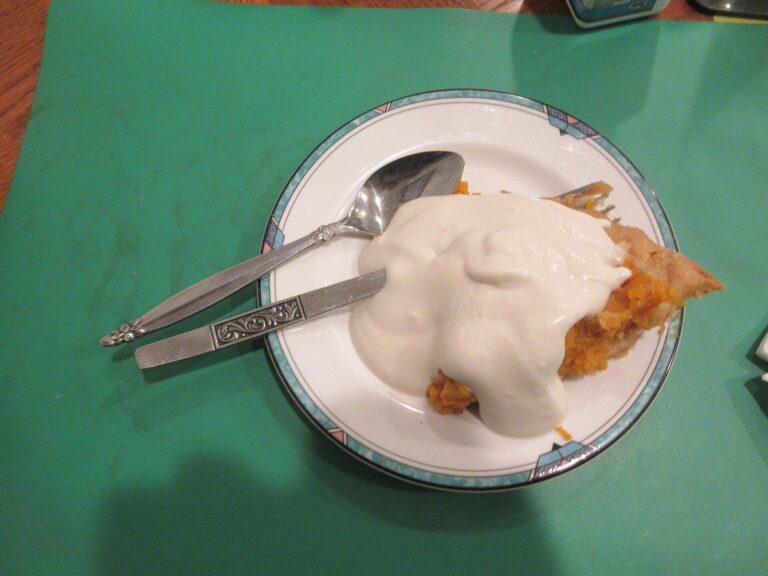
Illinois Extension lists pumpkin pie at 4 days in the fridge and apple pie at 3 days, with both holding up to 2 months in the freezer. FoodSafety.gov is a little tighter for pumpkin or pecan pie after baking, at 1 to 2 months, and says custard or chiffon pie should not be frozen. For a pie that has to wait, the shorter federal number is the one to follow. Every slice that gets frozen instead of tossed also stretches the holiday budget, which is a big deal when Thanksgiving dinner costs vary so much by state.
Green Bean Casserole: Not at All
Green bean casserole is the one dish on the list with a firm no. Illinois Extension says it keeps 4 days in the refrigerator and should not be frozen. The practical answer is to eat it within those 4 days, or to share a portion with a neighbor on the second day.
Stuffing, Eggnog and Other Extras
Illinois Extension gives stuffing up to 1 month in the freezer and bread up to 3 months. Mashed potatoes and yams can go up to 1 year, though quality is best earlier. On the drink side, FoodSafety.gov lists commercial eggnog at 6 months in the freezer and says homemade eggnog should not be frozen. Casseroles made with eggs after baking, and quiche, get 2 to 3 months from the same chart, and soups and stews with vegetables or meat also get 2 to 3 months.
Handling Rules That Apply to All of It
The USDA Food Safety and Inspection Service leftover guide says leftovers should go in the refrigerator within 2 hours of cooking, or within 1 hour when the room is above 90 F. Large amounts should be divided into shallow containers so they chill quickly. In the freezer, FSIS says leftovers keep best for 3 to 4 months and that frozen food remains safe indefinitely, though quality can drop.
When the turkey comes out of the freezer, FSIS says a portion thawed in the refrigerator should be used within 3 to 4 days or refrozen, and leftovers should be reheated to 165 F, with gravy and sauces brought to a rolling boil. Food reheated from frozen to 165 F can be refrozen. A portion that was thawed in cold water or the microwave should be cooked or heated to 165 F before it goes back in the freezer.
A Simple Plan for the Day After
Because the numbers differ from chart to chart, a good rule is to follow the shorter time and label every container with the date. Thanksgiving falls on the fourth Thursday of November, which is Nov. 26 in 2026, according to Wikipedia, so there is time to clear a shelf in the freezer.
Labeling takes seconds: masking tape, a marker and a date on the lid. A frozen container with no label turns into a guessing game by January, and the freezer times on this page only help when the date on the lid is known.
This article was produced with AI assistance and edited for accuracy against the sources linked above.
Image: Peggy Greb – Public domain/Wikimedia Commons