Sophie Cunningham walked into one of America’s fiercest cultural debates and did not quietly slip out the back door.
The Indiana Fever guard has faced boos, protests and intense criticism since publicly arguing that transgender women should not compete in female sports categories. Yet Cunningham says she has no intention of hiding her beliefs simply because some fans, activists and basketball figures strongly disagree with her.
For her supporters, the stance represents courage in an increasingly hostile public conversation. For her critics, it promotes the exclusion of transgender athletes and distorts what is happening inside girls’ sports. Either way, Cunningham has transformed herself from a hard-nosed basketball player into a national symbol in a dispute much larger than the WNBA.
A comment that ignited a national argument
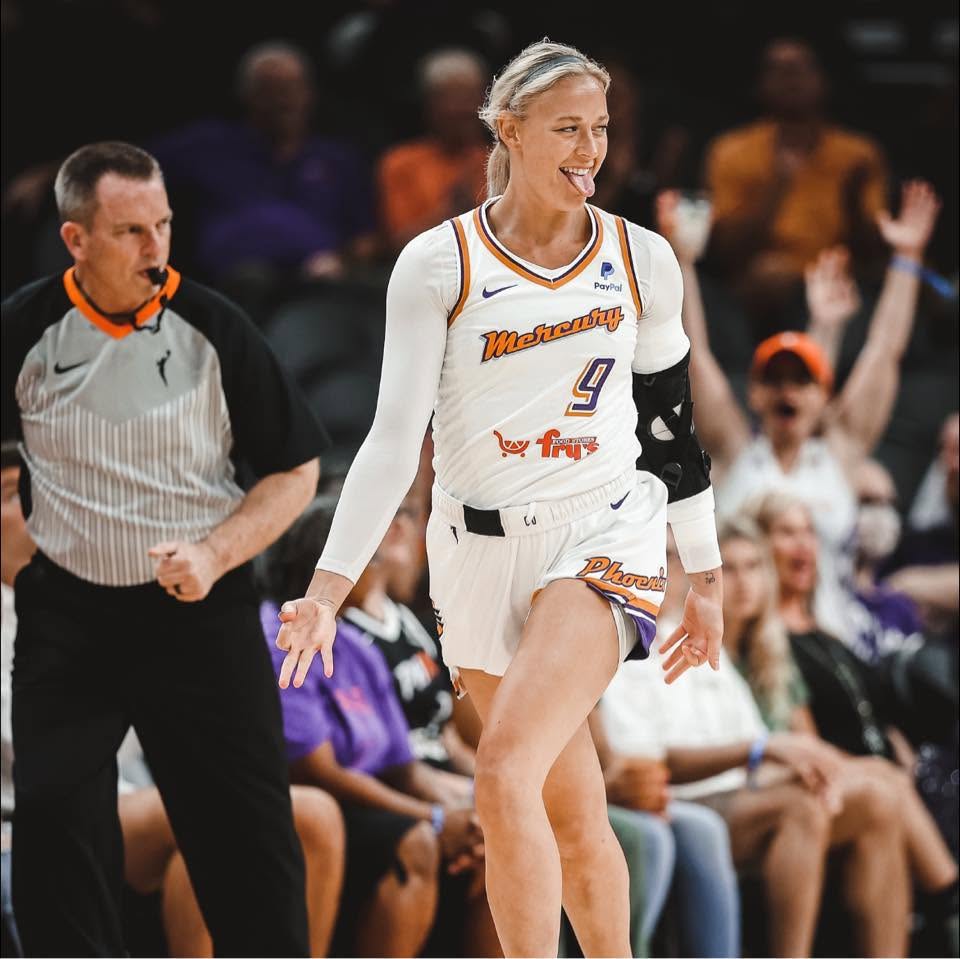
The controversy began after Cunningham discussed transgender participation in women’s sports during an ESPN interview. She said she had received “a lot of negative feedback” from people who believed she hated transgender individuals, an accusation she firmly rejected.
“I never once said that,” Cunningham said while presenting her position as a combination of compassion, honesty and concern for female athletes. She added that she wanted to protect girls who, in her view, should not have to compete against “biological men.”
Those words quickly escaped the boundaries of a sports interview. They spread across political programs, social-media pages and arena protests, with Cunningham’s name becoming shorthand for the broader battle over sex, gender identity and athletic fairness.
The argument is emotionally charged because both sides believe they are defending vulnerable people. Cunningham’s supporters say female athletes deserve categories based on biological sex so they do not lose scholarships, roster positions or competitive opportunities. Advocates for transgender inclusion argue that transgender girls are girls and should not be treated as threats or political targets.
Cunningham insists her position is not rooted in hatred. Before a game in Portland, she described herself as someone who loves basketball, enjoys inspiring younger players and tries to bring positive energy to the people around her.
She also made clear that public pressure would not force her into silence.
“I’m also here to be me,” Cunningham said, adding that she would not “dim my light” merely because other people disagreed with her.
The backlash followed her into WNBA arenas

The response was no longer confined to television studios or social media by the time the Fever arrived in Portland.
Cunningham was booed when she entered the game, while spectators waved flags representing transgender pride. Outside the arena, supporters gathered to praise her willingness to speak about female-only sports. Counterprotesters also appeared, turning an ordinary basketball game into a visible demonstration of America’s cultural divide.
Similar scenes unfolded in Seattle. Two teenage fans displayed signs thanking Cunningham for speaking up for girls. Seattle Storm minority owner Celeste Keaton confronted the teenagers and allegedly used profanity during the exchange.
The Storm later apologized, saying every fan deserved to feel welcome. The WNBA fined Keaton and suspended her from five home games, an extraordinary consequence that showed how quickly the controversy had moved beyond policy arguments and into questions about fan treatment and professional conduct.
Minnesota Lynx coach Cheryl Reeve offered one of the strongest public responses to Cunningham. Reeve wore a shirt declaring that transgender children belong in sports and argued that Cunningham’s description created a harmful impression about transgender people in locker rooms.
Reeve and Cunningham later spoke at midcourt before a Fever-Lynx game. Reeve said they discussed their platforms, the importance of education and the areas where their views differed. The exchange suggested that disagreement does not always have to end in shouting, threats or public humiliation.
Caitlin Clark, Cunningham’s high-profile Fever teammate, chose not to endorse either side publicly. Clark said leagues and governing bodies should work with athletes to develop solutions, while her team remained focused on basketball.
The debate is bigger than one basketball player
Cunningham’s comments landed shortly after the Supreme Court issued a major ruling involving West Virginia and Idaho.
The court held that Title IX permits schools to maintain separate sports teams based on biological sex and allowed the states’ restrictions on transgender participation in girls’ and women’s school sports to stand. The ruling addressed school athletics, not the WNBA’s professional eligibility policies, but it gave supporters of sex-based categories significant legal momentum.
That distinction matters. A Supreme Court decision about public-school competition does not automatically dictate how every professional league, private organization or international federation must operate. Different sports may continue adopting different eligibility rules based on legal requirements, competitive conditions and medical evidence.
Still, Cunningham has become a powerful voice for people who believe women’s sports lose their purpose when biological sex is removed from eligibility decisions. Her opponents see her language as unnecessarily inflammatory and fear it could contribute to hostility against transgender people who already experience social exclusion.
The controversy is unlikely to disappear because Cunningham refuses to retreat and her critics refuse to remain silent. Every road game, protest sign and press conference now carries the possibility of another confrontation.
But perhaps the real test is whether the sports world can discuss fairness without cruelty and inclusion without dismissing legitimate concerns from female athletes.
Sophie Cunningham has made her position unmistakable. She believes female sports should remain reserved for biological females, and backlash has not changed her mind. Whether she is viewed as courageous or controversial, she has forced the WNBA and its audience to confront a debate that slogans alone will never settle.