The Bible was never written as a laboratory manual, a geology textbook, or an astronomy guide. We read it first as sacred literature, spiritual instruction, poetry, law, prophecy, history, and moral reflection. Yet one reason it continues to fascinate believers, skeptics, historians, and scientists is that some of its ancient descriptions touch the same natural patterns that modern science later studied in detail.
That does not mean every poetic phrase should be forced into a scientific claim. A stronger reading is more careful and more interesting. We can look at places where biblical language overlaps with astronomy, public health, hydrology, geology, archaeology, and human biology, then ask why those connections still feel so striking thousands of years later.
The Bible Describes Earth as a Circle Long Before Space Photography
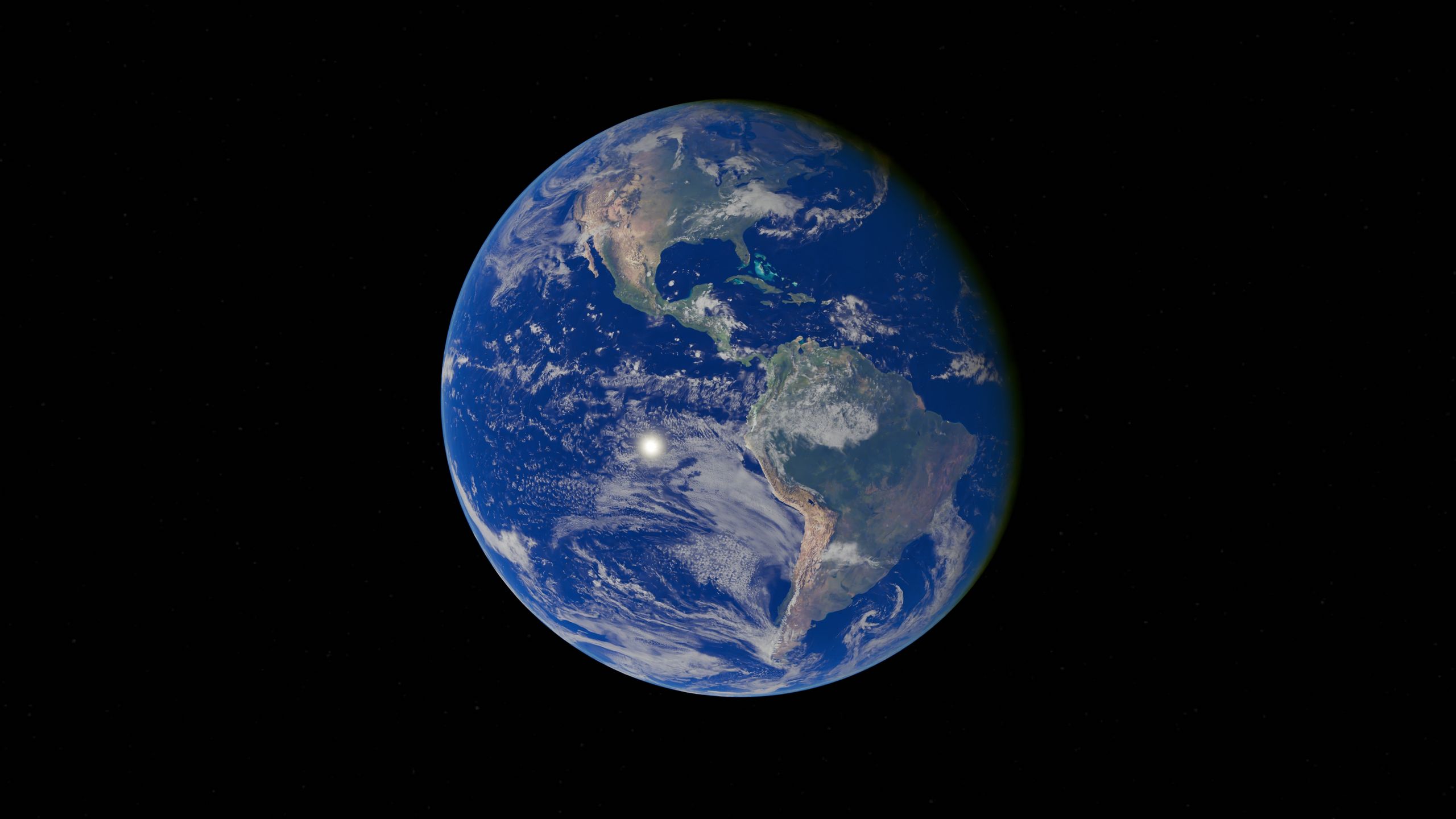
Isaiah 40:22 speaks of God sitting above the “circle of the earth,” a phrase that has drawn attention because it appears in an ancient text from a world where many people understood the cosmos through observation, symbolism, and inherited tradition. We should not flatten the verse into a modern astronomy sentence, but the image remains powerful. It points to a world perceived as curved, bounded, and vast beneath the heavens.
Modern science confirms that Earth is round, though more precisely it is an oblate spheroid because rotation makes it slightly wider at the equator than from pole to pole. (Sullivan, 2021) Ancient people could infer roundness through shadows during lunar eclipses, the changing visibility of stars across latitudes, and the way ships disappeared over the horizon. (Team, 2025) The biblical phrase still stands out because it uses cosmic language that comfortably fits a rounded Earth rather than a small, crude, boxed-in world.
Job Says the Earth Hangs on Nothing
Job 26:7 says that God “hangs the earth upon nothing,” one of the most memorable lines in biblical wisdom literature. The verse is poetic, but its imagery feels unusually clean to modern readers. Earth is not described as resting on a pillar, animal, mountain, or ocean floor. It hangs in space.
Today, we understand Earth as a planet moving through space under gravity, orbiting the Sun without any physical support beneath it. The ancient line does not explain orbital mechanics, mass, inertia, or gravitational attraction. Still, its image is striking because it avoids the heavy mythological architecture found in many ancient cosmologies. We see a poetic sentence that fits comfortably beside the modern picture of a suspended planet moving through a vast universe.
Job Hints at a Fiery World Beneath Our Feet
Job 28:5 says that the earth produces bread from above, yet underneath it is “turned up as it were by fire.” The verse sits in a chapter about mining, hidden treasure, and the deep places humans enter with effort and danger. Its language is observational and poetic, but it captures something real about the planet. Beneath the calm surface of fields and cities, Earth is hot, pressurized, and active.
Modern geology shows that Earth has a layered interior, including crust, mantle, outer core, and inner core. The mantle is hot and semi-solid, the outer core is molten metal, and Earth’s internal heat drives many of the processes that shape the surface. Volcanoes, earthquakes, mountain building, and plate tectonics all remind us that the ground beneath our feet is not dead stone. The Bible’s ancient language does not give us geophysics, but it does preserve a vivid awareness that the visible earth has a hidden fiery depth.
The Water Cycle Appears in Ancient Biblical Poetry
Several biblical passages describe water moving through a repeated natural cycle. Ecclesiastes 1:7 says rivers run into the sea, yet the sea is not full, and the rivers return again to the place from which they came. Job 36:27-28 speaks of water being drawn up, formed into drops, and poured down from the clouds. Amos 9:6 describes waters being called up from the sea and poured upon the earth.
Modern science calls this the hydrologic cycle. Water evaporates from oceans, lakes, rivers, soil, and plants. It condenses into clouds, falls as precipitation, runs across land, seeps underground, feeds rivers, returns to seas, and begins the process again. The biblical writers did not use modern terms such as evaporation, condensation, groundwater recharge, or atmospheric transport, yet their observations capture the recurring movement of water with remarkable elegance.
Stars Differ in Glory, Brightness, and Nature

First Corinthians 15:41 says that “one star differeth from another star in glory.” In context, Paul is making a theological point about resurrection and bodies, not writing an astronomy lesson. Even so, the phrase has a surprisingly modern feel because stars truly do differ in brightness, size, temperature, color, age, chemical composition, and life cycle.
Modern astronomy classifies stars across many categories. Some are small red dwarfs that burn for immense stretches of time. Some are massive blue stars that live fast and die violently. Some swell into red giants, collapse into white dwarfs, or explode as supernovas. The Bible’s phrase works as poetry, but science deepens the wonder behind it. The lights in the sky are not identical lamps. They are diverse worlds of fire with their own histories.
Hebrews Speaks of the Visible Coming From the Unseen
Hebrews 11:3 says that the visible world was not made from things that are seen. The verse is theological, grounded in faith and creation, but it also resonates with a truth modern science makes familiar. The objects we see are built from things we cannot see with ordinary human sight.
Atoms, molecules, particles, forces, and fields make up the visible world. A mountain, a tree, a human hand, and a drop of water all depend on structures hidden beneath ordinary perception. The writer of Hebrews was not describing atomic theory, but the idea that the seen world rests upon unseen realities remains one of the most intellectually rich overlaps between faith language and scientific imagination. We now live in an age where invisible structures explain the visible universe every day.
Leviticus Includes Early Public Health Principles
Leviticus contains detailed laws about skin disease, bodily discharge, washing, separation, inspection, and reentry into the community. Some of these laws belong to Israel’s ritual system, so we should not read them as modern medical policy. Yet several principles overlap with public health practices that remain important today. Separation of the sick, washing, careful examination, and controlled return after a period of time are all recognizable disease-control ideas.
Modern public health distinguishes between isolation and quarantine. Isolation separates people known to be sick, while quarantine restricts movement for those who may have been exposed. The ancient biblical system did not know germ theory, viruses, bacteria, or epidemiological modeling. Still, it was understood that illness could spread through close contact and that communities needed rules to protect the vulnerable. That practical wisdom gives these passages lasting relevance.
Biblical Food and Cleanliness Laws Reflect Real Risk Awareness
Many biblical purity laws are theological first, but some also touch areas that modern readers recognize as hygiene, contamination, food safety, and community protection. Instructions about washing, disposal, contact with dead animals, and bodily uncleanness created habits of separation between clean and unclean conditions. These rules shaped daily life through repetition, not abstract theory.
Modern science explains why contamination matters. Pathogens can move through bodily fluids, spoiled food, unsafe water, dead animals, and poor sanitation. Ancient Israel did not have microscopes, but it did have a structured system that trained people to treat contamination seriously. The overlap does not prove that every law was intended to be medical, but it shows that spiritual practice and bodily safety often intersected in everyday life.
The Flood Story Fits a World Shaped by Real Catastrophic Floods
The story of Noah’s Flood in Genesis is one of the most debated narratives in the Bible. A careful article should not claim that geology has confirmed every detail of a worldwide flood exactly as described in Genesis. Mainstream geology does not support a recent global flood covering all mountains at once. Yet science absolutely confirms that catastrophic floods have shaped human history, destroyed settlements, altered landscapes, and left deep marks in cultural memory.
Large regional floods, river disasters, sea-level changes, storm surges, and sudden inundations were terrifying realities in the ancient world. Mesopotamia, with its great river systems, was especially vulnerable to flooding. Flood stories appear across multiple ancient Near Eastern traditions, suggesting that human communities repeatedly preserved memories of overwhelming water disasters. Genesis gives the flood a theological meaning, but the emotional force of the story rests on something scientifically familiar: water can remake the human world in a single devastating event.
The Bible’s Mountain and Sea Imagery Reflects Geological Change

Psalm 104 describes waters covering mountains and then retreating as land appears. This is poetic creation language, not a modern geology lecture. Yet its imagery touches a real scientific truth: Earth’s surface has changed dramatically over time. Seas have advanced and retreated. Mountains have risen. Sediments have hardened into rock. Marine fossils can appear far from modern shorelines because landscapes move through deep time.
Geology shows that Earth is dynamic. Plate tectonics lifts land, subducts crust, opens oceans, closes seas, and pushes marine deposits into mountain ranges. What looks permanent in one human lifetime may be temporary across millions of years. The biblical poets saw creation as ordered, alive, and responsive to divine command. Science describes the physical processes. Together, the language reminds us that the planet has a history deeper than ordinary sight can grasp.
Joshua’s Long Day Has Been Studied Through Eclipse Research
Joshua 10 describes an extraordinary event in which the sun and moon appear to stand still during battle. Believers have read this as a miracle, skeptics as a legend, and researchers have explored whether the passage may preserve memory of an unusual astronomical event. Some scholars have proposed that the account could describe an ancient solar eclipse, with one widely discussed date being October 30, 1207 BCE.
That interpretation is not universally accepted, and it does not remove the theological meaning of the biblical story. It does show something important for modern readers: ancient biblical texts can intersect with astronomy, chronology, and historical reconstruction in serious academic debate. The point is not that science has flattened the miracle into a simple natural event. The point is that the biblical record contains time, place, sky, memory, and event in a way that still invites investigation.
Science Does Not Shrink the Bible; It Makes the Conversation Larger. Science confirms many natural realities that biblical writers described in poetic, practical, or historical language. Earth is suspended in space. Water moves in a cycle. The stars are beyond ordinary human counting. The ground hides fire beneath its surface. Isolation and washing can protect communities from disease. Archaeology continues to place many biblical people, places, and empires within a real ancient world.